


การพัฒนาที่ยั่งยืน
บริษัทมีเป้าหมายในการดำเนินธุรกิจตามหลักธรรมภิบาล เพื่อสร้างการพัฒนาที่ยั่งยืนให้กับทุกฝ่าย โดยมีการบริหารจัดการที่ดี มีธรรมาภิบาล มีความโปร่งใสในการดำเนินธุรกิจ มีการพัฒนาคุณภาพของสินค้าและบริการของทุกบริษัทในเครือฯ ที่ตรงกับความต้องการของผู้บริโภค สามารถสร้างการเติบโตทางธุรกิจ สร้างความสุขและคุณภาพชีวิตที่ดีให้กับผู้มีส่วนได้ส่วนเสียทุกกลุ่ม ทั้งผู้ถือหุ้น พนักงาน ลูกค้า คู่ค้า พันธมิตรทางธุกิจ และสังคม โดยยังคำนึงถึงผลกระทบต่อสิ่งแวดล้อมจากการดำเนินธุรกิจและการใช้ชีวิตประจำวันของพนักงาน บริษัทจึงให้ความสำคัญต่อการพัฒนาที่ยั่งยืน และมีนโยบายที่ครอบคลุมทั้ง 3 มิติ ได้แก่
- เศรษฐกิจ
- สังคม
- สิ่งแวดล้อม
เอกสารและนโยบายที่เกี่ยวข้อง
โครงสร้างการดำเนินงานด้านความยั่งยืน
เพื่อให้การกำกับดูแลการบริหารความยั่งยืนทางธุรกิจเป็นไปอย่างมีประสิทธิภาพ บริษัทจึงได้แต่งตั้งคณะบริหาร ความยั่งยืนทางธุรกิจ (SD Management Team) โดยมีประธานกรรมการบริหาร บริษัท ไทยกรุ๊ป โฮลดิ้งส์ จำกัด (มหาชน) เป็นประธานคณะบริหารความยั่งยืนทางธุรกิจ และมีกรรมการผู้จัดการของบริษัทย่อยที่ประกอบธุรกิจหลัก และผู้บริหารสูงสุดของสายงานร่วมเป็นคณะบริหารความยั่งยืนทางธุรกิจ ซึ่งรายงานตรงต่อคณะกรรมการกำกับดูแลบรรษัทภิบาลและความยั่งยืน และมีคณะทำงานด้านความยั่งยืนจากตัวแทนหน่วยงานต่าง ๆ เพื่อขับเคลื่อนให้การดำเนินงานของบริษัทและบริษัทย่อยมีความสอดคล้องกับนโยบาย กลยุทธ์ แผนการดำเนินงานและตัวชี้วัดด้านความยั่งยืน

คณะกรรมการกำกับดูแลบรรษัทภิบาลและความยั่งยืนได้ส่งเสริมและสนับสนุนการดำเนินงานของบริษัทให้เป็นไปตามนโยบายการดำเนินงานด้านพัฒนาอย่างยั่งยืนที่ได้รับอนุมัติจากคณะกรรมการบริษัท รวมทั้งติดตามความคืบหน้าการดำเนินงานของคณะบริหารความยั่งยืนทางธุรกิจ (SD Management Team) และคณะทำงานด้านความยั่งยืน เพื่อให้บริษัทและบริษัทย่อยปฏิบัติตามกลยุทธ์ทางธุรกิจเพื่อความยั่งยืนอย่างสม่ำเสมอและต่อเนื่องต่อไป และสอดคล้องกับประเด็นสำคัญด้านความยั่งยืน (ESG Materiality) กลยุทธ์ เป้าหมาย และตัวชี้วัดการดำเนินงานด้านความยั่งยืน ปี 2567 – 2571 ของกลุ่มบริษัทไทยกรุ๊ป ซึ่งได้ผ่านการพิจารณาร่วมกันจากทุกฝ่ายที่เกี่ยวข้องเพื่อให้ครอบคลุมทั้งมิติสังคม เศรษฐกิจ และสิ่งแวดล้อม โดยสอดคล้องกับนโยบาย กลยุทธ์ แผนการดำเนินงานด้านธุรกิจของกลุ่มบริษัทไทยกรุ๊ป และเป้าหมายการพัฒนาที่ยั่งยืนขององค์การสหประชาชาติ (UNSDGs)
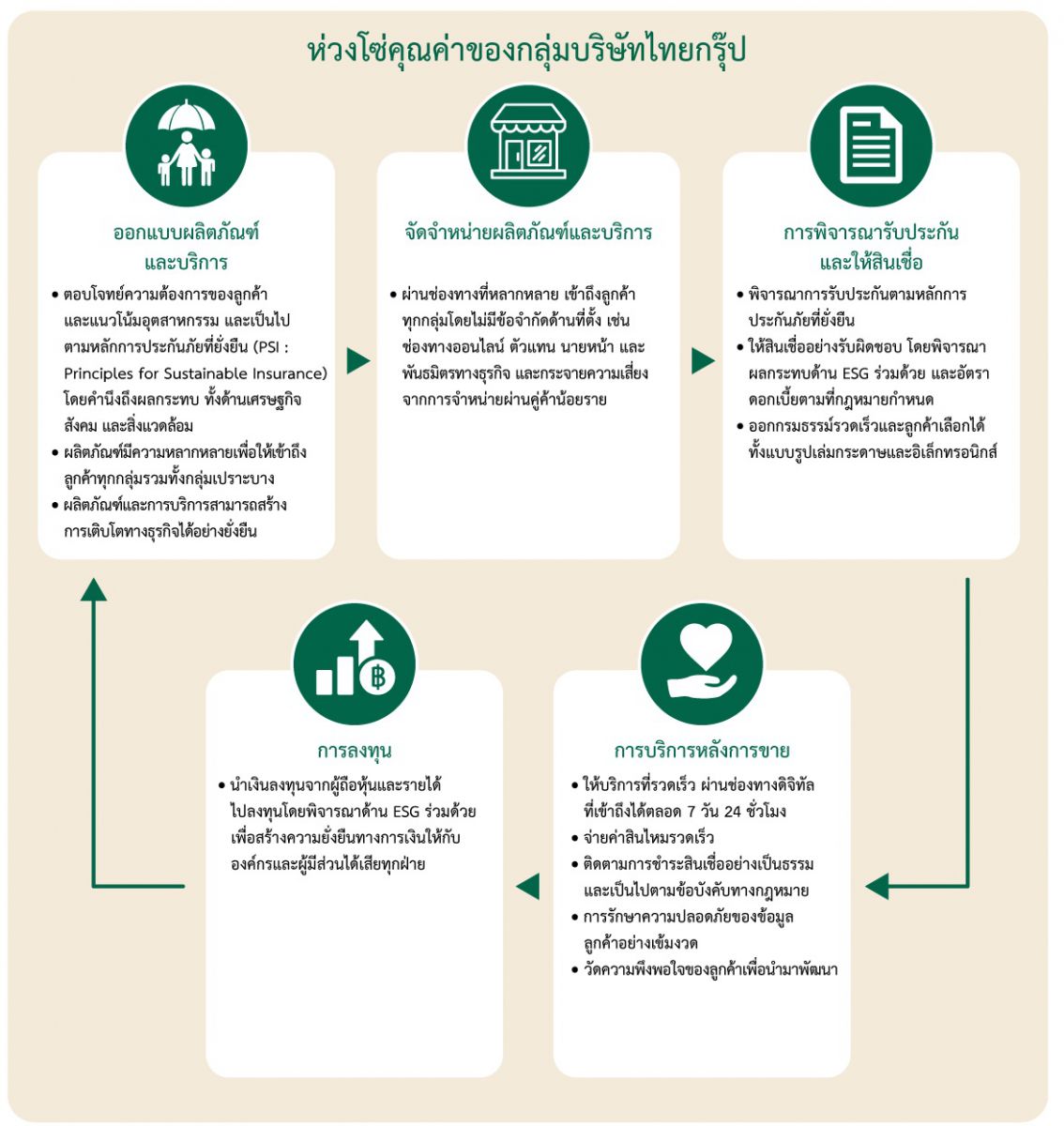
ห่วงโซ่คุณค่าของไทยกรุ๊ป โฮลดิ้งส์
ไทยกรุ๊ป โฮลดิ้งส์ประกอบด้วยธุรกิจหลัก คือ ธุรกิจประกันชีวิต ธุรกิจประกันภัย ธุรกิจรถเช่า และธุรกิจการเงิน ซึ่งเป็นธุรกิจบริการในอุตสาหกรรมประกันและการเงิน มีหลักการในการวางห่วงโซ่คุณค่าธุรกิจไม่ต่างกันมาก โดยสรุปสาระสำคัญของห่วงโซ่ธุรกิจภายในกลุ่มบริษัท มีดังนี้
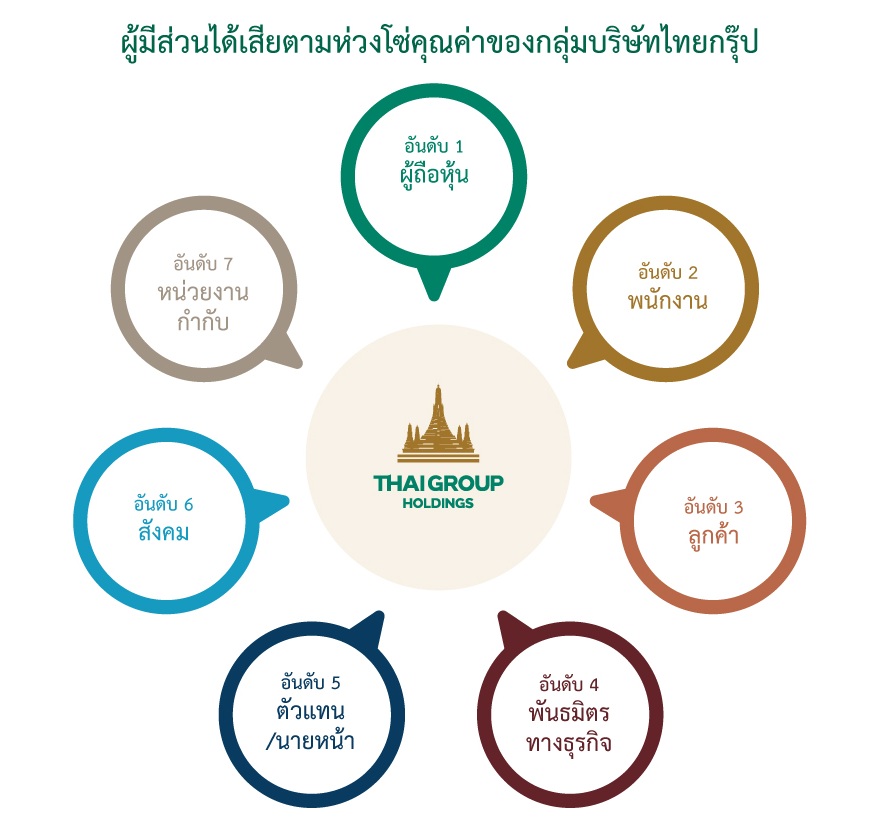
ผู้มีส่วนได้เสียตามห่วงโซ่คุณค่าของบริษัท
บริษัทได้มีการระบุและวิเคราะห์ผู้มีส่วนได้เสียเพื่อจัดลำดับความสำคัญโดยพิจารณาจาก
1. ระดับการมีส่วนร่วมในบริษัท และความเกี่ยวข้องในแต่ละกิจกรรมในห่วงโซ่คุณค่า
2. ผู้มีส่วนได้เสียที่ได้รับประโยชน์หรือผลกระทบจากบริษัท
3. ผู้ส่งมอบผลิตภัณฑ์และบริการของบริษัท
4. ผู้มีอิทธิพลต่อกิจกรรม ผลิตภัณฑ์ หรือบริการของบริษัท
5. ผู้มีความสนใจในผลิตภัณฑ์และบริการของบริษัท
แนวทางปฏิบัติและผลการดำเนินงานการสร้างการมีส่วนร่วมของผู้มีส่วนได้ส่วนเสีย ปี 2568
| ผู้มีส่วนได้เสีย | ช่องทางการสื่อสาร | ความคาดหวัง | การตอบสนองต่อความคาดหวัง | ผลการสร้างการมีส่วนร่วม |
|---|---|---|---|---|
| 1. ผู้ถือหุ้น | - เว็บไซต์ - อีเมล - จดหมาย - รายงานประจำปี - การประชุมผู้ถือหุ้น |
- การบริหารและการกำกับดูแลกิจการอย่างโปร่งใส - การเติบโตอย่างยั่งยืน - ความสามารถในการแข่งขันทางธุรกิจ - ได้รับผลตอบแทนในเกณฑ์ที่ดี - ความสามารถในการบริหารความเสี่ยงและภาวะวิกฤต |
- การกำกับดูแลกิจการที่ดี - การบริหารและพัฒนาธุรกิจให้มีการเติบโตอย่างยั่งยืน - การศึกษาและพัฒนาธุรกิจเพื่อเพิ่มโอกาสในการแข่งขันทางธุรกิจและสร้างผลกำไรอย่างเป็นธรรม - มีการปรับตัวให้ทันต่อการเปลี่ยนแปลงทางเทคโนโลยี - มีการวางแผนและทบทวนความเสี่ยงที่อาจเกิดขึ้นจากปัจจัยที่เกี่ยวข้องอย่างรอบด้าน - มีแผนรับมือและการจัดการภาวะวิกฤต |
- การจัดประชุมผู้ถือหุ้นตามวาระ และเปิดโอกาสให้ผู้ถือหุ้นแสดงความคิดเห็น
รวมถึงการเสนอวาระการประชุมและเสนอรายชื่อบุคคลเข้ารับการคัดเลือกเพื่อดำรงตำแหน่งกรรมการบริษัท
- การจัดทำรายงานประจำปีเพื่อนำเสนอผู้ถือหุ้นเพื่อทราบผลการดำเนินงาน |
| 2. พนักงาน | - อีเมล - อินทราเน็ต - E-Survey - งานประชุมพนักงาน - กิจกรรมพนักงาน - เว็บไซต์ - iVoice - กล่องรับความคิดเห็น - โปสเตอร์ |
- มีความก้าวหน้าในอาชีพ - ได้รับสวัสดิการและค่าตอบแทนที่เหมาะสม - ได้รับการปฏิบัติอย่างเท่าเทียม - มีความปลอดภัยในสถานที่ปฏิบัติงาน - มีความเคารพซึ่งกันและกัน - ได้รับเสรีภาพในการแสดงความคิดเห็น |
- การพัฒนาบุคลากรอย่างต่อเนื่อง เหมาะสมกับตำแหน่ง หน้าที่ และการเปลี่ยนแปลงในด้านต่าง ๆ
- การนำผลประเมินการทำงานมาเป็นเกณฑ์ในการพิจารณาสวัสดิการและค่าตอบแทน - มีการศึกษาจัดทำและสื่อสารนโยบายและแนวปฏิบัติด้านสิทธิมนุษยชนเพื่อให้พนักงานทุกคนรับทราบและปฏิบัติตามเพื่อสร้างวัฒนธรรมองค์กรที่ดีทั้งการปฏิบัติต่อเพื่อนร่วมงาน ลูกค้า และคนในสังคม - เปิดช่องทางรับฟังความคิดเห็นพนักงานผ่านช่องทางต่าง ๆ โดยไม่มีการเปิดเผยหรือให้โทษผู้ให้ข้อเสนอแนะหรือออกความเห็น รวมถึงการคุ้มครองพนักงานที่แจ้งเบาะแสการทุจริตและละเมิดจรรยาบรรณธุรกิจของบริษัท |
- การจัดกิจกรรม Townhall เพื่อสื่อสารเป้าหมาย กลยุทธ์
และทิศทางให้พนักงานทั้งองค์กรทราบทั้งในรูปแบบ Face to Face และออนไลน์
พร้อมเปิดโอกาสให้พนักงานได้แสดงความคิดเห็น และสอบถามประเด็นต่าง ๆ กับผู้บริหารระดับสูงโดยตรง
- การเปิดโอกาสให้เข้าร่วมกิจกรรมของบริษัทในวาระต่าง ๆ เช่น งานทำบุญครบรอบวันก่อตั้งบริษัท งานทำบุญประจำปี และกิจกรรมเทศกาลต่าง ๆ เป็นต้น - อิสระในการนำเสนอวิธีการดำเนินงาน และการแสดงความคิดเห็นในการพัฒนาบริษัท ผ่านช่างทาง iVoice การเข้าร่วมประกวดแผนพัฒนาการดำเนินงานในโครงการ Think Tank ฯลฯ - จัดช่องทางรับเรื่องร้องเรียน ต่าง ๆ เช่น การแจ้งเบาะแสการทุจริตคอร์รัปชัน การไม่ปฏิบัติตามจรรยาบรรณธุรกิจ ฯลฯ - การจัดอบรมพัฒนาศักยภาพพนักงาน โดยมีรายละเอียดปรากฏตามส่วนการดำเนินงานด้านทรัพยากรบุคคล - การปรับเพิ่มสวัสดิการและให้รางวัลประจำปีตามผลการประเมินการปฏิบัติงาน - การจัดทำ Engagement Survey ประจำปีเพื่อสำรวจความผูกพันของพนักงานที่มีต่อบริษัท พร้อมแสดงความคิดเห็นเพื่อการพัฒนาองค์กรและบริหารความผูกพัน |
| 3. ลูกค้า | - เว็บไซต์ - Line - อีเมล - จดหมาย - SMS - สาขาของบริษัทย่อย - ศูนย์ดูแลลูกค้า - ช่องทางรับเรื่องร้องเรียน |
- สินค้าที่ตรงความต้องการ - การบริการลูกค้าที่ดี เท่าเทียม รวดเร็ว - ชื่อเสียงและความมั่นคงของบริษัท - มีข้อมูลสินค้าและบริการที่ชัดเจน เข้าใจง่าย และจริงใจ - มีความมั่นคงปลอดภัยในการใช้เทคโนโลยีสารสนเทศและไซเบอร์ - มีความปลอดภัยในการเก็บรักษาและนำข้อมูลส่วนบุคคลไปใช้ - สามารถเข้าถึงการประกันและการเงินได้ - การให้ความคุ้มครองและผลประโยชน์ตามสัญญากรมธรรม์ - การคิดดอกเบี้ยที่เป็นธรรม |
- มีมาตรการด้านความปลอดภัยและการรักษาข้อมูลส่วนบุคคล - การพัฒนาและฝึกอบรมพนักงานด้านการบริการอย่างต่อเนื่อง - มีการวางแผนและทบทวนความเสี่ยงที่อาจเกิดขึ้นจากปัจจัยที่เกี่ยวข้องอย่างรอบด้าน - มีแผนรับมือและการจัดการภาวะวิกฤต - มีการสื่อสารให้ข้อมูลผลิตภัณฑ์และบริการที่ชัดเจน ไม่โฆษณาเกินจริงและไม่ทำให้เกิดความเข้าใจผิด - การพัฒนาผลิตภัณฑ์และบริการด้านประกันและการเงินเพื่อเปิดโอกาสให้ประชาชน แต่ละกลุ่มสามารถเข้าถึงได้ |
- หน่วยงานกำกับธุรกิจได้มีการตรวจสอบข้อความและการนำเสนอผลิตภัณฑ์ที่ไม่ขัดต่อ
ข้อห้ามและไม่เกินความเป็นจริงหรือก่อให้เกิดความเข้าใจผิด
ก่อนเผยแพร่โฆษณาผลิตภัณฑ์/บริการแต่ละรายการสู่ลูกค้า - SE Life อาคเนย์ประกันชีวิต หน่วยงานลูกค้าสถาบันได้มีการจัดอบรมให้ความรู้ด้านประกันและการเงินรวมถึงการบริหารความเสี่ยงให้กับลูกค้ารวม 6 ครั้ง - SE Life อาคเนย์ประกันชีวิต จัดกิจกรรม Exclusive Concert เพื่อตอบแทนความไว้วางใจและสร้างความผูกพันระหว่างลูกค้าและบริษัท นอกจากนี้ยังได้จัดกิจกรรมเพื่อส่งเสริมการสร้างความมั่นคงทางการเงินและการดูแลสุขภาพที่ดีแบบองค์รวมให้กับลูกค้าองค์กรต่าง ๆ 3 โครงการ - Indara อินทรประกันภัย หน่วยงานลูกค้าสถาบันได้จัดอบรมเสริมสร้างความรู้ด้านความเสี่ยง พร้อมวิธีรับมือ เช่น การประกันภัยก่อสร้าง ประกันภัยธุรกิจหยุดชะงัก รวม 4 โครงการ - บริษัทได้ปฏิบัติตาม พ.ร.บ.คุ้มครองข้อมูลส่วนบุคคลอย่างเคร่งครัด เพื่อรักษามาตรฐานการดูแลข้อมูลส่วนบุคคลของลูกค้าอย่างดีที่สุด เป็นผลให้บริษัทผ่านการรับรองมาตรฐาน ISO 27001 อย่างต่อเนื่อง - การสำรวจความพึงพอใจของลูกค้าต่อผลิตภัณฑ์และบริการของบริษัทประจำปี - พัฒนาระบบ iCEM เพื่อใช้บริหารจัดการการให้บริการลูกค้าที่มีเข้ามาผ่านช่องทาง ต่าง ๆ ของบริษัทให้เป็นไปอย่างมีประสิทธิภาพยิ่งขึ้น |
| 4. พันธมิตรทางธุรกิจ | - เว็บไซต์ - อีเมล - การประชุม - โทรศัพท์ - Sale Platform - จดหมาย - พนักงานของบริษัท |
- ข้อมูลสินค้าและบริการที่ชัดเจน - ผลตอบแทนที่เหมาะสม - การจ่ายค่าตอบแทนที่ตรงเวลา - สินค้าเป็นที่ต้องการของตลาด - ชื่อเสียงของบริษัท - การบริการลูกค้า - มีบรรษัทภิบาลที่ดีและโปร่งใส - การบริหารความเสี่ยงที่ดี - มีนวัตกรรมและเทคโนโลยีที่สะดวกในการใช้งานและปลอดภัย |
- มีการสื่อสารให้ข้อมูลผลิตภัณฑ์และบริการที่ชัดเจน
ไม่โฆษณาเกินจริงและไม่ทำให้เกิดความเข้าใจผิด - มีการตกลงจำนวนค่าตอบแทนและผลประโยชน์ รวมถึงกำหนดรอบการจ่ายอย่างชัดเจน - การพัฒนาผลิตภัณฑ์และบริการด้านประกันและการเงินเพื่อเปิดโอกาสให้ประชาชน แต่ละกลุ่มสามารถเข้าถึงได้ - การพัฒนาและฝึกอบรมพนักงานด้านการบริการอย่างต่อเนื่อง - มีแผนรับมือและการจัดการภาวะวิกฤต - มีการวางแผนและทบทวนความเสี่ยงที่อาจเกิดขึ้นจากปัจจัยที่เกี่ยวข้องอย่างรอบด้าน - การดูแลกำกับกิจการตามหลัก ธรรมาภิบาลที่ดี - มีการปรับตัวให้ทันต่อการเปลี่ยนแปลงทางเทคโนโลยี |
- จับมือพันธมิตรใหม่กับธนาคารแห่งประเทศจีน และบริษัท เมอร์เซเดส-เบนซ์ โมบิลิตี้
(ประเทศไทย) จำกัด เพื่อสร้างความแข็งแกร่งให้กับธุรกิจของทั้งสองฝ่าย - รักษาความสัมพันธ์กับพันธมิตรเก่าอย่างต่อเนื่อง เช่น AIS SCB ธนาคารอาคารสงเคราะห์ (ธอส.) ธนาคารเพื่อการเกษตรและสหกรณ์การเกษตร (ธ.ก.ส.) Toyota Isuzu MG ฯลฯ - ให้การสนับสนุนการดำเนินงานหรือกิจกรรมต่าง ๆ เพื่อส่งเสริมการมีสุขภาพที่ดี เช่น การแข่งขันมาราธอน CBD We Run งานวิ่งเฉลิมพระเกียรติวันแม่แห่งชาติ 12 สิงหาคม 2567 - การส่งจดหมายเชิญพันธมิตรทางธุรกิจเข้าร่วมเป็นสมาชิกต่อต้านการทุจริตคอร์รัปชันของภาคเอกชนไทย |
| 5. ตัวแทน/นายหน้า | - เว็บไซต์ - อีเมล - การประชุม - โทรศัพท์ - Sale Platform - จดหมาย - สาขาของบริษัทย่อย - พนักงานของบริษัท - การอบรมสัมมนา |
- ข้อมูลสินค้าและบริการที่ชัดเจน - ผลตอบแทนที่เหมาะสม - การจ่ายค่าตอบแทนที่ตรงเวลา - สินค้าเป็นที่ต้องการของตลาด - ชื่อเสียงของบริษัท - การบริการลูกค้า - มีการบริหารความเสี่ยงที่ดี - มีนวัตกรรมและเทคโนโลยีที่สะดวกในการใช้งานและปลอดภัย |
- มีการสื่อสารให้ข้อมูลผลิตภัณฑ์และบริการที่ชัดเจน
ไม่โฆษณาเกินจริงและไม่ทำให้เกิดความเข้าใจผิด - มีการตกลงจำนวนค่าตอบแทนและผลประโยชน์ รวมถึงกำหนดรอบการจ่ายอย่างชัดเจน - การพัฒนาผลิตภัณฑ์และบริการด้านประกันและการเงินเพื่อเปิดโอกาสให้ประชาชนแต่ละกลุ่มสามารถเข้าถึงได้ - การพัฒนาและฝึกอบรมพนักงานด้านการบริการอย่างต่อเนื่อง - มีแผนรับมือและการจัดการภาวะวิกฤต - มีการวางแผนและทบทวนความเสี่ยงที่อาจเกิดขึ้นจากปัจจัยที่เกี่ยวข้องอย่างรอบด้าน - การกำกับดูแลกิจการตามหลัก ธรรมาภิบาลที่ดี - มีการปรับตัวให้ทันต่อการเปลี่ยนแปลงทางเทคโนโลยี |
- บริษัทมีการพัฒนาและฝึกอบรมตัวแทนและนายหน้าด้านผลิตภัณฑ์ การบริการ และข้อกำหนดต่าง ๆ
อย่างต่อเนื่องโดยมีรายละเอียดปรากฏตามผลการดำเนินงานการส่งเสริมการเข้าถึงการประกันและการเงิน
และผลการพัฒนาฝึกอบรมพนักงานในส่วนของผลการดำเนินงานด้านการบริหารทรัพยากรบุคคล - บริษัทมีการจัดแคมเปญกระตุ้นการสร้างผลงานอย่างต่อเนื่อง เช่น รางวัลทริปท่องเที่ยว รางวัล Incentive Bonus และรางวัลประจำปี เป็นต้น - การพัฒนาแพลตฟอร์มออนไลน์เพื่อให้ตัวแทนและนายหน้าสามารถใช้เพื่อให้บริการแก่ลูกค้าได้อย่างรวดเร็วและมีประสิทธิภาพ |
| 6. สังคม | - เว็บไซต์ - ข่าวประชาสัมพันธ์ - กิจกรรมเพื่อสังคม - Line |
- การเข้าถึงผลิตภัณฑ์และบริการด้านประกันและการเงิน - การส่งมอบประโยชน์ต่อสังคม - การดูแลรักษาสิ่งแวดล้อม |
-
การพัฒนาผลิตภัณฑ์และบริการด้านประกันและการเงินเพื่อเปิดโอกาสให้ประชาชนแต่ละกลุ่มสามารถเข้าถึงได้
- การดำเนินกิจกรรมเพื่อสังคม - การดำเนินการด้านสิ่งแวดล้อมในกระบวนการดำเนินธุรกิจ |
- บริษัทมีการออกผลิตภัณฑ์ที่ลูกค้าทุกกลุ่มสามารถเข้าถึงได้ เช่น Indara อินทรประกันภัยออก
Micro Insurance ที่มีเบี้ยต่ำกว่า 200 บาท อาคเนย์ มันนี่
ออกสินเชื่อเกษตรกรให้กับเกษตรกรชาวไร่อ้อย และสินเชื่อเพื่อธุรกิจ Solar Rooftop
โดยมีรายละเอียดปรากฏตาม ผลการดำเนินงานในหัวข้อการส่งเสริมการเข้าถึงการประกันและการเงิน - การจัดกิจกรรม Wealth & Well-being Day เพื่อให้ความรู้ด้านการบริหารจัดการเพื่อความมั่นคงทางการเงิน โดยมีผู้สนใจเข้าร่วมกว่า 200 คน ณ ศูนย์การประชุมแห่งชาติสิริกิติ์ - กิจกรรมกายใจยั่งยืน ด้วยวิถีแห่งพลังชีวิต เพื่อให้ความรู้ด้านการดูแลสุขภาพทางเลือก โดยมีผู้สนใจเข้าร่วมกว่า 200 คน ณ ศูนย์การประชุมแห่งชาติสิริกิติ์ |
| 7. หน่วยงานกำกับ | - การประชุมรับฟังนโยบายและข้อกำหนดของหน่วยงานกำกับ - จดหมายชี้แจง - รายงานประจำปี - การติดต่อประสานงาน |
- การดำเนินธุรกิจตามกฎหมายและข้อกำหนดของหน่วยงานกำกับ - การเข้าถึงผลิตภัณฑ์และบริการด้านประกันและการเงินของสังคม - การพัฒนาธุรกิจอย่างยั่งยืน |
- การกำกับดูแลกิจการตามหลักธรรมาภิบาลที่ดี - การดำเนินธุรกิจภายใต้กฎหมาย และข้อกำหนด - การพัฒนาผลิตภัณฑ์และบริการด้านประกันและการเงินเพื่อเปิดโอกาสให้ประชาชนแต่ละกลุ่มสามารถเข้าถึงได้ |
-
ได้ปฏิบัติตามนโยบายและข้อกำหนดของสำนักงานคณะกรรมการกำกับและส่งเสริมการประกอบธุรกิจประกันภัย
(คปภ.) สำนักงานคณะกรรมการกำกับหลักทรัพย์และตลาดหลักทรัพย์ (ก.ล.ต.)
สำนักงานป้องกันและปราบปรามการฟอกเงิน (ปปง.) และธนาคารแห่งประเทศไทยอย่างเคร่งครัด
และให้ความร่วมมือในกิจกรรมต่าง ๆ เช่น งานครบรอบการก่อตั้ง ฯลฯ - ส่งพนักงานเข้าร่วมกิจกรรมและการอบรมที่ คปภ. และสมาคมประกันชีวิตไทยและประกันวินาศภัยไทยจัด เช่น การซ้อมแผนรับมือภัยคุกคามทางไซเบอร์ การสัมมนา “Climate Risk Management For Life Indarars” งานถวายผ้าพระกฐินพระราชทานฯลฯ |
ประเด็นสำคัญด้านความยั่งยืน
การกำหนดประเด็นด้านความยั่งยืน
บริษัทมีกระบวนการในการกำหนดและการจัดลำดับประเด็นสำคัญด้านความยั่งยืน ดังนี้
1. ศึกษาและวิเคราะห์ ปัจจัยความเสี่ยงที่มีผลกระทบต่อการดำเนินธุรกิจของบริษัท อาทิ
ดัชนีชี้วัดจากตลาดหลักทรัพย์แห่งประเทศไทย ประเด็นความยั่งยืนจากบริษัทอื่น ๆ ในอุตสาหกรรมเดียวกัน
แนวโน้มของอุตสาหกรรมในระดับสากล ฯลฯ
เพื่อนำมาระบุตัวตั้งต้นของประเด็นความสำคัญด้านความยั่งยืนของบริษัทครอบคลุมทั้ง 3 มิติ ได้แก่
เศรษฐกิจ สังคม และสิ่งแวดล้อม
2. จัดลำดับประเด็นความยั่งยืน โดยประเมินจากความสำคัญที่มีผลกระทบต่อบริษัท
และพิจารณาข้อมูลที่ได้จากการดำเนินกิจกรรม
สร้างการมีส่วนร่วมกับผู้มีส่วนได้เสียของบริษัททั้งภายในและภายนอก แล้วนำมาจัดลำดับในรูปแบบ
Materiality Matrix เพื่อให้ทราบถึงระดับความสำคัญทั้งในส่วนของประเด็นที่มีความสำคัญต่อบริษัท
และประเด็นที่มีความสำคัญต่อผู้มีส่วนได้เสีย
3. การทวนสอบความถูกต้องและครบถ้วน โดยนำผลการจัดลำดับประเด็นความยั่งยืนนำเสนอต่อผู้บริหารระดับสูง
เพื่อพิจารณาความครบถ้วน ถูกต้อง และให้ความคิดเห็น
เพื่อปรับปรุงและเผยแพร่ผ่านช่องทางสื่อสารของบริษัทต่อไป
4. พัฒนาการรายงานด้านความยั่งยืน
บริษัทจะมีการทบทวนเนื้อหาสำคัญในรายงานด้านความยั่งยืนรวมถึงกระบวนการจัดทำรายงานความยั่งยืนในทุกปี
รวมทั้งเปิดรับความคิดเห็นจากผู้มีส่วนได้เสียเพื่อพัฒนารายงานความยั่งยืนในฉบับต่อ ๆ ไป
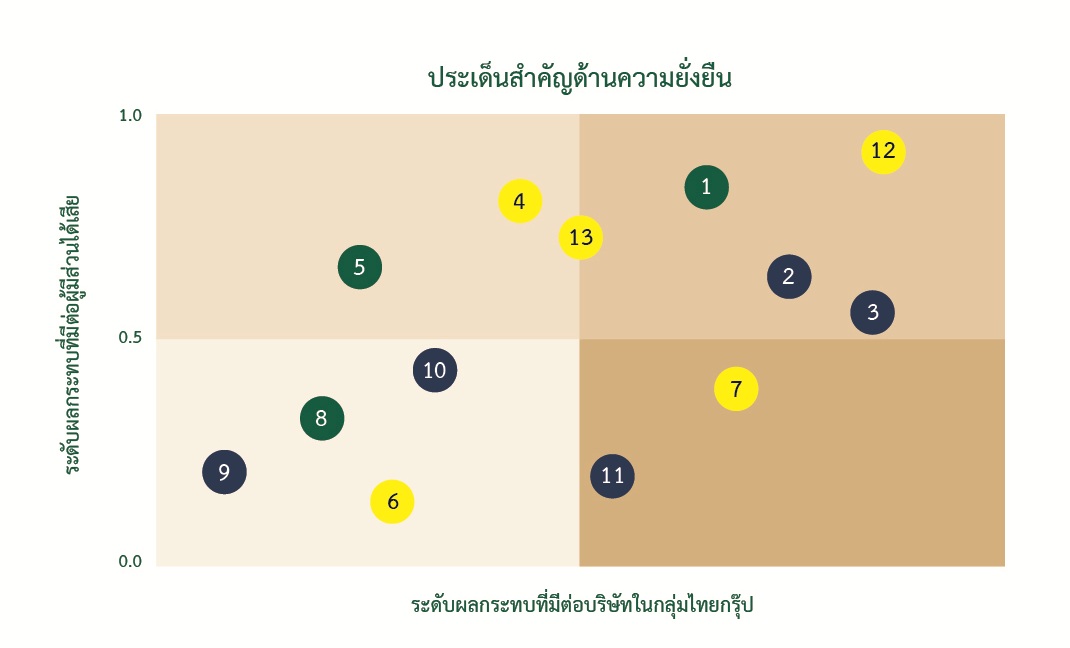
- 1. ผลิตภัณฑ์เพื่อสิ่งแวดล้อมและลดการปล่อยคาร์บอน
- 2. การพัฒนาบุคลากร
- 3. การสร้างการเข้าถึงประกันและการเงิน
- 4. การเงินที่ยั่งยืน
- 5. ผลิตภัณฑ์ที่รับผิดชอบ
- 6. การจัดการห่วงโซ่อุปทาน
- 7. นวัตกรรม
- 8. การจัดการด้านสิ่งแวดล้อม
- 9. อาชีวอนามัยและความปลอดภัยในการทำงาน
- 10. การพัฒนาชุมชน
- 11. การบริหารจัดการความสัมพันธ์ลูกค้า
- 12. การกำกับดูแลกิจการที่ดี
- 13. ความปลอดภัยทางเทคโนโลยีและการรักษาข้อมูล
กรอบการดำเนินงานและกลยุทธ์ด้านความยั่งยืน
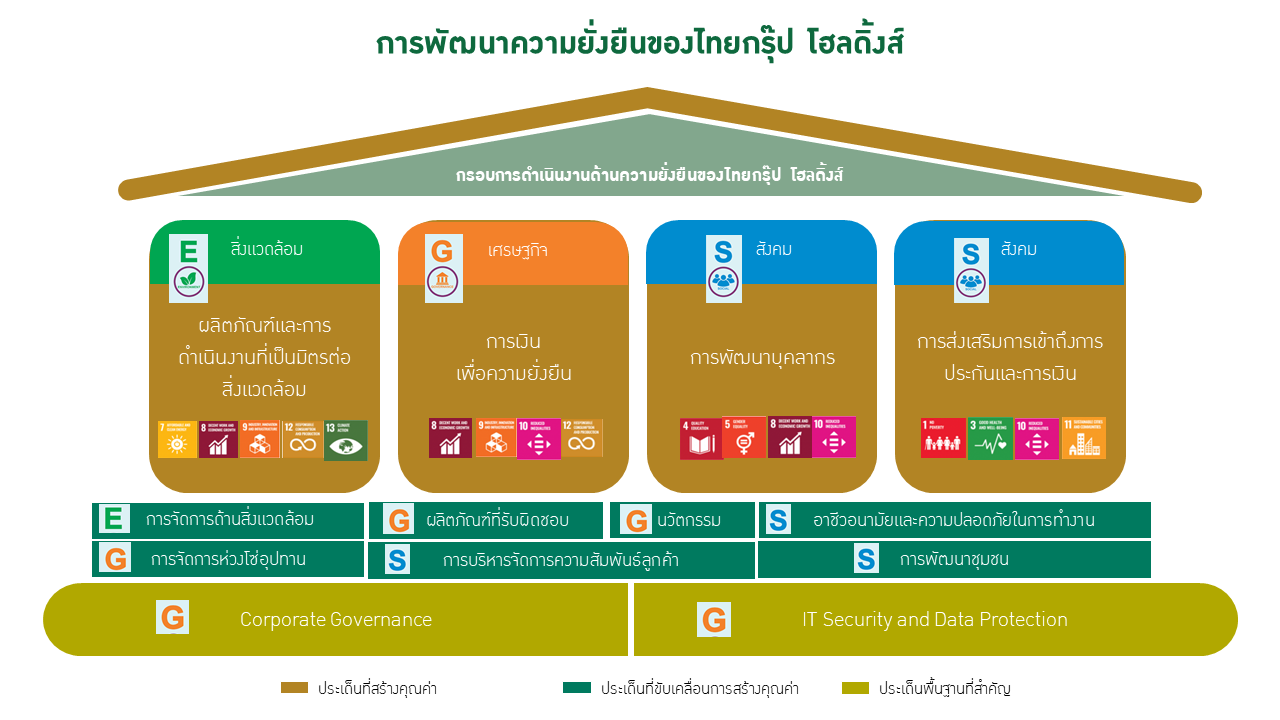
กลยุทธ์การดำเนินงานด้านความยั่งยืน

ด้านสิ่งแวดล้อม
สร้างนวัตกรรมผลิตภัณฑ์และกระบวนการดำเนินงานคาร์บอนต่ำที่สร้างมูลค่าทางธุรกิจ เพิ่มประสิทธิภาพเพื่อลดการใช้ทรัพยากรธรรมชาติ ตอบสนองความต้องการของลูกค้า สอดคล้องกับเป้าหมายด้านสภาพภูมิอากาศและการลดคาร์บอนของบริษัท

ด้านสังคม
ดึงดูด พัฒนาเพิ่มทักษะและรักษาพนักงาน ให้เติบโตไปพร้อมกับบริษัท สร้างวัฒนธรรมแห่งความหลากหลาย ความเสมอภาค การยึดมั่นในสิทธิมนุษยชน การปฏิบัติด้านแรงงานที่เป็นธรรม ส่งเสริมการเข้าถึงการประกันภัยให้คนในสังคม เพื่อนำไปสู่การปรับปรุงคุณภาพชีวิต การดูแลสุขภาพ และความคุ้มครองในกลุ่มผู้ด้อยโอกาส เพิ่มความรู้ทางการเงินและโปรแกรมการวางแผนเกษียณอายุสำหรับพนักงาน ลูกค้า และสังคมในวงกว้าง

ด้านบรรษัทภิบาลและเศรษฐกิจ
บูรณาการเกณฑ์ ESG เข้ากับกระบวนการและนโยบายการตัดสินใจทางการเงิน รวมถึงการลงทุน การเงิน การให้กู้ยืม การประกันภัย และการบริหารสินทรัพย์ ครอบคลุมการประเมินสินเชื่อและการให้บริการทางการเงินที่มีความรับผิดชอบต่อสังคมและสิ่งแวดล้อม ตลอดจนการส่งเสริมการลงทุนที่เกี่ยวข้องกับ ESG และป้องกันการลงทุนในโครงการที่ส่งผลเสียต่อสิ่งแวดล้อมและชุมชนท้องถิ่น
เป้าหมายและผลการดำเนินงาน: มิติเศรษฐกิจและบรรษัทภิบาล
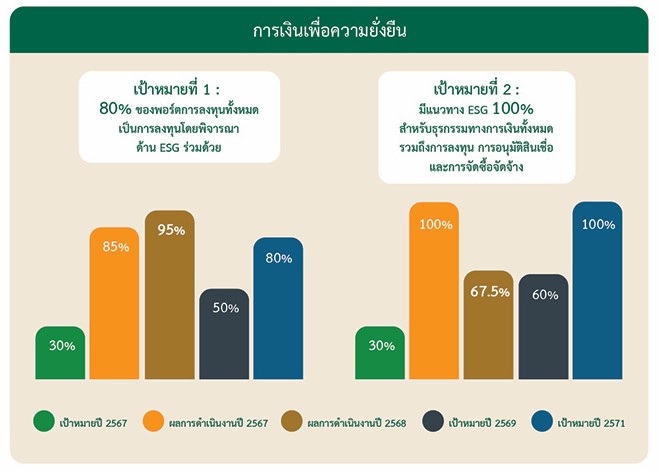
ประเด็นความยั่งยืนที่ 4 การเงินเพื่อความยั่งยืน
| เป้าหมายปี 2571 | เป้าหมายปี 2569 | ผลการดำเนินงานปี 2568 |
|---|---|---|
| 80% ของพอร์ตการลงทุนทั้งหมดเป็นการลงทุนโดยพิจารณาด้าน ESG ร่วมด้วย | 50% | 95% ของสินทรัพย์ลงทุนในปัจจุบันมีเกณฑ์ในการพิจารณาเรื่อง ESG สำหรับการตัดสินใจลงทุนแล้ว |
| มีแนวทาง ESG 100% สําหรับธุรกรรมทางการเงินทั้งหมด รวมถึงการลงทุน การอนุมัติสินเชื่อ และการจัดซื้อจัดจ้าง | 60% | บริษัทมีการพิจารณาสินเชื่อโดยคำนึงถึงความสามารถในการชำระหนี้ของลูกค้าทุกราย หรือ 100%
เพื่อลดปัญหาการสร้างหนี้ครัวเรือนที่เกินความสามารถของลูกค้าซึ่งจะส่งผลกระทบด้านอื่น ๆ
ของลูกค้า และลดโอกาสการเกิดหนี้เสียให้กับบริษัท และในปี 2568 การจัดซื้อจัดจ้างมีการประเมินด้าน ESG ในการพิจารณาคัดเลือก Supplier/Vendor รายใหม่ และรายปัจจุบัน คิดเป็น 35% ของคู่ค้านิติบุคคลทั้งหมด |
บริษัทยึดมั่นการปฏิบัติตามโยบายการกำกับดูแลกิจการที่ดีอย่างเคร่งครัด
ครอบคลุมหลักปฏิบัติตามหลักการกำกับดููแลกิจการ (Corporate Governance) ทั้ง 8 หลัก ได้แก่
(1) บทบาทและความรับผิดชอบของคณะกรรมการ
(2) กำหนดวัตถุุประสงค์และเป้าหมายหลักของบริษัทที่เป็นไปเพื่อความยั่งยืน
(3) เสริมสร้างคณะกรรมการที่มีประสิทธิผล
(4) สรรหาและพัฒนาผู้บริหารระดับสูงและการบริหารบุคลากร
(5) การประกอบธุรกิจอย่างมีความรับผิดชอบ
(6) ดููแลให้มีระบบการบริหารความเสี่ยงและการควบคุมภายในที่เหมาะสม
(7) รักษาความน่าเชื่อถือทางการเงินและการเปิดเผยข้อมูล
(8) สนับสนุนการมีส่วนร่วมและการสื่อสารกับผู้ถือหุ้น รวมถึงได้ออกนโยบายอื่น ๆ
ที่ครอบคลุมและสอดคล้องกับการกำกับดูแลกิจการที่ดี
และสื่อสารให้พนักงานได้รับทราบถึงนโยบายและจรรยาบรรณในการดำเนินธุรกิจของบริษัทเพื่อยึดถือเป็นหลักปฏิบัติ
กลยุทธ์การบริหารความเสี่ยง
บริษัทได้บูรณาการการบริหารความเสี่ยงเข้ากับกลยุทธ์และการดำเนินงานทางธุรกิจ เพื่อสนับสนุนการเติบโตอย่างยั่งยืนและความยืดหยุ่นในการรับมือกับความเปลี่ยนแปลง ภายใต้นโยบายการบริหารความเสี่ยง บริษัทฯ ได้นำแนวคิดการบริหารความเสี่ยงองค์กร (Enterprise Risk Management - ERM) มาปรับใช้โดยอ้างอิงตามกรอบการดำเนินงานของ COSO และแนวปฏิบัติที่ดีในระดับสากล TGH ทำการระบุ ประเมิน ติดตาม และจัดการความเสี่ยง ทั้งในด้านกลยุทธ์ การดำเนินงาน การเงิน ด้านอื่นๆ ที่ไม่ใช่ตัวเงิน และชื่อเสียง ผ่านกรอบการกำกับดูแลที่มีโครงสร้างชัดเจน รวมถึงการใช้โมเดล Three Lines of Defense นอกจากนี้ยังมีการทบทวนระดับความเสี่ยงที่ยอมรับได้ (Risk appetite) และระดับความเบี่ยงเบนที่ยอมรับได้ (Risk tolerance) อย่างสม่ำเสมอ เพื่อให้มั่นใจว่าสอดคล้องกับวัตถุประสงค์ของบริษัทฯ ข้อกำหนดด้านกฎเกณฑ์ต่างๆ และภูมิทัศน์ความเสี่ยงที่เปลี่ยนแปลงไป
บริษัทและบริษัทย่อยได้กำหนดแนวทางในการดูแลผู้มีส่วนได้เสียไว้ในจรรยาบรรณในการดำเนินธุรกิจ โดยคำนึงถึงความรับผิดชอบต่อผู้มีส่วนได้เสีย ตั้งแต่ผู้ถือหุ้น พนักงาน ลูกค้า คู่ค้า คู่สัญญา ชุมชน สังคม และสิ่งแวดล้อม ทั้งยังส่งเสริมการแข่งขันทางการค้าอย่างเสรีและเป็นธรรม หลีกเลี่ยงการดำเนินการที่อาจก่อให้เกิดความขัดแย้งทางผลประโยชน์และเมิดทรัพย์สินทางปัญญารวมถึงการต่อต้านการทุจริตทุกรูปแบบ
องค์ประกอบของคณะกรรมการ
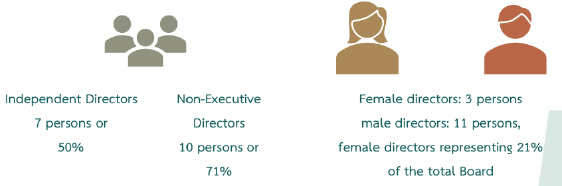
คณะกรรมการบริษัทจะประกอบด้วยกรรมการอย่างน้อย 5 คนเพื่อดำเนินธุรกิจของบริษัท โดยไม่น้อยกว่าครึ่งหนึ่งต้องมีถิ่นพำนักอยู่ในประเทศ นอกจากนี้ จะต้องมีกรรมการอิสระอย่างน้อย 1 ใน 3 ของจำนวนกรรมการทั้งหมด และต้องมีกรรมการอิสระอย่างน้อย 3 คน (ตามที่ระบุไว้ในกฎบัตรคณะกรรมการ) ทั้งนี้ TGH มุ่งมั่นที่จะสนับสนุนความหลากหลายทางเพศในคณะกรรมการ โดยไม่มีการเลือกปฏิบัติหรือจำกัดเรื่องเชื้อชาติ ชาติพันธุ์ สัญชาติ ศาสนา เพศ หรือภูมิหลัง ทุกคนจะได้รับการปฏิบัติ ได้รับการเป็นตัวแทน และได้รับการประเมินอย่างเท่าเทียม เพื่อให้มั่นใจว่าจะได้รับโอกาสที่เท่าเทียมและมีสิทธิออกเสียงอย่างเท่าเทียมกัน
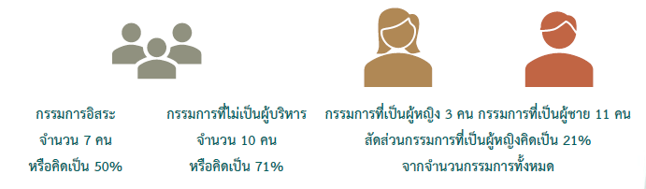
บริษัทฯ ตั้งเป้าหมายสัดส่วนความหลากหลายทางเพศของคณะกรรมการบริษัทให้มีกรรมการที่เป็นผู้หญิง ร้อยละ 35
จรรยาบรรณธุรกิจ
บริษัท เครือไทย โฮลดิ้งส์ จำกัด (มหาชน) มุ่งมั่นที่จะสร้างความมั่นใจว่าพนักงานทุกคนรับทราบ เข้าถึง และเข้าใจนโยบายด้านการกำกับดูแลกิจการ เช่น นโยบายต่อต้านการให้และรับสินบนและการทุจริต จรรยาบรรณทางธุรกิจสำหรับพนักงานและคู่ค้า มาตรฐานแรงงาน รวมถึงนโยบายการบริหารทรัพยากรบุคคล นโยบายการแจ้งเบาะแส และนโยบายสิทธิมนุษยชนที่พนักงานพึงได้รับ โดยนโยบายเหล่านี้จะถูกแจกจ่ายให้กับพนักงาน ผู้บริหาร คู่ค้า และกรรมการบริษัททุกคนในระหว่างขั้นตอนการปฐมนิเทศ ทั้งนี้ มีเวอร์ชันดิจิทัล (ทั้งภาษาไทยและภาษาอังกฤษ) พร้อมให้บริการตลอดเวลาบนระบบพอร์ทัลภายในสำหรับพนักงานของ TGH และบนเว็บไซต์ของบริษัท โดยสามารถเข้าดูนโยบายทั้งหมดได้ที่ https://www.tgh.co.th/corporate-governance/policy
บริษัทได้กำหนดมาตรการทบทวนความเหมาะสมและประสิทธิภาพของจรรยาบรรณเป็นประจำทุกปี และมอบหมายให้ฝ่ายตรวจสอบภายในทำการสุ่มตรวจการปฏิบัติตามกฎเกณฑ์อย่างน้อยปีละหนึ่งครั้ง นอกจากนี้ ข้อมูลที่ได้รับผ่านช่องทางการแจ้งเบาะแสหรือจากผู้มีส่วนได้ส่วนเสียจะได้รับการประเมิน เพื่อนำมาปรับปรุงจรรยาบรรณให้ทันสมัยหากจำเป็น ในกรณีที่มีการฝ่าฝืนจรรยาบรรณ บริษัทได้กำหนดมาตรการทางวินัยตามความรุนแรงของปัญหา ซึ่งรวมถึงการตักเตือนด้วยวาจาหรือลายลักษณ์อักษร และการเลิกจ้าง สำหรับคู่ค้าทางธุรกิจ บริษัทกำหนดให้คู่ค้าต้องทำแบบประเมินตนเองเพื่อยืนยันการปฏิบัติตามจรรยาบรรณคู่ค้า (Supplier Code of Conduct) และหน่วยงานที่เกี่ยวข้องอาจดำเนินการสุ่มตรวจการดำเนินงานของคู่ค้าเพิ่มเติมได้
การสื่อสารจรรยาบรรณธุรกิจสำหรับคู่ค้า
บริษัท ไทยกรุ๊ป โฮลดิ้งส์ จํากัด (มหาชน) มีความมุ่งมั่นในการดําเนินธุรกิจตามหลัก ธรรมาภิบาล ความโปร่งใส ความซื่อตรง และความรับผิดชอบต่อสังคม สิ่งแวดล้อม และผู้มีส่วนได้เสีย ทุกภาคส่วน บริษัทตระหนักว่าคู่ค้าเป็นส่วนสําคัญในห่วงโซ่คุณค่า (Value Chain) และมีบทบาทสําคัญต่อ ความยั่งยืนขององค์กร บริษัทจึงได้จัดทํา “จรรยาบรรณธุรกิจสําหรับคู่ค้า (Supplier Code of Conduct)” เพื่อกําหนดกรอบแนวทางปฏิบัติในการดําเนินธุรกิจของคู่ค้าให้สอดคล้อง กับมาตรฐานสากล กฎหมาย ที่เกี่ยวข้องกับธุรกิจ โดยคํานึงถึงสิ่งแวดล้อม สังคม และบรรษัทภิบาล (Environment, Social and Governance: ESG) รวมถึงหลักจริยธรรม มาตรฐานแรงงาน สิทธิมนุษยชน สุขภาพและความปลอดภัย และการต่อต้านการทุจริต โดยแนวทางปฏิบัตินี้ จะถูกแจ้งให้คู่ค้าและพันธมิตรทางธุรกิจทุกรายทราบ ซึ่งถือเป็นส่วนหนึ่งของกระบวนการทำสัญญาข้อตกลง เพื่อสร้างความมั่นคงและการพัฒนาธุรกิจอย่างยั่งยืนไปด้วยกัน จรรยาบรรณดังกล่าวจะถูกสื่อสารไปยังผู้จัดหาและคู่ค้าทางธุรกิจทุกฝ่ายในกระบวนการทำสัญญา โดยผู้จัดหาจะต้องรับทราบและปฏิบัติตามจรรยาบรรณนี้เป็นเงื่อนไขในการร่วมงานกับบริษัท ไทยกรุ๊ป โฮลดิ้งส์ จำกัด (มหาชน) ซึ่งบริษัทได้เผยแพร่เอกสารจรรยาบรรณธุรกิจสำหรับคู่ค้าทั้งภาษาไทยและภาษาอังกฤษบนเว็บไซต์ของบริษัท ที่สามารถเข้าถึงได้ทุกคน โดยสามารถดาวน์โหลดได้ที่ Supplier Code of Conduct
เสรีภาพในการสมาคมและการเจรจาต่อรองร่วม
คู่ค้าทางธุรกิจจะต้องเคารพและปฏิบัติตามกฎหมายที่เกี่ยวข้องกับเสรีภาพในการสมาคมและการเจรจาต่อรองร่วมของพนักงาน โดยพนักงานทุกคนมีสิทธิที่จะเข้าร่วมในการเจรจาต่อรองร่วมได้ โดยปราศจากการถูกตอบโต้หรือลงโทษในทุกรูปแบบ
การปฏิบัติตามกฎระเบียบด้านเวลาการทำงาน
คู่ค้าทางธุรกิจจะต้องปฏิบัติตามกฎหมายที่บังคับใช้ทั้งหมดที่เกี่ยวข้องกับเวลาการทำงานและการล่วงเวลา โดยพนักงานจะต้องได้รับค่าจ้างอย่างเป็นธรรมตามที่ระบุไว้ในสัญญา ทั้งนี้ บริษัทสนับสนุนให้ซัพพลายเออร์บริหารจัดการและลดการเกิดปัญหาการทำงานล่วงเวลาที่มากเกินไปอย่างจริงจัง
การให้ความช่วยเหลือทางการเมืองหรือการสนับสนุนพรรคการเมือง
บริษัท ไทยกรุ๊ป โฮลดิงส์ จำกัด (มหาชน) ดำเนินธุรกิจด้วยความเป็นกลางทางการเมือง ไม่มีนโยบายให้การช่วยเหลือทางการเมือง หรือสนับสนุนพรรคการเมือง หรือกระทำการอันเป็นการฝักใฝ่พรรคการเมือง หรือกลุ่มการเมืองใด ๆ หรือผู้มีอำนาจทางการเมืองคนใด และบริษัทไม่นำเงินทุนหรือทรัพยากรใด ๆ ของบริษัทไปใช้เพื่อสนับสนุนพรรคการเมืองหรือนักการเมือง หรือผู้มีอำนาจทางการเมืองไม่ว่าทางตรงหรือทางอ้อมทั้งสิ้น ตลอดจนห้ามมิให้กรรมการ ผู้บริหาร และพนักงานของบริษัทและบริษัทในกลุ่มไทยกรุ๊ป ใช้อำนาจหน้าที่เพื่อชี้ชวน กดดัน หรือบังคับให้เพื่อนร่วมงาน รวมถึงผู้ใต้บังคับบัญชาให้การสนับสนุนกิจการใดๆ ทางการเมือง หากมีข้อกังวลหรือข้อสงสัยเกี่ยวกับการมีส่วนเกี่ยวข้องทางการเมือง ควรรายงานผ่านช่องทางแจ้งเบาะแสบนเว็บไซต์ของบริษัท หรือโดยการคลิกที่ https://www.tgh.co.th/ztc
จำนวนเงินบริจาคพรรคการเมือง ในปี 2568 = 0 บาท
.png)
การเปิดเผยข้อมูลด้านวินัย
ในปี 2568 บริษัทไม่มีเรื่องร้องเรียนการละเมิดนโยบายต่อต้านการให้สินบนและทุจริตคอร์รัปชัน จึงไม่มีพนักงานถูกดำเนินการทางวินัยหรือถูกเลิกจ้าง และไม่มีการจ่ายค่าปรับหรือการชำระค่าเสียหายใด ๆ ผลการดำเนินงานนี้สะท้อนถึงความพยายามอย่างต่อเนื่องของบริษัทในการปฏิบัติตามจรรยาบรรณ และการประเมินรวมถึงการปรับปรุงนโยบายให้เหมาะสมกับสภาพแวดล้อมทางธุรกิจอย่างต่อเนื่อง
| ตัวชี้วัด | 2568
(ปีที่รายงาน) |
|---|---|
| จำนวนพนักงานที่ถูกดำเนินการทางวินัยเนื่องจากไม่ปฏิบัติตามนโยบายต่อต้านการให้สินบนและทุจริตคอร์รัปชัน | 0 ราย |
| จำนวนพนักงานที่ถูกเลิกจ้างเนื่องจากไม่ปฏิบัติตามนโยบายต่อต้านการให้สินบนและทุจริตคอร์รัปชัน | 0 ราย |
| จำนวนค่าปรับ โทษ หรือการชำระค่าเสียหายที่เกิดจากการไม่ปฏิบัติตามนโยบายต่อต้านการให้สินบนและทุจริตคอร์รัปชัน | 0 ราย |
บริษัทได้รับการรับรองเป็นสมาชิกของแนวร่วมต่อต้านคอร์รัปชันของภาคเอกชนไทย (Thailand's Private Sector Collective Action Coalition Against Corruption: CAC) ตั้งแต่วันที่ 31 มีนาคม 2564 โดยได้ดำเนินการตามนโยบายต่อต้านการทุจริตคอร์รัปชันและสื่อสารไปยังพนักงานเพื่อให้พนักงานทุกคนรับทราบ ตระหนักถึงผลกระทบจากการทุจริตคอร์รัปชัน และปฏิบัติตามนโยบาย ดูรายละเอียดเพิ่มเติมได้ ที่นี่

กระบวนการจัดการเรื่องร้องเรียน
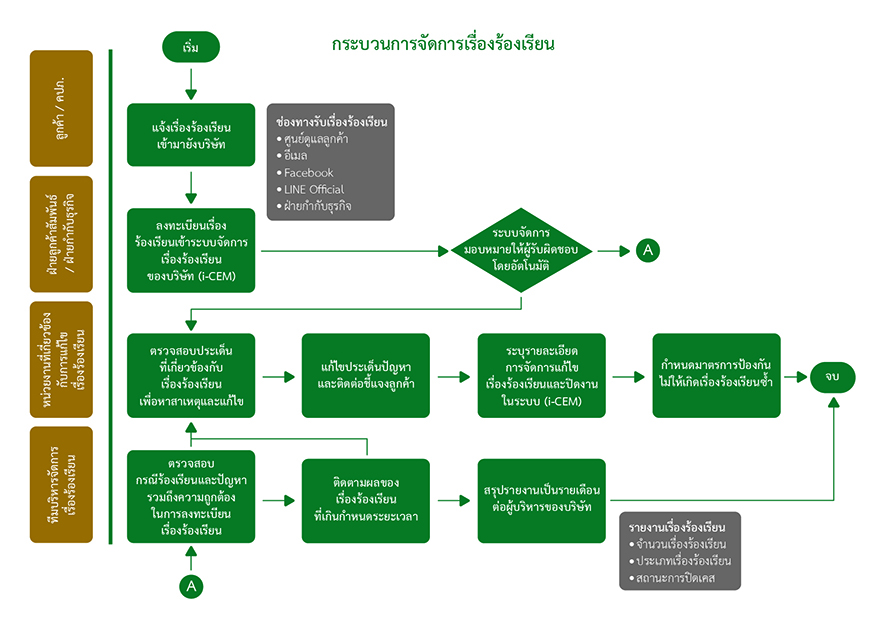
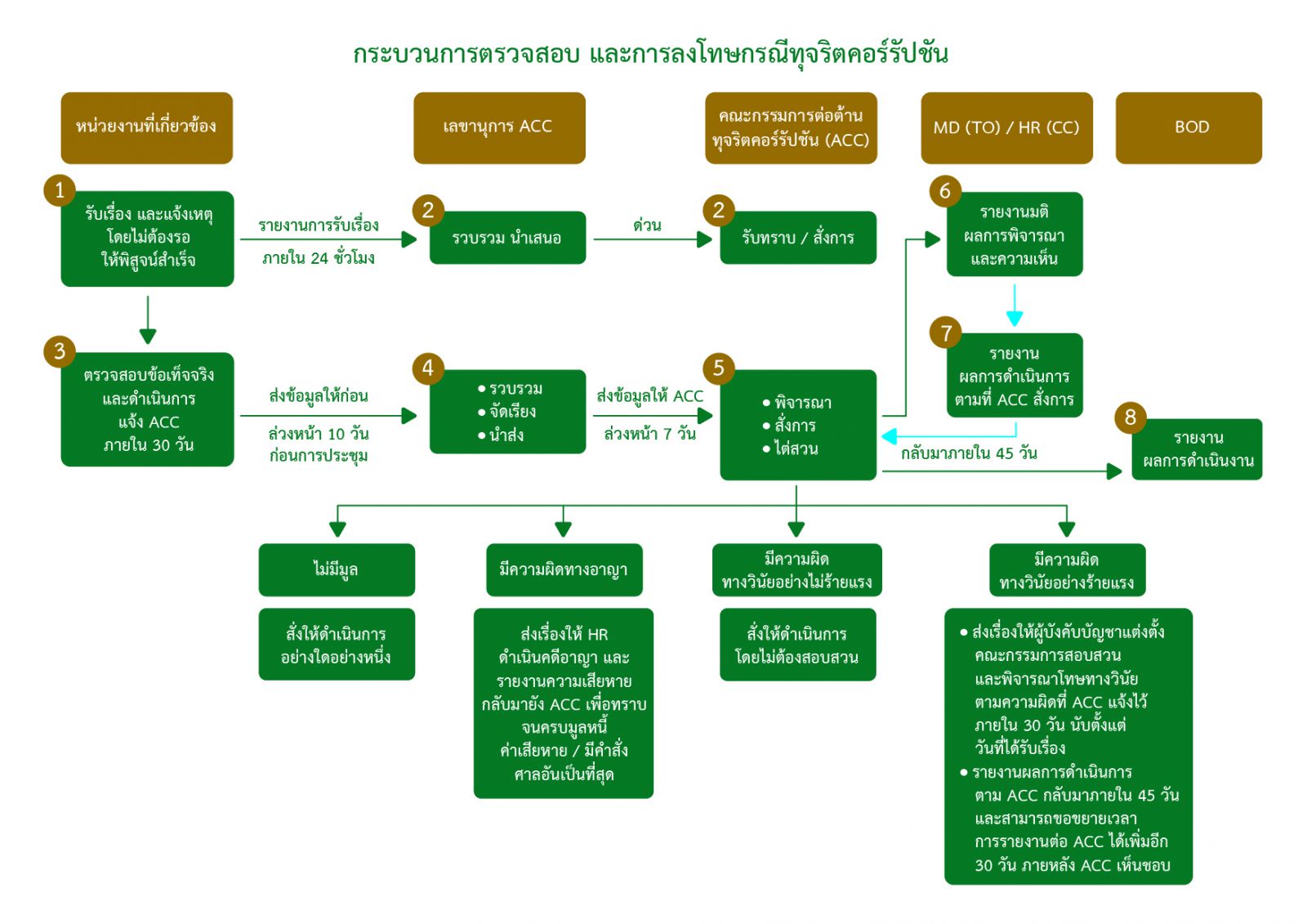
กระบวนการจัดการการฝ่าฝืนจริยธรรม และจรรยาบรรณในการดำเนินธุรกิจ
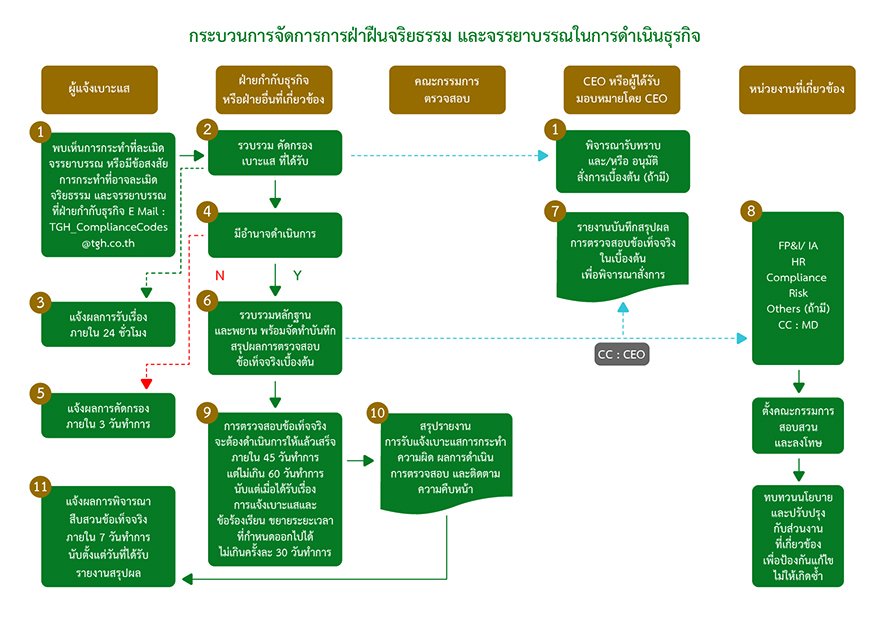
กระบวนการตรวจสอบ และการลงโทษกรณีทุจริตคอร์รัปชัน
นวัตกรรมและการพัฒนาระบบที่เกี่ยวข้อง
บริษัทและบริษัทย่อยสนับสนุนการสร้างนวัตกรรมทั้งในระดับกระบวนการทำงานภายในองค์กร
และในระดับความร่วมมือระหว่างองค์กร โดยมุ่งส่งเสริมการคิดค้นและพัฒนาวิธีการดำเนินงานรูปแบบใหม่ ๆ
รวมถึงการปรับเปลี่ยนแนวคิดและกระบวนการผลิตเพื่อเพิ่มมูลค่าให้กับสินค้าและบริการ ทั้งนี้
เป้าหมายของการพัฒนานวัตกรรมคือการก่อให้เกิดการเปลี่ยนแปลงในเชิงบวก ยกระดับประสิทธิภาพการดำเนินงาน
และสร้างผลลัพธ์ที่ดียิ่งขึ้น
อันนำไปสู่การเพิ่มผลิตผลขององค์กรพร้อมทั้งสร้างคุณค่าและประโยชน์ต่อสังคมโดยรวมอย่างยั่งยืน อาทิ
- LINE Official Account @THAI GROUP
เป็นช่องทางดิจิทัลที่บริษัทพัฒนาอย่างต่อเนื่องเพื่อรองรับลูกค้าของกลุ่มบริษัทโดยเฉพาะ
โดยได้เพิ่มฟังก์ชันการใช้งานเพื่อให้บริการลูกค้าของบริษัทย่อยได้อย่างครบวงจรในที่เดียวครอบคลุมทั้งลูกค้าประกันส่วนบุคคลและประกันกลุ่ม
ได้แก่ ลูกค้า SE Life อาคเนย์ประกันชีวิต Indara อินทรประกันภัย และลูกค้ารถยนต์มือสองของ RDD รถดีเด็ด
ออโต้ ลูกค้าสามารถเข้าถึงการบริการได้ตลอด 24 ชั่วโมง (24/7 Digital Access) ทั่วประเทศไทย
ทุกพื้นที่ตั้ง รวมกว่า 654,000 คน นอกจากนี้ยังช่วยลดการใช้ทรัพยากรธรรมชาติ
โดยลดการใช้กระดาษจากการให้บริการเดิมที่ต้องใช้แบบฟอร์มเอกสาร โดยในปี 2568
ลูกค้ายื่นคำขอผ่านระบบออนไลน์ จำนวน 7,954 คำขอ คิดเป็นกระดาษที่ลดลงจำนวน 30,589 แผ่น เทียบเท่าต้นไม้
5 ต้น
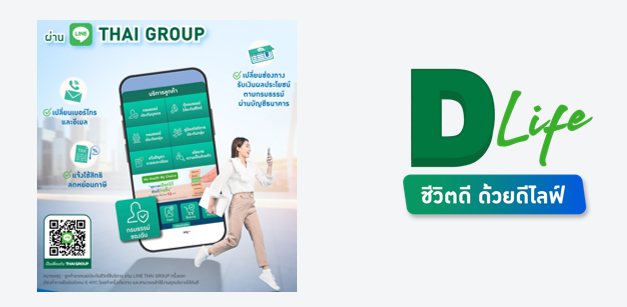
- D Life แพลตฟอร์ม เป็นช่องทางที่ SE Life อาคเนย์ประกันชีวิตพัฒนาขึ้นและปรับปรุงอย่างต่อเนื่อง
เพื่อสนับสนุนให้ตัวแทนของบริษัทสามารถให้บริการแก่ลูกค้าได้อย่างรวดเร็ว ทุกที่ ทุกเวลา
พร้อมระบบการรักษาความปลอดภัยในระดับสูงสุด
นอกจากนี้ ในปี 2568 ไทยกรุ๊ปยังได้พัฒนานวัตกรรมอย่างต่อเนื่อง โดยพัฒนาฟังก์ชันต่าง ๆ บนระบบ i-CEM (Customer Engagement Management) ซึ่งนำเทคโนโลยีหุ่นยนต์ทำงานอัตโนมัติ (Robotic Process Automation: RPA) และกระบวนการทำงานแบบอัตโนมัติ (Workflow Automation) มาใช้ในการบริหารจัดการการดูแลลูกค้าที่ติดต่อผ่านช่องทางต่าง ๆ รวมกว่า 475,000 รายการ ช่วยให้ลูกค้าได้รับประสบการณ์ที่ดีจากการบริการที่สะดวกและรวดเร็ว มีประสิทธิภาพเป็นมาตรฐานเดียวกันในทุกช่องทางการบริการ รวมทั้งสร้างประโยชน์ให้กับองค์กรในการลดภาระการทำงานที่ซ้ำซ้อนของทีมงานได้อย่างมีประสิทธิภาพ เช่น การดำเนินการป้อนข้อมูลและติดตามเรื่องลูกค้าในรูปแบบ Manual ได้รับการปรับปรุงด้วยกระบวนการทำงานที่ชัดเจนและเป็นระบบ ช่วยลดความผิดพลาดที่เกิดจากผู้ปฏิบัติงาน เพิ่มความถูกต้องแม่นยำ และยกระดับการบริหารจัดการ Service Level Agreement (SLA) ให้สามารถติดตามและบริหารจัดการได้อย่างมีประสิทธิภาพ อีกทั้งยังช่วยลดความเสี่ยงจากค่าปรับหรือความล่าช้า รองรับการขยายตัวของปริมาณงานและจำนวนลูกค้าที่เพิ่มขึ้น พร้อมทั้งจัดเก็บและวิเคราะห์ข้อมูลการให้บริการแบบทันต่อเหตุการณ์ (Real Time) เพื่อประเมินและพัฒนากลยุทธ์การดำเนินงานอย่างต่อเนื่อง ซึ่งส่งผลต่อการเสริมสร้างความเชื่อมั่น ความไว้วางใจ และความพึงพอใจของลูกค้าในระยะยาว
แนวปฏิบัติการดำเนินการกับคู่ค้าและกำหนดระยะเวลาชำระเงินให้แก่คู่ค้า
บริษัทปฏิบัติต่อคู่ค้าอย่างเสมอภาคและยุติธรรม โดยมีกำหนดเครดิตเทอมเฉลี่ย 30 วัน และในปี 2568 ระยะเวลาเฉลี่ยที่เกิดขึ้นจริงอยู่ที่ 22 วัน
| ระยะเวลาเครดิตเทอม | ระยะเวลาเฉลี่ยที่เกิดขึ้นจริงในปี 2568 |
|---|---|
| 30 วัน | 15 วัน |
นโยบายด้านภาษีอากรของบริษัท
เพื่อสนับสนุนการดำเนินธุรกิจตามหลักธรรมาภิบาล สร้างการพัฒนาที่ยั่งยืนอย่างต่อเนื่องให้กับผู้มีส่วนได้เสีย รวมถึงสอดคล้องกับวิสัยทัศน์ พันธกิจ และค่านิยมและวัฒนธรรมขององค์กร บริษัทจึงให้ความสำคัญกับการบริหารจัดการด้านภาษีโดยยึดหลักความถูกต้อง โปร่งใส มุ่งมั่นในการปฏิบัติตามกฎหมายภาษีอากรที่เกี่ยวข้องต่าง ๆ และใช้เป็นแนวทางปฏิบัติงานของกลุ่มบริษัทให้เป็นไปในทิศทางเดียวกัน บริษัทจึงกำหนดแนวปฏิบัติด้านภาษีอากร ดังนี้ คลิก
เป้าหมายและผลการดำเนินงาน : มิติสังคม
ประเด็นความยั่งยืนที่ 3 การส่งเสริมการเข้าถึงการประกันและการเงิน
| เป้าหมายปี 2571 | เป้าหมายปี 2569 | ผลการดำเนินงานปี 2568 |
|---|---|---|
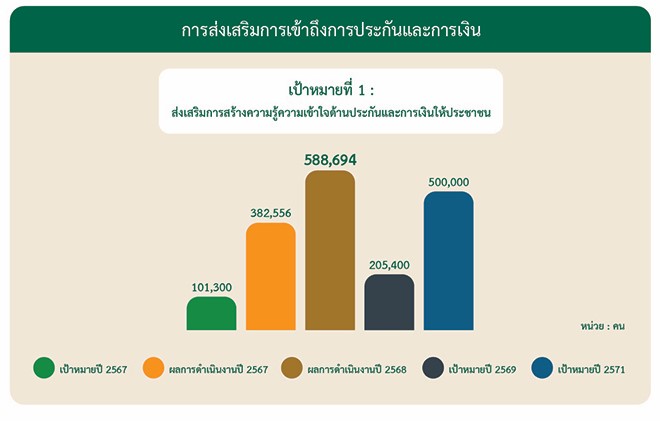
| เพิ่มความตระหนักรู้ทางการเงินและการประกันภัยสําหรับ 500,000 คน ผ่านช่องทางห้องสัมมนา และออนไลน์ผ่านสื่อของบริษัท | 205,400 คน - SE Life: 100,000 คน - SECAP: 5,000 คน - Indara: 100,000 คน - SEM/SEMR: 400 คน |
588,694 คน - SE Life: 147,778 (148 %) - SECAP: 5,939 (119 %) - Indara: 434,709 (435 %) - SEM/SEMR: 268 (67%) |
| เพิ่มการเข้าถึงทางการเงินและการประกันภัยสําหรับกลุ่มที่ด้อยโอกาส | SE Life: 2% ของกลุ่มเปราะบาง มีการเข้าถึงผลิตภัณฑ์ประกันชีวิตเพิ่มขึ้น
(เปรียบเทียบกับจำนวนลูกค้าทั้งหมด) (หมายเหตุ: กลุ่มเปราะบางของ SE Life คือ ผู้ที่มีรายได้ต่อเดือนต่ำกว่า 15,000 บาท เด็ก นักเรียน นักศึกษา อายุไม่เกิน 20 ปี และ ผู้สูงอายุ 60 ปีขึ้นไป) |
11% |
| SEMR: 10% ของกลุ่มเปราะบาง สามารถเข้าถึงการบริการด้านการเงินได้มากขึ้น (หมายเหตุ: กลุ่มที่เปราะบางของ SEMR คือ เกษตรกรชาวไร่อ้อย) |
23% | |
| Indara: ขายกรมธรรม์ประกันภัยอุบัติเหตุแบบไมโคร อินชัวรันส์ 50,000 กรมธรรม์ (200
บาทต่อกรมธรรม์) (หมายเหตุ: ประกันภัยอุบัติเหตุแบบไมโคร อินชัวรันส์ ครอบคลุมประกันกลุ่มสำหรับแรงงานต่างด้าวที่มีรายได้น้อย และการให้ประกันอุบัติเหตุส่วนบุคคลฟรี) |
33% ของเป้าหมาย (หรือคิดเป็นประมาณ 16,615 กรมธรรม์) |
|
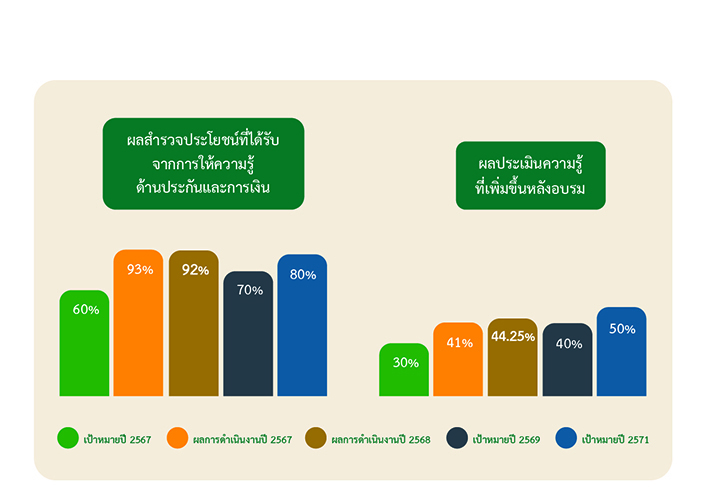
| ดําเนินโครงการพัฒนาพนักงานเพื่อปรับปรุงการประกันภัยและความรู้ทางการเงิน ความรู้เกี่ยวกับสุขภาพ ความเป็นอยู่ที่ดีและความยั่งยืน | 70% ของพนักงานทั้งหมดได้รับการฝึกอบรม | 99.75% |
| ผู้ได้รับการอบรมด้านประกันและการเงินมีความรู้ความเข้าใจเพิ่มขึ้นอย่างน้อย 5% | 10% | |
| คะแนนการมีส่วนร่วมของพนักงานเพิ่มขึ้น 5% จากปี 2566 | +3.45% | |
| ดําเนินโครงการเพื่อสวัสดิการพิเศษให้กับพนักงานและครอบครัว จำนวน 5 โครงการ | 2 โปรแกรม | 3 โปรแกรม โปรแกรม / กิจกรรม เพื่อดูแลพนักงานให้มี Wealth & Well being ที่ดี 1. คุณพ่อลาคลอด 2. มอบประกัน PA ให้พนักงานฟรี มูลค่า 50,000.- คุ้มครอง 24 ชั่วโมง ทั่วโลก 3. โปรแกรมด้านการป้องกัน และ สร้างเสริมสุขภาวะที่ดีให้พนักงาน (Preventive Care) เพื่อสร้าง Well Being ให้กับพนักงาน |
การเคารพสิทธิมนุษยชน และความเท่าเทียมทางเพศ
บริษัทและบริษัทย่อยมีนโยบายสนับสนุนและเคารพการปกป้องสิทธิมนุษยชน โดยการปฏิบัติต่อผู้ที่มีส่วนเกี่ยวข้อง ไม่ว่าจะเป็นพนักงาน ชุมชน และสังคมรอบข้างด้วยความเคารพในคุณค่าของความเป็นมนุษย์ คำนึงถึงความเสมอภาคและเสรีภาพที่เท่าเทียมกัน ไม่ละเมิดสิทธิขั้นพื้นฐาน และไม่เลือกปฏิบัติไม่ว่าจะเป็นในเรื่องของเชื้อชาติ สัญชาติ ศาสนา ภาษา สีผิว เพศ อายุ การศึกษา สภาวะทางร่างกาย หรือสถานะทางสังคม รวมถึงจัดให้มีการดูแลไม่ให้ธุรกิจของบริษัทและบริษัทย่อยเข้าไปมีส่วนเกี่ยวข้องกับการละเมิดสิทธิมนุษยชนทั้งทางตรงและทางอ้อม เช่น การบังคับใช้แรงงาน (Forced labor) การใช้แรงงานเด็ก (Child Labor) และการคุกคามทางเพศ เป็นต้น นอกจากนี้บริษัทและบริษัทย่อยได้ส่งเสริมให้มีการเฝ้าระวังการปฏิบัติตามข้อกำหนดด้านสิทธิมนุษยชน โดยจัดให้มีการมีส่วนร่วมในการแสดงความคิดเห็นและช่องทางในการร้องเรียนสำหรับผู้ที่ได้รับความเสียหายจากการถูกละเมิดสิทธิอันเกิดจากการดำเนินธุรกิจของบริษัทและบริษัทย่อย และดำเนินการเยียวยาตามสมควร ทั้งนี้ เพื่อให้การเคารพสิทธิมนุษยชนเป็นไปอย่างมีประสิทธิภาพ บริษัทและบริษัทย่อยได้ดำเนินการสร้างองค์ความรู้ด้านสิทธิมนุษยชนและปลูกจิตสำนึกให้บุคลากรของบริษัทและบริษัทย่อยปฏิบัติตามหลักสิทธิมนุษยชน
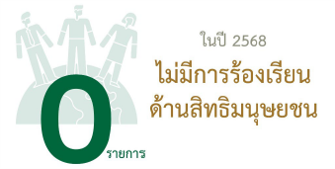
ทั้งนี้ จากการตรวจสอบทุกช่องทางร้องเรียนของบริษัททั้งจากบุคลภายในและบุคคลภายนอก ไม่พบการร้องเรียนด้านสิทธิมนุษยชน
ความหลากหลายของคณะกรรมการบริษัทและพนักงาน ปี 2568
| หญิง | ชาย | |
|---|---|---|
| คณะกรรมการบริษัท | 21.00% | 79.00% |
| ผู้บริหารระดับสูง | 57.70% | 42.30% |
| พนักงานระดับบริหาร | 57.70% | 42.30% |
| พนักงานระดับปฏิบัติการ | 67.66% | 32.34% |
ค่าตอบแทนของพนักงานบริษัทและบริษัทย่อย จำแนกตามเพศ (หน่วย : บาท)
| ค่าตอบแทน | 2565 | 2566 | 2567 | 2568 |
|---|---|---|---|---|
| พนักงานชาย | 277,916,461 | 401,276,925 | 217,115,365 | 322,987,581 |
| พนักงานหญิง | 455,862,174 | 643,661,105 | 383,946,533 | 524,134,562 |
| รวม | 733,778,635 | 1,044,938,030 | 601,061,898 | 847,122,143 |
ข้อมูลการลาออกจากงานโดยสมัครใจ
| ปี | หญิง | ชาย |
|---|---|---|
| 2565 | 65.34% | 34.66% |
| 2566 | 66.20% | 34.66% |
| 2567 | 68.26% | 31.74% |
| 2568 | 62.00% | 38.00% |
การพัฒนาความสามารถบุคลากรและการปฏิบัติต่อแรงงานอย่างเป็นธรรม
บริษัทและบริษัทย่อยตระหนักถึงความสำคัญของการพัฒนาทรัพยากรมนุษย์และการปฏิบัติต่อแรงงานอย่างเป็นธรรม
อันเป็นปัจจัยที่จะช่วยเพิ่มมูลค่าของกิจการและเสริมสร้างความสามารถในการแข่งขันและการเจริญเติบโตอย่างยั่งยืนของบริษัทและบริษัทย่อยในอนาคต
ทั้งนี้ บริษัทและบริษัทย่อยได้กำหนดนโยบายและแนวปฏิบัติ ดังนี้
1. เคารพสิทธิของพนักงานตามหลักสิทธิมนุษยชน และปฏิบัติตามกฎหมายแรงงาน
2. จัดให้มีกระบวนการจ้างงาน และเงื่อนไขการจ้างงานอย่างเป็นธรรม รวมถึงการจ่ายค่าตอบแทนในรูปเงินเดือน
และ/หรือ โบนัสที่เป็นธรรม เหมาะสมตามศักยภาพของพนักงาน และการพิจารณาผลงานความดีความชอบ
ภายใต้กระบวนการประเมินผลการทำงานที่เป็นธรรมเพื่อสร้างความมั่นคงในสายอาชีพและส่งเสริมโอกาส
ความก้าวหน้าในอาชีพ
3. ส่งเสริมการพัฒนาบุคลากร โดยจัดให้มีการจัดอบรม สัมมนา ฝึกอบรม รวมถึงส่งบุคลากรเข้าร่วมสัมมนา และ
ฝึกอบรมวิชาการด้านต่าง ๆ ที่เกี่ยวข้องเพื่อพัฒนาความรู้ ความสามารถศักยภาพของบุคลากร รวมถึงปลูกฝัง
ทัศนคติที่ดี มีคุณธรรม จริยธรรม และการทำงานเป็นทีมแก่บุคลากร
4. จัดให้มีสวัสดิการด้านต่าง ๆ สำหรับพนักงานตามที่กฎหมายกำหนด เช่น ประกันสังคม เป็นต้น
และนอกเหนือจากที่กฎหมายกำหนด เช่น ประกันสุขภาพ ประกันอุบัติเหตุ กองทุนสำรองเลี้ยงชีพ เป็นต้น
รวมถึงการให้เงินช่วยเหลือประเภทต่าง ๆ แก่พนักงาน เช่น สวัสดิการเงินกู้พนักงานอัตราดอกเบี้ยต่ำพิเศษ
เงินช่วยเหลือมงคลสมรส เงินเยียวยาพิเศษกรณีประสบภัยพิบัติ เงินช่วยฌาปนกิจ เป็นต้น
5. จัดให้มีบริการตรวจสุขภาพประจำปีแก่บุคลากรทุกระดับชั้นของบริษัท โดยพิจารณาจากปัจจัยความเสี่ยงตาม
ระดับ อายุ เพศ และสภาพแวดล้อมในการทำงานของแต่ละบุคคล
6. ดำเนินการให้พนักงานปฏิบัติงานได้อย่างปลอดภัย และมีสุขอนามัยในสถานที่ทำงานที่ดี โดยจัดให้มีมาตรการ
ป้องกันการเกิดอุบัติเหตุ และเสริมสร้างให้พนักงานมีจิตสำนึกด้านความปลอดภัย รวมถึงจัดการฝึกอบรม และ
ส่งเสริมให้พนักงานมีสุขอนามัยที่ดี และดูแลสถานที่ทำงานให้ถูกสุขลักษณะ มีความปลอดภัยอยู่เสมอ
7. สร้างสภาพแวดล้อมการทำงานที่มีความสุขและยอมรับซึ่งกันและกัน และมีการปฏิบัติต่อพนักงานทุกระดับอย่าง
เท่าเทียมกัน ไม่มีการเอารัดเอาเปรียบซึ่งกันและกัน
8. เปิดโอกาสให้พนักงานสามารถแสดงความคิดเห็น หรือร้องเรียนเกี่ยวกับการปฏิบัติอย่างไม่เป็นธรรมหรือ
การกระทำที่ไม่ถูกต้องในบริษัทและบริษัทย่อย รวมถึงให้การคุ้มครองพนักงานที่รายงานเรื่องดังกล่าว
บริษัทได้ดูแลพนักงานของบริษัทและทุกบริษัทในเครือตามหลักสิทธิมนุษยชน สร้างสภาพแวดล้อมการทำงานที่ปลอดภัยและถูกสุขลักษณะ มอบสวัสดิการที่เหมาะสมและเกินกว่าที่กฎหมายกำหนด เปิดโอกาสในการแสดงความคิดเห็นเพื่อร่วมพัฒนาองค์กร มีการพัฒนาความรู้ความสามารถของพนักงานอย่างต่อเนื่อง เพื่อให้พนักงานมีความเชี่ยวชาญและเป็นมืออาชีพ สามารถพัฒนาการทำงานและสร้างผลงานที่สามารถตอบสนองความต้องการของลูกค้าที่เปลี่ยนแปลงไปในแต่ละช่วงเวลาและทันต่อการแข่งขันของธุรกิจ มีความสุขในการทำงาน มีความภาคภูมิใจ มีความรัก ความผูกพันกับองค์กร
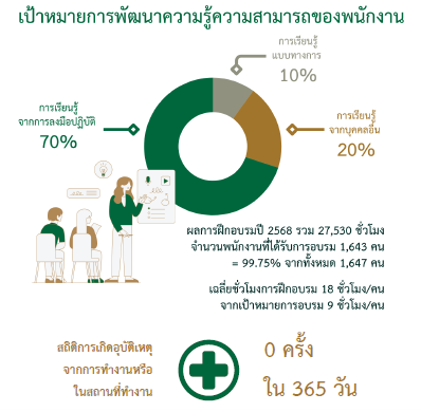
ผลการฝึกอบรมปี 2568 รวม 27,530 ชั่วโมง
จำนวนพนักงานที่ได้รับการอบรม 1,643 คน = 99.75% จากทั้งหมด 1,647 คน
เฉลี่ยชั่วโมงการอบรม 18 ชั่วโมง/คน จากเป้าหมายการอบรม 9 ชั่วโมง/คน
สถิติการเกิดอุบัติเหตุจากการทำงานหรือในสถานที่ทำงาน = 0 ครั้ง ใน 365 วัน
เป้าหมายและผลการดำเนินงาน : มิติสิ่งแวดล้อม
ผลิตภัณฑ์เพื่อสิ่งแวดล้อมและลดการปล่อยคาร์บอนจากการดำเนินงาน
ประเด็นความยั่งยืนข้อที่ 1 ผลิตภัณฑ์และการดำเนินงานที่เป็นมิตรต่อสิ่งแวดล้อม
| เป้าหมายปี 2571 | เป้าหมายปี 2569 | ผลการดำเนินงานปี 2568 |
|---|---|---|
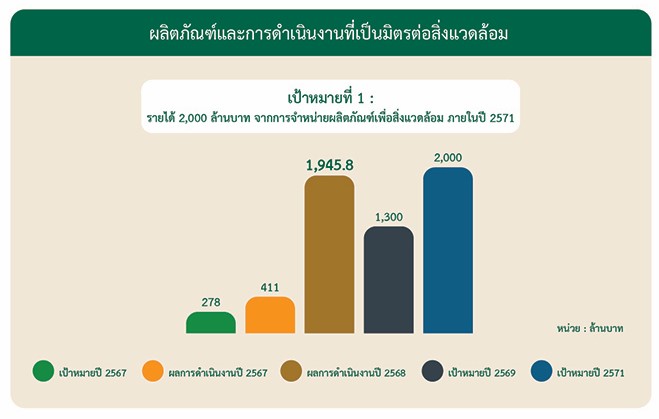
| ส่งเสริมให้บริษัทในเครือพัฒนาและจำหน่ายผลิตภัณฑ์คาร์บอนต่ำและเพิ่มรายได้รวม 2,000 ล้านบาท จากผลิตภัณฑ์ดังกล่าว | เป้าหมายรวมรายได้ 1,300 ล้านบาท จากผลิตภัณฑ์คาร์บอนต่ำ | ผลการดำเนินงานรวม รายได้ 1,945.8 ล้านบาท จากผลิตภัณฑ์คาร์บอนต่ำ |
| SECAP - ให้เช่ารถ EV, xEV, PHEV และ Hybrid จำนวน 1,000 คัน หรือคิดเป็นรายได้ประมาณ 800 ล้านบาท |
SECAP - ให้เช่ารถ EV, xEV, PHEV และ Hybrid จำนวน 1,075 คัน และคิดเป็นรายได้จำนวน 1,383 ล้านบาท |
|
| SEM - ปล่อยสินเชื่อเพื่อธุรกิจ Solar Rooftop สะสมรวม 200 ล้านบาท |
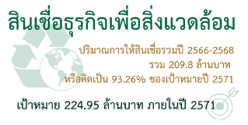
SEM - ปล่อยสินเชื่อเพื่อธุรกิจ Solar Rooftop อาคาร รวมยอดสะสมจำนวน 209.8 ล้านบาท |
|
| Indara - ขายประกันภัยรถยนต์ EV, Hybrid, PHEV และ Green Product จำนวน 15,000 กรมธรรม์ - คิดเป็นรายได้จากเบี้ยรับประกัน จำนวน 300 ล้านบาท - คิดเป็น 3.13% ของรายได้จากเบี้ยรับประกันทั้งหมด (9,999 ล้านบาท) |
Indara - ขายประกันภัยรถยนต์ EV, Hybrid, PHEV และ Green Product 17,964 กรมธรรม์ - คิดเป็นรายได้จากเบี้ยรับประกัน 353 ล้านบาท - คิดเป็น 3.13% ของรายได้จากเบี้ยรับประกันทั้งหมด (11,277 ล้านบาท) |
|
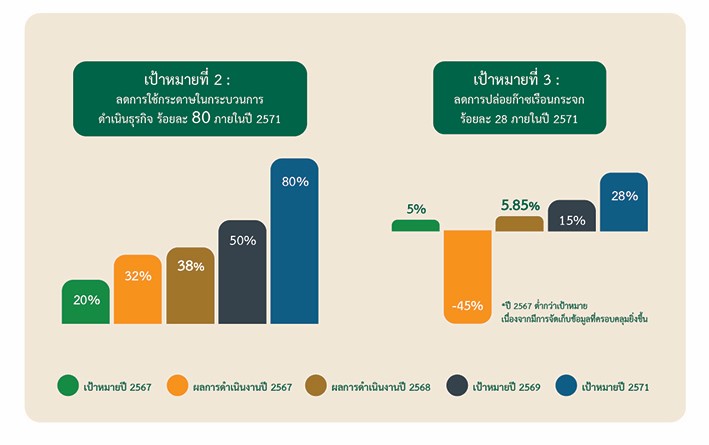
| ลดการพิมพ์/กระดาษที่ใช้งานได้ลง 80% | 50% | 38% - ปี 2568 การพิมพ์/กระดาษที่ใช้งานได้ 44,931 กิโลกรัม หรือ 8,640,656 แผ่น หรือคิดเป็นต้นไม้ 1,440 ต้น - ปี 2567 การพิมพ์/กระดาษที่ใช้งานได้ 48,746 กิโลกรัม หรือ 9,374,231 แผ่น หรือคิดเป็นต้นไม้ 1,562 ต้น - ปี 2566 (ปีฐาน) การพิมพ์/กระดาษที่ใช้งานได้ 72,016 กิโลกรัม หรือ 13,849,417 แผ่น หรือคิดเป็นต้นไม้ 2,308 ต้น |
| การปล่อยก๊าซเรือนกระจกลดลง 28% | 15% | 5.85 % - ปี 2568 = 4,391 tCO2e - ปี 2567 = 4,664 tCO2e (ปีฐาน) - ปี 2566 = 3,202 tCO2e (เปรียบเทียบตัวชี้วัดจากปี 2566 เป็น 2567 เนื่องจากมีการขยายขอบเขตการจัดเก็บข้อมูลที่ครอบคลุมมากขึ้น) |
นอกจากนี้ยังได้ส่งเสริมให้บริษัทในเครือมีการให้สินเชื่อ (Project Finance) แก่ผู้ประกอบการที่ดำเนินธุรกิจเพื่อสิ่งแวดล้อมอย่างต่อเนื่อง โดยมีการพิจารณาให้สินเชื่อที่ยืดหยุ่นในเกณฑ์การพิจารณาและคุณสมบัติ เพื่อให้ผู้ประกอบการสามารถเข้าถึงเงินทุนได้สะดวกมากขึ้น และให้อัตราดอกเบี้ยต่ำพิเศษ เป็นการส่งเสริมให้ธุรกิจเพื่อสิ่งแวดล้อมมีการขยายตัวมากยิ่งขึ้น โดยปัจจุบันผู้ประกอบการที่ได้รับสินเชื่อนี้ สามารถก่อสร้างและให้บริการไฟฟ้าจากพลังงานแสงอาทิตย์ (Solar Rooftop) แล้วเสร็จ สามารถผลิตและจำหน่ายไฟฟ้า จำนวนทั้งสิ้น 58 แห่ง กำลังการผลิตไฟฟ้าในปี 2568 รวม 45.104 MW.
บริษัท อาคเนย์แคปปิตอล จำกัด หรือ SECAP มีความพร้อมในการจัดหารถยนต์พลังงานไฟฟ้า (EV) รวมถึงรถยนต์ Hybrid และ Hybrid Plug in เพื่อส่งเสริมความยั่งยืนด้านสิ่งแวดล้อม จากการลดใช้พลังงานฟอสซิลและลดการปล่อยมลพิษหรือก๊าซเรือนกระจก (Greenhouse Gases: GHGs) เพื่อสนับสนุนนโยบายภาครัฐในการส่งเสริมการใช้รถยนต์พลังงานไฟฟ้าโดยคณะกรรมการยานยนต์ไฟฟ้าแห่งชาติได้ออกนโยบาย 30@30 คือ การตั้งเป้าผลิตรถ ZEV (Zero Emission Vehicle) หรือรถยนต์ที่ปล่อยมลพิษเป็นศูนย์ให้ได้อย่างน้อยร้อยละ 30 ของการผลิตยานยนต์ทั้งหมดในปี 2573 โดยบริษัทมีเป้าหมายนำรถยนต์พลังงานไฟฟ้ามาให้บริการเพื่อลดการปล่อยมลพิษหรือก๊าซเรือนกระจก และลดการใช้พลังงานจากฟอสซิล
โดยในปี 2568 บริษัทมีรถยนต์ไฟฟ้า (EV) รวมถึงรถยนต์ Hybrid และ Hybrid Plug in ที่ให้บริการรวม 1,075 คัน (ร้อยละ 179 ของเป้าหมายปี 2569) และคิดเป็นรายได้จำนวน 1,383 ล้านบาท (ร้อยละ 172 ของเป้าหมาย) สำหรับบริษัท อินทรประกันภัย จำกัด (มหาชน) ได้ออกผลิตภัณฑ์เพื่อสิ่งแวดล้อม โดยให้ความคุ้มครองรถยนต์ EV, Hybrid, PHEV ความคุ้มครอง Solar Rooftop และ EV Charger รวมจำนวน 17,964 กรมธรรม์ (ร้อยละ 119 จากเป้าหมาย ปี 2569) คิดเป็นรายได้จำนวน 353 ล้านบาท (ร้อยละ 117 จากเป้าหมายปี 2569)
การจ่ายค่าตอบแทนผู้บริหาร
บริษัท ไทยกรุ๊ป โฮลดิ้งส์ จำกัด (มหาชน) (TGH) เล็งเห็นถึงความสำคัญของการเชื่อมโยงการจ่ายค่าตอบแทนผู้บริหารให้สอดคล้องกับพันธกิจด้านความยั่งยืน และการเปลี่ยนแปลงสภาพภูมิอากาศ ซึ่งเป็นส่วนหนึ่งของการเสริมสร้างการสร้างมูลค่าระยะยาวและการดำเนินธุรกิจอย่างมีความรับผิดชอบ คณะกรรมการบริษัทได้นำเกณฑ์พิจารณาด้านความยั่งยืน รวมถึงองค์ประกอบที่เชื่อมโยงกับผลการประเมิน FTSE Russell ESG Rating บรรจุลงในกรอบการประเมินผลการปฏิบัติงานของผู้บริหารสำหรับประธานเจ้าหน้าที่บริหาร (CEO) และทีมผู้บริหารระดับสูง แนวทางนี้สนับสนุนการบูรณาการมิติ ESG เข้าไปในการตัดสินใจในแต่ละวัน พร้อมทั้งส่งเสริมให้เกิดการพัฒนาอย่างต่อเนื่อง
ผลลัพธ์ด้าน ESG จะถูกนำมาพิจารณาในการจ่ายค่าตอบแทนผู้บริหาร โดยเฉพาะในส่วนของผลตอบแทนแบบผันแปร (variable incentives) ซึ่งมีส่วนร่วมในการประเมินผลการปฏิบัติงานโดยรวมในลักษณะที่สมดุลและได้สัดส่วน ทั้งนี้ คณะกรรมการบริษัท โดยการสนับสนุนของคณะกรรมการสรรหาและกำหนดค่าตอบแทน (Nomination and Remuneration Committee) จะทำหน้าที่กำกับดูแลกระบวนการนี้ และดำเนินการยกระดับกรอบการทำงานดังกล่าวอย่างต่อเนื่อง เพื่อให้สอดคล้องกับความคาดหวังของนักลงทุนและกฎเกณฑ์ต่าง ๆ ที่เปลี่ยนแปลงไป พร้อมทั้งพัฒนาความโปร่งใสในการเปิดเผยข้อมูลที่เกี่ยวข้องกับ ESG ให้ดียิ่งขึ้น
การบริหารจัดการก๊าซเรือนกระจก
บริษัทมีเป้าหมายในการร่วมลดก๊าซเรือนกระจกรวมทั้ง Scope 1-3 อย่างน้อยร้อยละ 28 จากปี 2567 ภายในปี 2571 โดยส่งเสริมให้พนักงานทำงานบนระบบออนไลน์เพื่อลดการใช้เอกสารกระดาษ รวมถึงการรณรงค์เพื่อร่วมกันรักษาสิ่งแวดล้อมด้วยการลดใช้ทรัพยากรธรรมชาติ อาทิ การทำงานผ่านระบบออนไลน์ ด้วยการจัดทำระบบ i-Series เพื่อดำเนินการในระบบออนไลน์ อาทิ ระบบประเมินผลการปฏิบัติงาน ระบบจองห้องประชุม รวมถึงการบริหารจัดการขยะของเสียภายในองค์กรด้วยการคัดแยกขยะก่อนทิ้งและส่งกำจัดอย่างถูกวิธี และมีเป้าหมายในการลดกระดาษจากกระบวนการทำธุรกิจ อย่างน้อยร้อยละ 5 ต่อปี โดยส่งเสริมให้ตัวแทน ลูกค้า คู่ค้า ใช้บริการส่งใบคำขอออนไลน์ (e-Application) และรับกรมธรรมอ์ อนไลน์ (e-Policy) รวมถึงการขอใช้บริการหลังการขายผ่านระบบออนไลน์ ผ่านระบบ D-Life โดย 100 e-Application/e-Policyเท่ากับต้นไม้ 1 ต้น โดยทุก ๆ ต้นไม้ 1 ต้นที่ได้จากการปรับกระบวนการในการทำธุรกิจของบริษัทมาเป็นระบบออนไลน์ บริษัทจะสมทบปลูกเพิ่ม 1 ต้น โดยมีเป้าหมายในการปลูกต้นไม้รวมอยู่ที่ 100,000 ต้น หรือเทียบเท่า ก๊าซคาร์บอนไดออกไซด์ ได้ 900 – 1,500 กิโลตัน/ปี
| ประเภท 1 | ประเภท 2 | ประเภท 3 |
|---|---|---|
| การเผาไหม้แบบอยู่กับที่ (Stationary Combustion) การใช้น้ำมันสำหรับงานอาคาร - Diesel (Generator) - Diesel (Fire pump) การเผาไหม้แบบเคลื่อนที่ (Mobile Combustion) การใช้น้ำมันสำหรับการเดินทาง (รถตู้ รถส่วนกลาง ผู้บริหาร รถมอเตอร์ไซค์) - 95 ULG - DIESEL - GASOHOL E20 - GASOHOL E85 - GASOHOL91 - GASOHOL95 - PREMIUM DIESEL - PREMIUM GASOHOL 95 - สารทำความเย็นชนิด R22 - สารทำความเย็นชนิด R32 |
การใช้พลังงานไฟฟ้า - การไฟฟ้านครหลวง | - การใช้กระดาษเอกสาร A4 และ A3 สีขาว 80 แกรม - กระดาษลัง - Mixed Paper ขยะกระดาษอื่น ๆ ทั่วไป - พลาสติก PET : โพลิเอทิลีนเทเรฟทาเลต (ขวดใส) - พลาสติก LDPE : โพลิเอทอลิน ชนิดความหนาแน่นต่ำ (ถุงขยะ) - ขยะอินทรีย์ (เศษอาหาร) - ขยะทั่วไป - ขยะอันตราย (หลอดไฟ) - น้ำประปา-การประปานครหลวง |
การปล่อยก๊าซเรือนกระจก
บริษัทได้รวบรวมข้อมูลการปล่อยก๊าซเรือนกระจก (GHG) สำหรับช่วงวันที่ 1 มกราคม ถึง 31 ธันวาคม 2568 โดยกำหนดขอบเขตองค์กรโดยใช้วิธีควบคุมการดำเนินงาน (Operational Control Approach) ตามมาตรฐาน GHG Protocol การรายงานการปล่อยก๊าซเรือนกระจกขอบเขตที่ 1 และ 2 ครอบคลุมการดำเนินงานของกลุ่มบริษัทมากกว่า 95% เพื่อให้มั่นใจว่ามีการเปิดเผยข้อมูลอย่างครอบคลุมและเป็นตัวแทนที่แท้จริง พร้อมตั้งเป้าหมายลดการปล่อยก๊าซเรือนกระจก -28% ภายใน พ.ศ.2571
Unit: tCO2e
| GHG Emissions | 2025 | 2024 (Base Year) | 2023 | % Change from 2024 |
|---|---|---|---|---|
| Scope 1: Direct GHG Emissions | 1,855.89 | 1,921.29 | 1,471.06 | -3.40% |
| Scope 2: Indirect GHG Emissions from Energy Consumption (Location-based) |
2,068.80 | 2,304.43 | 1,472.13 | -10.23% |
| Total Scope 1 + 2 | 3,924.69 | 4,225.72 | 2,943.19 | -7% |
| Scope 3: Other Indirect GHG Emissions | ||||
| Category 1 Purchased goods and services | 129.64 | 130.75 | 161.96 | 0.84% |
| Category 5 Waste generated in operations | 337.08 | 307.58 | 96.91 | 9.59% |
| Total Scope 3 | 466.72 | 438.33 | 258.57 | 6.47% |
| Total Scope 1 + 2 + 3 | 4,391.41 | 4,664.05 | 3,201.76 | -5.85% |
| Average per employee | 3.26 | 3.05 | 3.2 |
การบริหารจัดการการเปลี่ยนแปลงสภาพภูมิอากาศ
นอกจากนี้ บริษัทตระหนักถึงความสำคัญในการดูแลสิ่งแวดล้อม โดยเฉพาะผลกระทบทั้งเชิงบวกและเชิงลบจากการเปลี่ยนแปลงสภาพภูมิอากาศ จึงได้ออกนโยบายการบริหารจัดการการเปลี่ยนแปลงสภาพภูมิอากาศที่ครอบคลุมทุกกระบวนการดำเนินธุรกิจและห่วงโซ่อุปทานของบริษัทและบริษัทย่อย เพื่อป้องกันและลดผลกระทบที่เกิดจาก “ความเสี่ยงจากการเปลี่ยนแปลงสภาพภูมิอากาศ” (Climate Risk) ซึ่งเป็นความเสี่ยงทางการเงิน (Financial Risk) ที่ส่งผลกระทบต่อผลประกอบการขององค์กรอย่างมีนัยสำคัญ นอกจากนี้ ยังขยายขอบเขตไปถึงการบริหารความสัมพันธ์กับพันธมิตร คู่ค้า ตัวแทน นายหน้า นักสำรวจภัย โรงพยาบาลและอู่คู่สัญญา หน่วยงานกำกับและดูแล ผู้รับเหมาช่วงต่อในกิจกรรมต่าง ๆ ฯลฯ พร้อมมุ่งเน้นการสร้างความร่วมมือจากทุกฝ่ายเพื่อส่งเสริมการดำเนินงานที่ลดผลกระทบเชิงลบต่อสภาพภูมิอากาศ พร้อมส่งเสริมการลดการปล่อยก๊าซเรือนกระจก การใช้ทรัพยากรอย่างมีประสิทธิภาพ เพื่อปกป้องสิ่งแวดล้อมในระยะยาวและขับเคลื่อนการดำเนินงานที่ยั่งยืนในทุกมิติของธุรกิจ โดยกำหนดเป้าหมาย กลยุทธ์ และแนวทางการดำเนินธุรกิจในการลดการปล่อยก๊าซเรือนกระจก เพื่อจำกัดการเพิ่มอุณหภูมิโลก โดยมีคณะกรรมการกำกับดูแลบรรษัทภิบาลและความยั่งยืน และคณะกรรมการกำกับความเสี่ยง เป็นผู้ควบคุมดูแลการบริหารจัดการความเสี่ยงด้านการเปลี่ยนแปลงสภาพภูมิอากาศ
นโยบายการบริหารจัดการการเปลี่ยนแปลงสภาพภูมิอากาศ
บริษัท ไทยกรุ๊ป โฮลดิ้งส์ จำกัด (มหาชน) และบริษัทย่อยตระหนักถึงความสำคัญของการปกป้องสภาพภูมิอากาศซึ่งเป็นความท้าทายระดับโลก และมีผลกระทบอย่างมีนัยสำคัญต่อระบบเศรษฐกิจ สังคม และสิ่งแวดล้อม โดยสอดคล้องกับพันธกิจใการเป็นผู้นำด้านการพัฒนาอย่างยั่งยืน บริษัทจึงได้จัดทำนโยบายการบริหารจัดการการเปลี่ยนแปลงสภาพภูมิอากาศ เพื่อใช้เป็นกรอบแนวทางในการดำเนินการด้านสภาพภูมิอากาศในทุกมิติของการดำเนินธุรกิจ โดยมุ่งเน้นการบูรณาการการบริหารจัดการทรัพยากรอย่างยั่งยืนเข้ากับโมเดลธุรกิจคาร์บอนต่ำ (Low-Carbon Business Model) เพื่อให้กลุ่มบริษัทไทยกรุ๊ปสามารถบริหารจัดการและลดผลกระทบเชิงลบจากการเปลี่ยนแปลงสภาพภูมิอากาศได้อย่างมีประสิทธิภาพพร้อมทั้งส่งเสริมการสร้างผลกระทบเชิงบวกต่อสิ่งแวดล้อม โดยมุ่งเน้นการลดการปล่อยก๊าซเรือนกระจก (Greenhouse Gas: GHG) การเพิ่มประสิทธิภาพการใช้พลังงาน การใช้ทรัพยากรธรรมชาติอย่างยั่งยืน และการดำเนินธุรกิจที่ลดผลกระทบต่อสิ่งแวดล้อมอย่างเป็นรูปธรรม เพื่อกำหนดทิศทางการดำเนินธุรกิจให้สอดคล้องกับพันธกิจและข้อตกลงระหว่างประเทศ (Paris Agreement) โดยมุ่งจำกัดการเพิ่มขึ้นของอุณหภูมิเฉลี่ยของโลกให้อยู่ในระดับต่ำกว่า 2 องศาเซลเซียส และพยายามจำกัดให้อยู่ที่ 1.5 องศาเซลเซียส รวมถึงการยึดถือหลักการประกันภัยอย่างยั่งยืน (Principles for Sustainable Insurance: PSI) และการดำเนินธุรกิจให้สอดคล้องกับเป้าหมายการพัฒนาที่ยั่งยืนขององค์การสหประชาชาติ (United Nations Sustainable Development Goals: UN SDGs) รวมทั้งเพื่อเสริมสร้างความพร้อมและความสามารถในการปรับตัวต่อความเสี่ยงด้านสภาพภูมิอากาศในทุกมิติของการดำเนินธุรกิจ และส่งเสริมการบริหารจัดการห่วงโซ่อุปทาน (Supply Chain Management) อย่างมีประสิทธิภาพ และสนับสนุนความร่วมมือกับคู่ค้าและพันธมิตรทางธุรกิจในการลดผลกระทบเชิงลบ และสร้างผลกระทบเชิงบวกที่เกี่ยวข้องกับการเปลี่ยนแปลงสภาพภูมิอากาศ โดยให้สอดคล้องกับหลักเกณฑ์ของสำนักงานคณะกรรมการกำกับและส่งเสริมการประกอบธุรกิจประกันภัย (คปภ.) และมาตรฐานสากลที่เกี่ยวข้อง
การรับมือการเปลี่ยนแปลงสภาพภูมิอากาศ
บริษัทมีโครงการเพื่อร่วมจำกัดการเพิ่มขึ้นของอุณหภูมิโลกไม่ให้เกิน 1.5 องศาเซลเซียสตามข้อตกลงปารีส
และลดผลกระทบเชิงลบจากการเปลี่ยนแปลงสภาพภูมิอากาศ ดังนี้
1. ปรับกระบวนการทำงานให้เป็น Digitalization เพื่อลดการใช้กระดาษลง 80% ภายในปี 2571 จากปี 2566
2. ปรับการปล่อยก๊าซเรือนกระจกลง 28% ภายในปี 2571 จากปี 2567
3. การออกผลิตภัณฑ์และบริการที่เป็นมิตรต่อสิ่งแวดล้อม ได้แก่ การให้บริการรถยนต์เช่าองค์กรประประเภท
EV/Hybrid/Plugin Hybrid เพิ่มขึ้นและลดจำนวนรถสันดาปที่ใช้น้ำมันเชื้อเพลิงฟอสซิลลง การออก Green
Insurance ที่ให้ความคุ้มครองรถยนต์ EV/Hybrid/Plugin Hybrid รวมถึง EV Charger และ Solar Roof
การให้สินเชื่อ Solar Roof แก่คู่ค้าของบริษัทในเครือ โดยมีเป้าหมายรายได้จากผลิตภัณฑ์และบริการ 2,000
ล้านบาทภายในปี 2566-2571 เพื่อส่งเสริมการใช้พลังงานสะอาดและพลังงานทางเลือกแทนพลังงานฟอสซิล
4. ดำเนินโครงการก่อสร้างอาคาร Thai Group Quarter บนถนนสุรวงศ์ เพื่อเป็นสำนักแห่งใหม่ของกลุ่มบริษัท
ที่เป็นมิตรต่อสิ่งแวดล้อมตามมาตรฐานสากล Leadership in Energy and Environmental Design (LEED)
ซึ่งเป็นระบบการจัดอันดับและรับรองมาตรฐานอาคารสีเขียวที่ได้รับการยอมรับมากที่สุดในโลก
พัฒนาโดยสภาอาคารสีเขียวแห่งสหรัฐอเมริกา U.S. Green Building Council (USGBC)
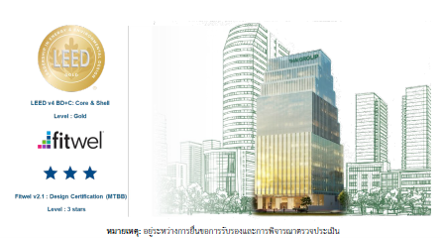
โดยเน้นการออกแบบ ก่อสร้าง และการดำเนินงานที่ประหยัดพลังงาน ประหยัดน้ำ เป็นมิตรต่อสิ่งแวดล้อม
และดีต่อสุขภาพผู้ใช้งาน ทั้งมีการควบคุมมลพิษจากการก่อสร้างตามมาตรฐาน U.S. Environmental Protection
Agency (EPA) 2012 เพื่อลดผลกระทบต่อสิ่งแวดล้อมและลดการปล่อยก๊าซเรือนกระจก อาทิ
- ระหว่างช่วงการก่อสร้าง มีการป้องกันการพังทลายของหน้าดินจากการชะล้าง
- จัดให้มีบ่อดักตะกอนก่อนปล่อยน้ำออกจากโครงการ ถังบำบัดน้ำเสียสำหรับห้องน้ำ และบ่อดักไขมันสำหรับครัว
- จัดทำรั้วกั้นเพื่อควบคุมทิศทางการไหลของน้ำไม่ให้กระทบพื้นที่ข้างเคียง
-
ควบคุมคุณภาพอากาศภายในระหว่างก่อสร้างตามมาตรฐานสมาคมผู้รับเหมางานโลหะแผ่นและเครื่องปรับอากาศแห่งชาติ
The Sheet Metal and Air Conditioning Contractors' National Association (SMACNA) เช่น
การปกป้องท่อลมและอุปกรณ์ปรับอากาศด้วยพลาสติก
สำหรับภายนอกอาคารมีการควบคุมฝุ่นโดยฉีดพรมน้ำในพื้นที่อย่างน้อยวันละ 2 ครั้ง
ล้างล้อรถทุกคันก่อนออกจากพื้นที่ คลุมผ้าใบรถบรรทุกและกองวัสดุเพื่อป้องกันการฟุ้งกระจาย
- ผู้รับเหมาหลักและรายย่อยมีส่วนในการคัดแยกขยะ เพื่อนำไปรีไซเคิลหรือใช้งานต่อกว่า 75%
ขยะคอนกรีตบางส่วนถูกนำมาทำหมอนคอนกรีตสำหรับที่จอดรถ
และบางส่วนใช้ในการเตรียมที่ดินสำหรับงานก่อสร้างอาคารอื่น ๆ
ซึ่งการนำวัสดุเหล่านี้กลับมาใช้ใหม่มีส่วนในการช่วยลดคาร์บอนฟุตปริ้นท์
- ใช้วัสดุก่อสร้างที่มีส่วนผสมรีไซเคิล (Recycled Content) และยังเลือกใช้วัสดุที่มีแหล่งขุด ผลิต
และประกอบภายในรัศมี 160 กิโลเมตรจากโครงการในสัดส่วนสูง
ตัวอย่างผลิตภัณฑ์ที่มีส่วนประกอบจากวัสดุรีไซเคิลคือ คอนกรีตไฮดรอลิก เหล็กเสริม เหล็กรูปพรรณ และ
ฝ้ายิปซัม
- เลือกใช้วัสดุภายในอาคาร สี สารเคลือบ กาว ยาแนว และ ฝ้าเพดาน ที่ผ่านเกณฑ์สารอินทรีย์ระเหยง่าย (VOC
content) ในระดับต่ำ และมีผลทดสอบการปล่อยมลพิษตามมาตรฐานการควบคุมสารประกอบอินทรีย์ระเหย California
Department of Public Health (CDPH)
- การใช้วัสดุที่ได้รับฉลากสิ่งแวดล้อม Environmental Product Declarations (EPD) อย่างน้อย 11 รายการ
ผ่านตามข้อกำหนด LEED 10 รายการ
- การใช้กระจก IGU (Insulated Glass Unit) หรือกระจกฉนวนความร้อน
ซึ่งมีประสิทธิภาพสูงสำหรับป้องกันคววามร้อนเข้าสู่อาคาร มีค่า Solar Heat Gain Coefficient (SHGC)
ต่ำว่า 0.23 รวมถึงมีค่า Solar Reflectance Index (SRI)
ซึ่งมีดัชนีสะท้อนความร้อนจากแสงอาทิตย์สูงในส่วนหลังคา ช่วยลดการถ่ายเทความร้อนเข้าสู่อาคาร
ระบบแสงสว่างใช้หลอดไฟ LED ทั้งโครงการ และมีการใช้ระบบ lighting control ทั้งภายในและภายนอกอาคาร
- ที่จอดรถใต้ดินมีการใช้หลอดไฟประหยัดพลังงานแบบ Built in motion sensor ซึ่งจะลดความสว่างลง 20%
เมื่อไม่มีผู้ใช้งาน
- HIGH EFFICEINCY HVAC SYSTEM ใช้สารทำความเย็นที่ไม่ใช่ CFC-Based ได้แก่ R-134a สำหรับ water cool
chiller และ R-410A สำหรับ VRF
ซึ่งสารทำความเย็นเหล่านี้จะช่วยลดการปล่อยก๊าซเรือนกระจกและชะลอการลดลงของชั้นโอโซนได้ 11%
เมื่อเทียบกับ Baseline ของ LEED
- ใช้ Water-cooled chiller และ VRF ที่มีประสิทธิภาพสูงกว่าค่ามาตรฐานขั้นต่ำ
ส่งผลโดยตรงต่อการลดการใช้ไฟฟ้าและการปล่อยก๊าซคาร์บอนไดออกไซค์ 80,000 กิโลกรัมคาร์บอนต่อปี
- โครงการตั้งเป้าหมายลดการใช้พลังงาน 10-15% เทียบกับ BASELINE ของ LEED
- การใช้สุขภัณฑ์ที่สามารถประหยัดน้ำได้ถึง 43% เมื่อเทียบกับเกณฑ์อ้างอิง (LEED)
- ระบบหอผึ่งเย็น (Cooling Tower) ที่มีอุปกรณ์ป้องกันการสูญเสียละอองน้ำ ติดตั้งมาตรวัดน้ำ
เซนเซอร์เพื่อตรวจสอบคุณภาพน้ำและการทำงานของระบบ
- โครงการใช้น้ำรีไซเคิลในการรดน้ำต้นไม้ โดยใช้น้ำฝนในบ่อหน่วงน้ำ ลดปัญหาน้ำไหลบ่าสู่ถนน และน้ำ
CONDENSATE จากระบบปรับอากาศ
- น้ำเสียจากครัวและห้องน้ำ จะถูกส่งเข้า WATER TREATMENTPLANT ซึ่งประกอบไปด้วย ถังตกตะกอน
ถังเกติมอากาศ ถังพักตะกอน ถังเก็บตะกอนส่วนเกิน
ซึ่งจะถูกสูบออกโดยรถดูดปฏิกูลเพื่อนำไปกำจัดอย่างถูกวิธีต่อไป
การบริหารจัดการทรัพยากรน้ำ
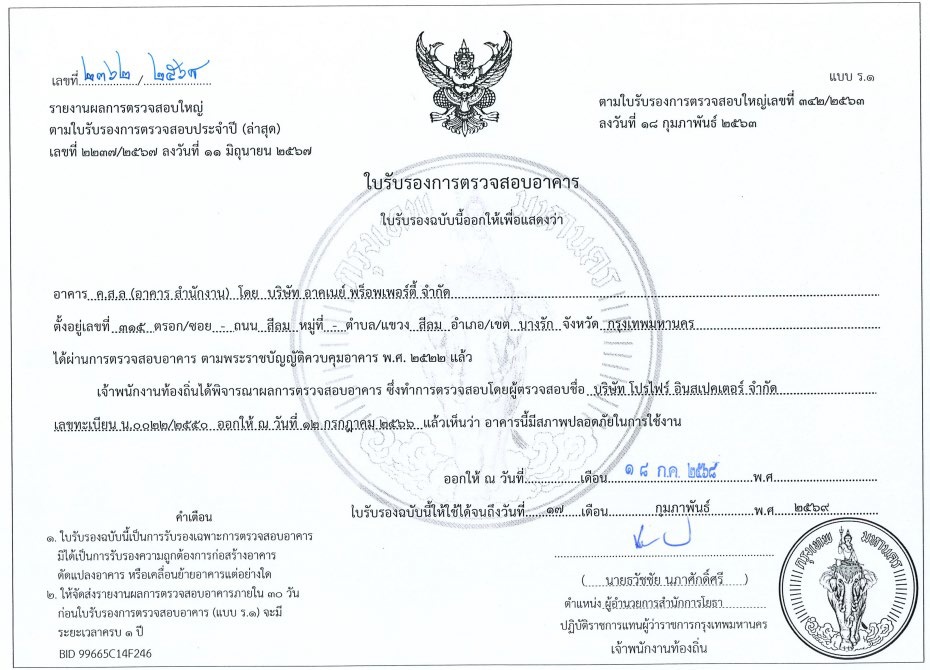
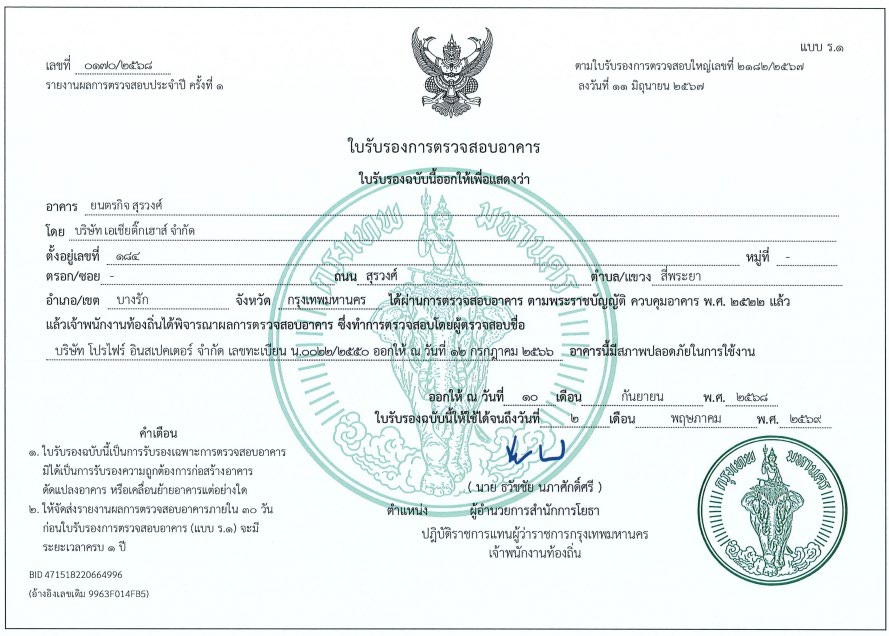
บริษัทมีการรณรงค์ให้พนักงานใช้น้ำอย่างรู้คุณค่าและใช้เท่าที่จำเป็น ส่วนการจัดการน้ำเสีย บริษัทได้มีการติดตั้งระบบบำบัดน้ำเสียอย่างถูกต้องตามกฎหมายอาคารควบคุม เพื่อบำบัดน้ำเสียก่อนทิ้งลงสู่ท่อระบายน้ำสาธารณะ โดยบริษัท อาคเนย์ พร็อพเพอร์ตี้ จำกัด และบริษัท เอเชียติ๊กเฮาส์ จำกัด ซึ่งเป็นเจ้าของอาคารเช่าที่ตั้งสำนักงานของบริษัทได้ผ่านการตรวจสอบอาคารเป็นประจำทุกปี ตามพระราชบัญญัติควบคุมอาคาร พ.ศ. 2522 มาตรา 8 (6) ระบบการจัดการเกี่ยวกับสภาพแวดล้อมของอาคาร เช่น ระบบการจัดแสงสว่าง การระบายอากาศ การปรับอากาศการฟอกอากาศ การระบายน้ำ การบำบัดนำเสีย และการกำจัดขยะมูลฝอยและสิงปฏิกูล ทั้งนี้ ด้วยพื้นที่เดิมของบริษัทมีจำกัด จึงไม่สามารถจัดทำบ่อพักน้ำเพื่อบำบัดและนำกลับมาใช้หมุนเวียนใหม่ได้
การใช้น้ำประปา
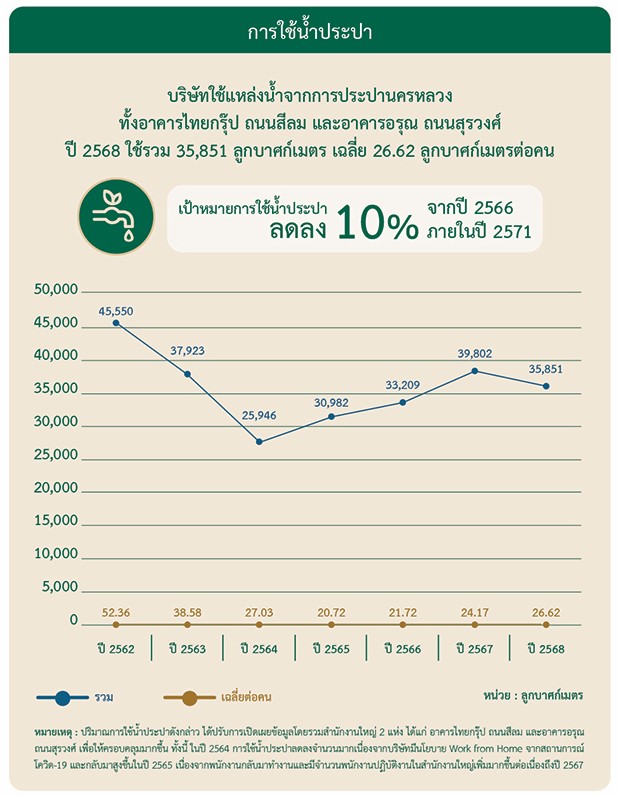
บริษัทใช้แหล่งน้ำจากการประปานครหลวง ทั้งอาคารไทยกรุ๊ป ถนนสีลม และอาคารอรุณ ถนนสุรวงศ์ ปี 2568 ใช้รวม 35,851 ลูกบาศก์เมตร เฉลี่ย 26.62 ลูกบาศก์เมตร ต่อคน เป้าหมายการใช้น้ำประปาลดลง 10% จากปี 2566 ภายในปี 2571
การบริหารจัดการการใช้พลังงาน
บริษัท ไทยกรุ๊ป โฮลดิ้งส์ จำกัด (มหาชน) และบริษัทย่อยตระหนักถึงปัญหาด้านพลังงาน ซึ่งเป็นปัญหาที่มีความสำคัญและมีผลกระทบต่อการดำรงชีวิตของคนและเศรษฐกิจของชาติปันอย่างมาก บริษัทจึงเล็งเห็นว่าการอนุรักษ์พลังงานเป็นสิ่งจำเป็นและถือเป็นหน้าที่ของทุกคนที่ต้องร่วมมือกันดำเนินการจัดการพลังงานอย่างต่อเนื่องและให้คงอยู่ตลอดไป จึงได้มีการกำหนดนโยบายอนุรักษ์พลังงานขึ้น และต่อมาได้มีการทบทวนนโยบายและแนวปฏิบัติด้านการอนุรักษ์พลังงานในเดือนมีนาคม 2569 เพื่อใช้เป็นแนวทางการดำเนินงานด้านพลังงานเพื่อส่งเสริมการใช้พลังงานให้เกิดประสิทธิภาพและเกิดประโยชน์สูงสุด
ปริมาณการใช้ไฟฟ้า
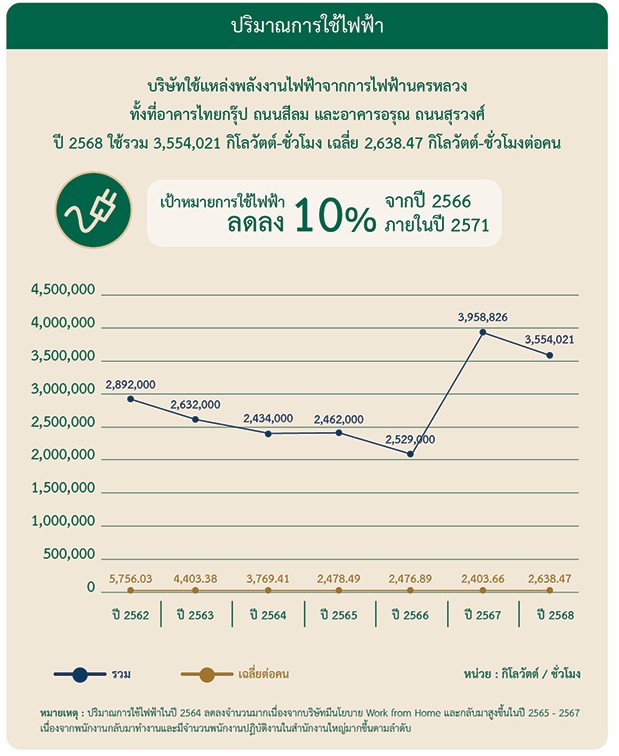
บริษัทใช้แหล่งพลังงานไฟฟ้าจากการไฟฟ้านครหลวงทั้งที่อาคารไทยกรุ๊ป ถนนสีลม และอาคารอรุณ ถนนสุรวงศ์ ปี 2568 ใช้รวม 3,554,021 กิโลวัตต์-ชั่วโมง เฉลี่ย 2,638.47 กิโลวัตต์-ชั่วโมง ต่อคน เป้าหมาย การใช้ไฟฟ้าลดลง 10% จากปี 2566 ภายในปี 2571
ชนิดและจำนวนหลอดไฟ
อาคารสำนักงานใหญ่ สีลม ใช้หลอดประหยัดพลังงาน 82% รวมพลังงานไฟฟ้าที่ใช้ 143,827.6 kWh/ปี
| ชนิดหลอด | จำนวน (หลอด) |
|---|---|
| LED T8 / 16W | 2,837 |
| LED T8 / 8W | 87 |
| LED T5 / 16W | 84 |
| LED E27 / 9W | 677 |
| ดาวน์ไลท์ MR16 12 V /6 W | 745 |
การบริหารจัดการขยะของเสียที่คัดแยก
ส่วนงานอาคารและสถานที่ผู้ดูแลการบริหารจัดการขยะของเสียได้ดำเนินการรวบรวมคัดแยกขยะและส่งกำจัดอย่างถูกวิธี โดยได้ร่วมมือกับบริษัท ไทยเบฟรีไซเคิล จำกัด ในการรับขยะไปรีไซเคิลตามกระบวนการ ส่วนขยะที่ไม่สามารถรีไซเคิลได้ บริษัทได้ส่งมอบให้กับรถจัดเก็บขยะของสำนักงานเขตบางรักเพื่อนำไปกำจัดอย่างถูกวิธีโดยมีสรุปปริมาณขยะและของเสียของบริษัท ดังนี้
หน่วย: กิโลกรัม
| ปริมาณขยะและของเสีย | ปี 2564 | ปี 2565 | ปี 2566 | ปี 2567 | ปี 2566 |
|---|---|---|---|---|---|
| ไม่อันตราย | 16,199 | 40,444 | 42,950 | 135,086 | 146,008 |
| อันตราย | 8 | 0 | 96 | 141 | 155 |
| รวม | 16,207 | 40,444 | 43,046 | 135,227 | 146,163 |
| เฉลี่ยต่อคน | 17 | 27 | 28 | 90 | 109 |
หมายเหตุ: ประมาณขยะตั้งแต่ปี 2567 เพิ่มสูงขึ้นเนื่องจากมีการบริหารจัดการอย่างถูกวิธีโดยเก็บรวมรวมและคัดแยกประเภทขยะที่ครอบคลุมมากขึ้น
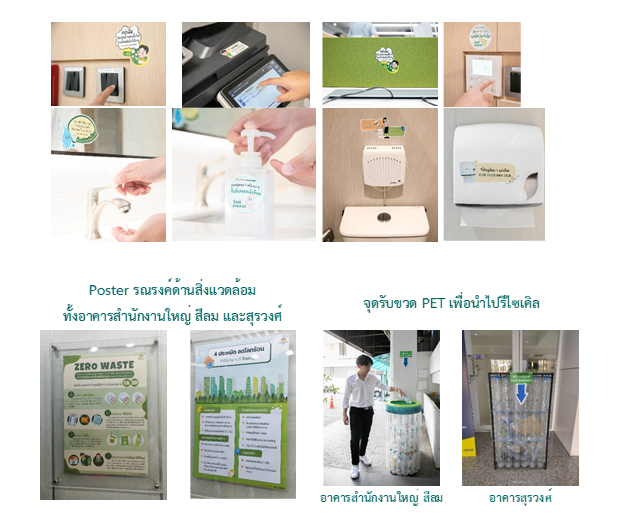
สื่อรณรงค์ประหยัดพลังงานจุดต่าง ๆ ภายในอาคารสีลมและสุรวงศ์ โดยรณรงค์อย่างต่อเนื่องจากปี 2566-2568
Sustainable Business Development
The Company aims to conduct its business in accordance with the principles of good governance to promote sustainable development for all stakeholders. This is achieved through effective management practices, transparency in operations, and governance standards. The Company focuses on improving the quality of products and services across all subsidiaries to meet consumer needs, drive business growth, and enhance the well-being and quality of life of all stakeholders, including shareholders, employees, customers, business partners, and society. The Company also takes into account environmental impacts from its business operations and employees’ daily activities. Continuous attention is given to sustainable development by establishing policies and operational guidelines that cover 3 dimensions, supporting balanced growth and creating long-term value for the organization and society as a whole.
- Economic
- Social
- Environmental
Documents and Policies Related to Sustainable Development
Sustainability Governance Structure
To ensure effective governance and management of business sustainability, the Company has established the Sustainability Management Team (SD Management Team). The Chairman of the Executive Board of Thai Group Holdings Public Company Limited and Indara Insurance Public Company Limited serves as the Chair of the SD Management Team, while the Managing Directors of key operating subsidiaries and senior executives from relevant business units serve as members of the team.
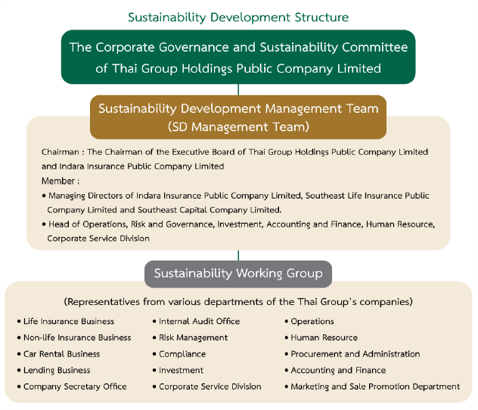
The SD Management Team reports directly to the Corporate Governance and Sustainability Committee. A Sustainability Working Group, composed of representatives from various departments, supports and drives the implementation of sustainability initiatives to ensure that the operations of the Company and its subsidiaries are aligned with the group’s sustainability policies, strategies, operational plans, and key performance indicators in a systematic and continuous manner.
Value Chain of Thai Group Holdings
Thai Group Holdings comprises four core businesses: life insurance, non-life insurance, car rental, and financial services. All of these are service-oriented businesses within the insurance and financial industry, and they share a similar approach in structuring their value chains. The key components of the Group's internal value chain can be summarized as follows:
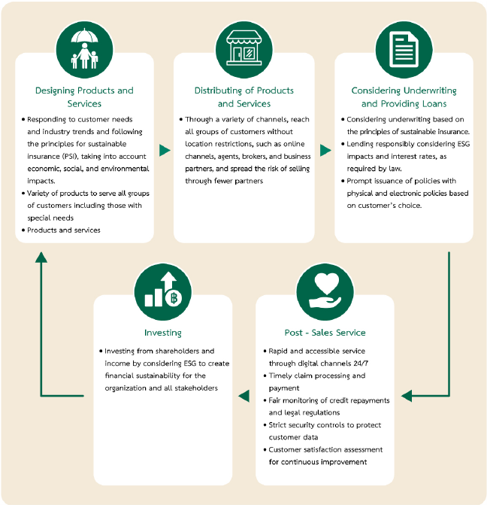
Stakeholders Along the Company’s Value Chain
The Company has identified and analyzed its stakeholders across the Company’s value chain in order
to
prioritize them, based on:
1. Level of involvement with the Company and relevance to activities across the value chain.
2. Stakeholders who benefit from or are impacted by the Company’s operations.
3. Suppliers and service providers that deliver the Company’s products and services.
4. Parties that influence the Company’s activities, products, or services.
5. Individuals or groups who have an interest in the Company’s products and services.
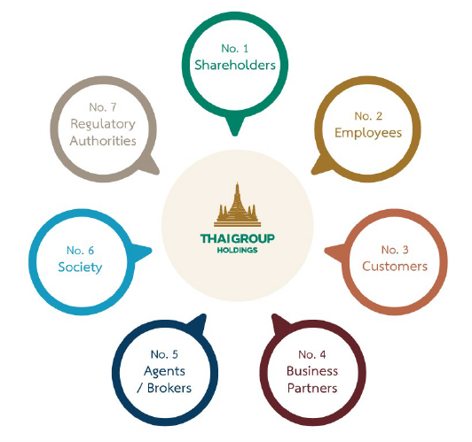
Stakeholder Engagement Practices and 2025 Performance Outcomes
| Stakeholder | Communication | Expectations | Response to Expectations | Stakeholder Engagement |
|---|---|---|---|---|
| 1. Shareholders | • Company Website • Postal mail • Annual Report • Shareholders’ Meeting |
• Transparent business Engagement and corporate Governance • Sustainable growth • Strong business competitiveness • Satisfactory returns on investment • Effective risk and crisis management |
• Good corporate governance • Business management and development with a focus on sustainable growth • Business research and development to enhance competitiveness and generate fair profits • Adaptation to technological changes • Comprehensive risk assessment and review based on relevant factors • Effective crisis response and management planning |
• Organizing shareholders’ meetings according to schedule, allowing shareholders to
express opinions, propose meeting agenda items, and nominate candidates for directorship • Preparing and presenting the Annual Report to shareholders to disclose the Company’s performance |
| 2. Employees | • E-mail • Intranet • E-Survey • Employee meetings • Internal events • Company Website • iVoice • Suggestion box • Posters |
• Career advancement opportunities • Fair compensation and benefits • Equal treatment • Workplace safety • Mutual respect • Freedom of expression |
• Ongoing employee development aligned with job roles and responsive to organizational and
environmental changes • Performance evaluations used as a basis for compensation and benefits decisions • Dissemination of human rights policies to promote a culture of mutual respect • Anonymous and safe channels for feedback and whistleblowing, with protection against retaliation |
• Organized Townhall meetings (both face-to-faceand virtual) to communicate corporate
goals, strategies, and directions to all employees, while providing open forums for direct
interaction with senior executives • Encouraged employee participation in company events such as the anniversary celebration, annual merit-making, and cultural festivities • Independence in presenting operational methods and expressing opinions on the |
| 3. Customers | • Company website • LINE official account • Postal mail • SMS • Subsidiaries' branches • Customer care center • Complaint and feedback channels |
• Products and services that meet their needs • Good, equitable, and responsive customer service • Strong corporate reputation and financial stability • Clear, easy-to-understand, and honest product and service information • Secure use of information technology and cybersecurity • Protection and proper use of personal data • Access to insurance and financial services • Fair and timely delivery of coverage and benefits as stated in insurance policies • Fair interest rates |
• Implemented data privacy protection and cybersecurity measures • Provided continuous service training and development for employees • Conducted comprehensive risk assessments by considering all relevant Factors • Established crisis response and management plans • Communicated product and service information clearly, avoiding misleading or exaggerated advertising • Developed insurance and financial products and services to improve accessibility for different customer segments |
• The business regulatory unit reviewed all product content and advertising materials to
ensure compliance with legal restrictions, avoiding exaggeration or misleading information
before public release • SE Life (Southeast Life Insurance), the Institution Client Management Division, organized workshops and sessions on insurance, finance, risk management, and healthy living, including a Healthy Meal workshop and a Health Talk on ‘Eat Well, Be Happy, Reduce BMI Without Fasting,’ to promote customers’ financial and personal well-being at SX2025. • Indara (Indara Insurance), through its Institutional Client Unit, organized four training programs to enhance clients’ knowledge of risk management and preparedness, covering topics such as Training on insurance and risk management. • The Company has strictly complied with the Personal Data Protection Act (PDPA) to ensure the highest standard in safeguarding customers' personal data. As a result, the Company has continuously maintained its ISO 27001 certification. • Annual customer satisfaction survey on the Company’s products and services • Developed the iCEM system to enhance the efficiency of customer service management across various communication channels of the Company |
| 4. Business Partners | • Company Website • Meetings • Telephone • Sales platform • Postal mail • Company representatives |
• Clear and accurate product and service information • Reasonable returns • Timely compensation/payment • Market-demanded products • Strong corporate reputation • Quality customer service • Good corporate governance with transparency • Effective risk management • User-friendly and secure innovations and technologies |
• Communicated product and service information clearly, without exaggeration or misleading
content
• Established clear agreements on compensation, benefits, and payment schedules • Developed insurance and financial products and services to enhance accessibility for different customer segments • Provided continuous training and development for employees in customer service excellence • Established crisis response and management plans • Conducted comprehensive risk assessments by considering all relevant factors • Ensured corporate oversight in accordance with good governance principles • Adapted promptly to technological changes |
• Maintain ongoing relationships with business partners.
• Support operations or activities that promote good health , such as the Royal Commemoration Run for National Mother’sDay on August 12, 2025. |
| 5. Agents/Brokers | • Company website • Meetings • Telephone • Sale Platform • Postal mail • Subsidiaries' branches • Company representatives • Training and seminars |
• Clear and accurate product and service information • Reasonable returns • Timely commission payments • Marketable and in-demand products • Strong corporate reputation • Quality customer service support • Effective risk management • Convenient and secure innovations and technologies |
• Communicated product and service information clearly, without exaggeration or misleading
content
• Established clear agreements on commission structure, benefits, and payment schedules • Developed insurance and financial products and services to enhance accessibility for various customer segments • Provided continuous training and development for employees in customer service • Established crisis response and management plans • Conducted comprehensive risk assessments by considering all relevant Factors • Ensured corporate governance in accordance with good governanceprinciples • Adapted proactively to technological changes |
• The Company continuously provided product, service, and regulatory training and
development for agents and brokers, as detailed in the performance results under the “Access
to Insurance and Financial Services” section and the “Human Resource Development” section
• The Company organized on going performance incentive campaigns, such as travel reward trips, incentive bonuses, and annual awards • Developed online platforms to enable agents and brokers to deliver customer services more efficiently and effectively |
| 6. Society | • Website Company • Press Releases • CSR Activities • LINE |
• Accessibility to insurance and financial products and services • Delivering benefits to society • Environmental Protection |
• Develop insurance and financial products and services to make them accessible to each
group of people. • Corporate social responsibility • Environmental action in business processes |
• The Company offers products accessible to all customer groups. For example, INSURE (Indara
Insurance) offers Micro Insurance products with premiums below Baht 200;
Southeast Money provides agricultural loan to sugarcane farmers and solar rooftop business
loans. Details are provided under the section on Financial and Insurance Access.
• SE Life (Southeast Life Insurance) organized the ‘Unlock Life: Debt-Free, Increased Income, Comfortable Retirement’ program to share personal financial management knowledge with employees, youth, and the younger generation. Collaboration with Chulalongkorn University included the ‘Capacity Development Partnership Program,’ and employees and agents were supported to donate blood regularly. • Organized the ‘Sustainable Mind and Body: Pathway to Life Energy’ activity to provide knowledge on alternative health care, with over 200 participants at the Queen Sirikit National Convention Center. • Provided assistance to those affected by unrest in the Thai-Cambodian border area and to victims of the southern Thailand floods. |
| 7. Regulatory Authorities | • Policy and regulatory briefing meetings • Official letters and explanatory documents • Annual reports • Direct coordination and liaison |
• Business operations in compliance with laws and regulatory requirements • Public accessibility to insurance and financial products and services • Sustainable business development |
• Ensured corporate governance in accordance with good governance principles • Operated the business in compliance with applicable laws and regulatory requirements • Developed insurance and financial products and services to enhance accessibility for various customer segments |
• Strict compliance with the policies and regulations of the Office of Insurance
Commission (OIC), the Securities and Exchange Commission (SEC), the Stock Exchange of
Thailand, the Anti-Money
Laundering Office (AMLO), the Bank of Thailand, and other relevant regulatory authorities,
as well as cooperation in various activities such as company anniversary events.
• Employees were assigned to participate in activities and training organized by the Office of Insurance Commission (OIC), the Life Insurance Association of Thailand, and the Thai General Insurance Association, including blood donation activities on National Life Insurance Day |
ESG Materiality Topics Identification
The Company has established a structured process to identify and prioritize ESG materiality
topics, as outlined below:
1. Study and Analysis: The Company begins by studying and analyzing risk factors that may impact its
business operations. This includes referring to indicators from the Stock Exchange of Thailand
(SET), sustainability issues addressed by other companies in the same industry, and global industry
trends. These insights are used to identify the initial list of material sustainability topics
covering the three dimensions: economic, social, and environmental.
2. Prioritization of Material Topics: The Company evaluates each topic based on its potential impact
on the business and considers insights gathered from stakeholder engagement activities—both internal
and external. The topics are then prioritized using a Materiality Matrix, which helps determine the
level of importance from both the Company’s and stakeholders’ perspectives.
3. Validation of Accuracy and Completeness: The prioritized list of material topics is presented to
senior management for review and validation in terms of accuracy and completeness. Management input
is used to improve the materiality process and ensure its alignment with strategic direction, prior
to communicating the results through the Company’s official channels.
4. Sustainability Reporting Development: The Company reviews and updates the content and development
process of the Sustainability Report annually. Feedback from stakeholders is welcomed and
incorporated into future reports to continuously enhance the quality and relevance of the
sustainability disclosure.
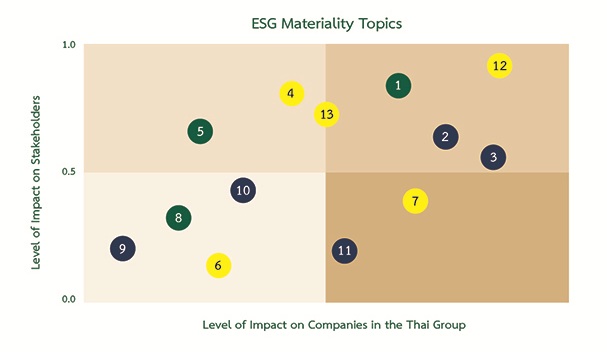
- 1. Low Carbon Products and Processes
- 2. Human Resource Development
- 3. Financial and Insurance Access
- 4. Sustainable Finance
- 5. Responsible Products
- 6. Supply Chain Management
- 7. Innovation
- 8. Environmental Management
- 9. Occupational Health and Safety
- 10. Community Development
- 11. Customer Relationship Management
- 12. Corporate Governance
- 13. IT Security and Data Protection
TGH Sustainability Framework
%20Update%2025052026.jpg)
Sustainability Strategic Framework
Environmental
Develop low-carbon products and operational innovations that create business value, improve efficiency to reduce natural resource consumption, meet customer needs, and align with the company’s climate and carbon reduction goals.
Social
Attract, develop, upskill, and retain employees to grow alongside the company. Foster a culture of diversity, equity, human rights commitment, and fair labor practices. Promote access to insurance for society to improve quality of life, healthcare, and protection for underserved groups, while enhancing financial literacy and retirement planning programs for employees, customers, and the broader community.
Governance
Integrate ESG criteria into financial decision-making processes and policies, including investments, financing, lending, insurance, and asset management. This includes responsible credit assessment and financial services with consideration for social and environmental impacts, as well as promoting ESG-related investments and avoiding investments in projects that negatively affect the environment and local communities.
Goals and Strategic Performance: Governance Dimension
Sustainable Finance
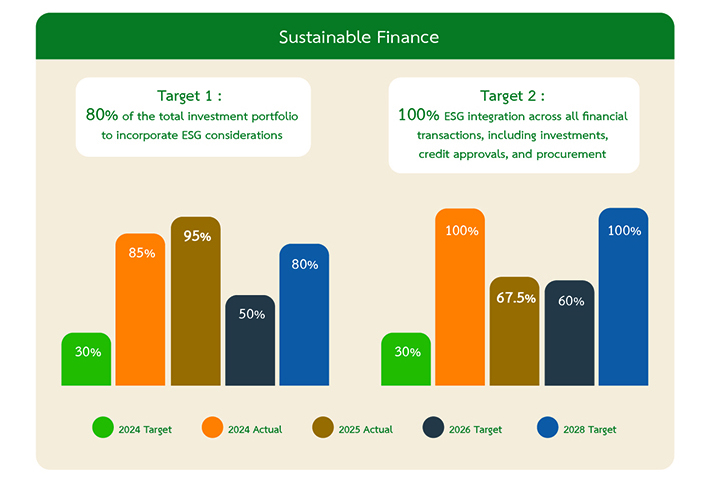
Material Topic 4: Sustainable Finance
| 2028 Target | 2026 Target | 2025 Performance |
|---|---|---|
| ESG factors are integrated into 80% of the Company’s total investment portfolio. | 50% | ESG criteria have been integrated into the investment decision making process for 95% of the Company’s current investment assets. |
| All financial transactions, covering investment, loan approvals, and procurement are governed by a comprehensive 100% ESG framework | 60% | The Company considers the debt repayment ability of 100% of customers in its credit approval process to help reduce the risk of excessive household debt, which may negatively impact customers in various aspects, as well as to minimize the likelihood of non-performing loans for the Company. Procurement includes ESG assessments in the selection of both new and existing suppliers and vendors, covering 35% of all corporate counterparties |
The Company adheres strictly to the principles of good corporate governance, covering all 8 core
corporate governance principles, including:
1. Roles and Responsibilities of the Board
2. Setting Sustainable Objectives and Key Goals for the Company
3. Enhancing the Effectiveness of the Board
4. Executive Search, Development, and Personnel Management
5. Conducting Business Responsibly
6. Ensuring Appropriate Risk Management and Internal Control Systems
7. Maintaining Financial Integrity and Transparency
8. Supporting shareholder engagement and communication, as well as introducing other policies that
are comprehensive and aligned with good corporate governance practices. The Company also
communicates these policies and business ethics to employees to ensure they are adhered to as
guiding principles.
Risk Management Strategy
The Company integrates risk management into its business strategy and operations to support sustainable growth and resilience. Guided by its Risk Management Policy, the Company applies an Enterprise Risk Management (ERM) approach based on the COSO Enterprise Risk Management framework and international best practices. TGH identifies, assesses, monitors, and manages strategic, operational, financial, non-financial, and reputational risks through a structured governance framework, including the Three Lines of Defense model. Risk appetite and tolerance levels are regularly reviewed to ensure alignment with the Company’s objectives, regulatory requirements, and evolving risk landscape.
The Company and its subsidiaries have established guidelines for caring for and interacting with stakeholders in their Business Code of Conduct, considering responsibilities toward shareholders, employees, customers, business partners, contractors, communities, society, and the environment. In addition, the Company promotes business operations under the principles of free and fair competition, avoids actions that may create conflicts of interest or violate intellectual property rights, and upholds a strict stance against all forms of corruption. Relevant practices have been established under the following areas:
Composition of the Board of Directors
In accordance with its Articles of Association, the Company will have a Board of Directors comprised of at least five members to conduct the Company’s business, not less than half of whom must reside within the country. There must be at least one third of independent directors out of total directors, and at least 3 persons. (Specified in the Charter of the Board). TGH is committed to supporting gender diversity on the board, with no restrictions on race, ethnicity, nationality, religion, gender, or background. Everyone shall be treated, represented, and evaluated as an equal, ensuring equal opportunity and equal rights to vote.
Company Code of Conduct and Policies
Thai Group Holdings Public Company Limited is committed to ensuring that all employees are aware of, able to access, and understand the company's policies on governance-related policies, such as Anti-bribery and Corruption Policy, C ode of Business Conduct for both employees and suppliers, as well as labour standards, including Human Resource Management Policy, Whistleblowing Policy and the Human Rights Policy to which they are entitled. The policies are distributed to all employees, managers, suppliers, and board members during the onboarding process. A digital version, available in both Thai and English, is available at all times on TGH’s internal employee portal and on the company’s website. The policies are available on https://www.tgh.co.th/corporate-governance/policy
The company has implemented measures to review the code of conduct's effectiveness and relevance annually, and the internal audit department has been tasked with conducting random compliance audits at least once a year. In addition, any information received through the whistleblowing channel or from stakeholders is evaluated, and the Code of Conduct is updated if necessary. In the event of any violations of the Code of Conduct, the Company has established disciplinary measures based on the severity of the issues, including verbal or written warnings and termination of employment. For business partners, the Company requires partners to complete a self-assessment to ensure compliance with the Supplier Code of Conduct. Random audits of business partners' operations may also be conducted by relevant department
Communication of Supplier Code of Conduct
Thai Group Holdings Public Company Limited is committed to conducting its business in accordance with the principles of good governance, transparency, integrity, and responsibility toward society, the environment, and all stakeholders. The Company recognizes that its suppliers are an essential part of the Value Chain and play a significant role in the organization's sustainability growth. Therefore, the Company has established this “Supplier Code of Conduct” to define the framework and standards for suppliers’ business operations in alignment with international standards and applicable laws, and ESG principles (Environmental, Social, and Governance). including ethical conduct, labour standards, human rights, health and safety, and anti-corruption. The code is communicated to all suppliers and business partners as part of the contract agreement process. This Code aims to promote sustainable business development (ESG) and long-term mutual growth between the Company and its suppliers. The Supplier Code of Conduct is available in both Thai and English on the Thai Group Holdings Public Company Limited website and is accessible to everyone. You can download the Supplier Code of Conduct below Supplier Code of Conduct – TGH Website
Freedom of Association and Collective Bargaining
Suppliers must respect and comply with applicable laws on freedom of association and collective bargaining of their employees. The workers have the right to participate in collective bargaining without facing any form of reprisal or punishment.
Working Hour Compliance
Suppliers must comply with all applicable laws regarding working hours and overtime, and employees must be fairly compensated in accordance with the contract. The company encourages suppliers to actively manage and reduce instances of excessive working hours.
Political Neutrality Statement
Thai Group Holdings Public Company Limited is a politically neutral company that operates independently under the governance framework defined and outlined in the policy. The company does not provide or accept any politically affiliated donation, nor does it engage in any form of activities that are associated with a political party, view, or opinion. Any concern or suspicion of political involvement should be reported through the whistleblowing channel on our website or by clicking https://www.tgh.co.th/ztc
Political Donation in 2025 = 0 THB
Disciplinary Disclosure
In 2025, the company recorded no violations of its anti-bribery and corruption policies, no employees were disciplined or terminated, and no fines or settlements were paid. This performance reflects the company’s ongoing effort to ensure compliance with the code of conduct and the continuous process of evaluating and adjusting our policies to best fit the business environment.
| Indicator | 2025
(Reporting year) |
|---|---|
| Staff disciplined for non-compliance with anti-bribery and corruption policy | 0 staff |
| Staff terminated for non-compliance with anti-bribery and corruption policy | 0 staff |
| Fines, penalties, or settlements for non-compliance of the anti-bribery and corruption policy | 0 staff |
The Company has been a certified member of Thailand’s Private Sector Collective Action Coalition
Against
Corruption (CAC) since March 31, 2021. The initial three-year certification expired on March 31,
2024, and
the Company has successfully renewed it for the first time, with the second renewal due on March 31,
2027. The Company implements its anti-corruption policy and communicates it to all employees to
ensure they are aware of the impacts of corruption and adhere to the policy against all forms of
corruption. In addition, channels for reporting corruption have been established, allowing all
stakeholder
groups to report any violations of rights or instances of illegal, non-compliant, or unethical
business
conduct to the responsible departments.
1. Mail:
To: Chairman of the Audit Committee, Audit Committee Member, Chairman of the Anti-Corruption
Committee, or Anti-Corruption Committee Member.
Address: 10500 Thai Group Holdings Public Company Limited, 315 Thai Group Building, 10th
Floor, Silom Road, Silom Subdistrict, Bang Rak District, Bangkok 10500.
2. Company Website Click for More Information
Complaint Handing Process
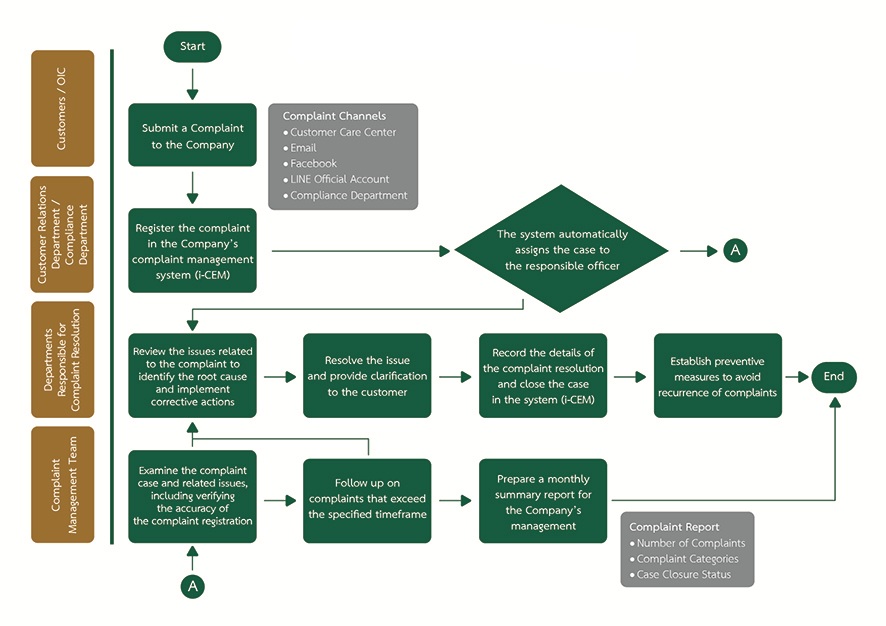
Procedure of Managing Violations of the Code of Ethics and Business Conduct
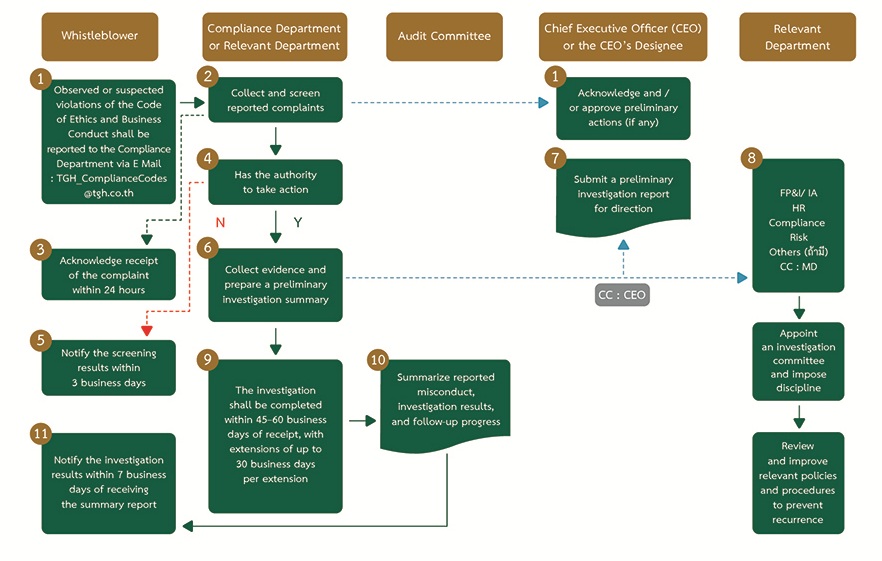
Investigation and Disciplinary Process for Corruption and Fraud Cases
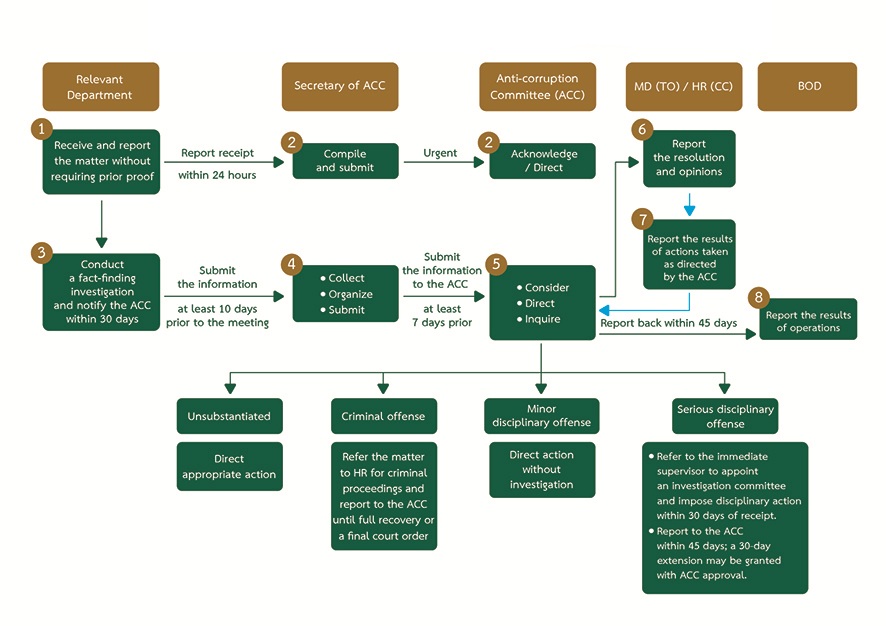
Innovation and Dissemination of Innovation Derived from Responsible Operations Toward Society, Environment, and Stakeholders
The Company and its subsidiaries promote innovation at both the internal operational level and the
interorganizational collaboration level. The focus is on encouraging the creation and development of
new operating approaches, as well as transforming concepts and production processes to enhance the
value of products and services. The objective of innovation development is to drive positive change,
improve operational efficiency, and deliver better outcomes, leading to increased organizational
productivity. This, in turn, creates value and sustainable benefits for society as a whole, for
example:
• The LINE Official Account, @THAI GROUP, is a digital channel continuously developed by the Company
to specifically serve customers across the Group. Enhanced functionalities have been introduced to
provide a comprehensive, one-stop service platform for customers of its subsidiaries, covering both
individual and group insurance customers, including those of SE Life
(Southeast Life Insurance), Indara (Indara Insurance), as well as used car customers of RDD (Rod Dee
Det Auto). Customers can access services 24 hours a day, 7 days a week (24/7 Digital Access) across
all locations nationwide, with a total user base of over 654,000. In addition, the platform
contributes to the conservation of natural resources by reducing paper usage previously
required for document-based services. In 2025, a total of 7,954 requests were submitted through the
online system, resulting in a reduction of 30,589 sheets of paper, equivalent to approximately five
trees.
• The D Life platform is a channel developed and continuously enhanced by SE Life (Southeast Life
Insurance) to support the Company’s agents in delivering prompt services to customers anytime and
anywhere, with the highest level of security standards.
In addition, in 2025, Thai Group continued to advance its innovation initiatives by enhancing various functions on the i-CEM (Customer Engagement Management) system. The system incorporates Robotic Process Automation (RPA) and Workflow Automation to manage customer service interactions across multiple channels, totaling over 475,000 transactions. This enables customers to receive a seamless and positive service experience that is convenient, fast, and consistently standardized across all service channels. The system also delivers organizational benefits by effectively reducing the workload associated with repetitive tasks. For example, manual processes such as data entry and customer case tracking have been improved through structured and systematic workflows, reducing human error, increasing accuracy, and enhancing the management of Service Level Agreements (SLAs) for more efficient monitoring and control. In addition, it helps mitigate risks related to penalties or delays, supports the growth in workload and customer volume, and enables real-time data collection and analysis for continuous evaluation and improvement of operational strategies. These efforts ultimately strengthen customer confidence, trust, and long-term satisfaction.
Supplier Management Practices and Payment Terms
The Company has always recognized the importance of its suppliers and is committed to treating all suppliers equitably and fairly in conducting business. The Company strictly complies with contractual obligations and agreed commercial terms and conditions, while also emphasizing effective liquidity management. In cases where the Company is unable to comply with any agreed term or condition, it will promptly notify the supplier to jointly explore reasonable solutions in good faith. The Company establishes and communicates payment schedules to suppliers. The average credit term is set at 30 days, subject to the specific agreements between the Company and each supplier. In practice, the Company’s average payment period to suppliers remains within the agreed credit term, with an actual average payment period of 15 days in 2025, compared to the standard 30-day credit term.
| The standard credit term | Actual average payment period |
|---|---|
| 30 days | 15 days |
Tax Policy of the Company
To support business operations under good governance principles and ensure sustainable development for stakeholders, the Company is committed to tax management with full compliance, transparency, and ethical responsibility. This commitment is aligned with the Company’s vision, mission, and values. More information Please visit Here Here
Goals and Strategic Performance: Social Dimension
Financial and Insurance Access
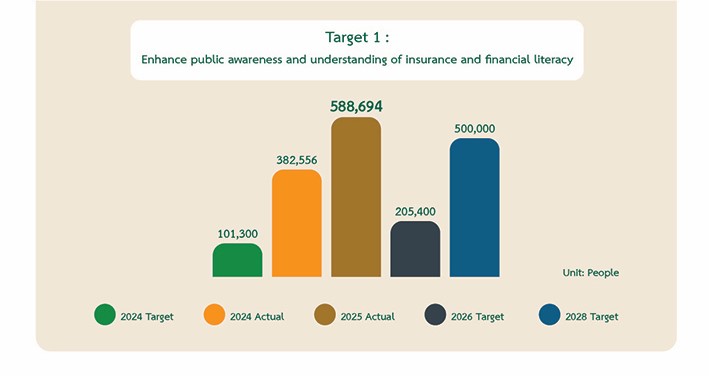
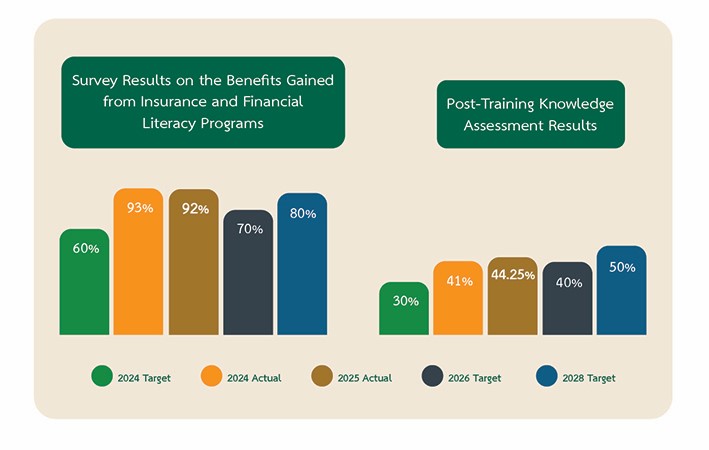
Material Topic 3: Financial and Insurance Access
| 2028 Target | 2026 Target | 2025 Performance |
|---|---|---|
| Raise financial and insurance awareness for 500,000 people through seminars and online channels via the Company’s media platforms. | 205,400 People - SE Life: 100,000 People - SECAP: 5,000 People - Indara: 100,000 People - SEM/SEMR: 400 People |
588,694 People - SE Life: 147,778 (148 %) - SECAP: 5,939 (119 %) - Indara: 434,709 (435 %) - SEM/SEMR: 268 (67%) |
| Enhancing access to financial services and insurance for underserved groups. | SE Life: 2% of the underserved group gained increased access to life insurance products
(compared to the total number of customers) (Remark : SE Life defines the underserved group as individuals with a monthly income below THB 15,000 including children, students up to 20 years old, and the elderly aged 60 and above) |
11% |
| SEMR: 10% of the underserved group gained increased access to financial services (Remark: The underserved group of SEMR refers to sugarcane farmers) |
23% | |
| Indara: Sold 50,000 Micro Insurance accident policies (THB 200 per policy) (Remark: The Micro Insurance accident coverage includes group insurance for low-income migrant workers and provides free personal accident insurance) |
||
| Implement employee development programs to enhance knowledge in insurance and finance, as well as in health, well-being, and sustainability | 70% of all employees received training | 99.75% |
| Employees trained in insurance and finance showed at least a 5% increase in knowledge and understanding | 10% | |
| Employee engagement scores increased by 5% compared to 2023 | Increased by 3.45% compared to 2023 | |
| Implement 5 special welfare programs for employees and their families. | 2 programs | 3 programs or initiatives aimed at promoting employees’ wealth and well-being: 1. Paternity leave for fathers. 2. Free Personal Accident (PA) insurance for employees, valued at THB 50,000 providing 24-hour worldwide coverage. 3. Preventive Care program to promote and enhance employees’ health and wellbeing |
Human Rights Management & Oversight
The Human Resources Department is responsible for the day-to-day management and
oversight of TGH's human rights commitments as they relate to employees and the
workplace. The Human Resources Department also works alongside and advises our
Procurement Division to ensure that our suppliers comply with the expected standards. This
includes ensuring that TGH's policies on non-discrimination, fair treatment, safe working
conditions, freedom of association, rights to collective bargaining, and labour standards are
implemented consistently across all business units and group entities. In fulfilling this role,
the Human Resources Department serves as the central function for human rights-related
matters within TGH, with responsibilities covering:
Policy implementation — ensuring human rights-related policies and labour standards are
applied in day-to-day operations and HR processes, including recruitment, employment,
performance management, and separation
Internal communication — communicating human rights commitments, policies, and
updates to employees across the organisation, ensuring awareness at all levels
Receiving and coordinating complaints — acting as the primary point of contact for
employees who wish to raise concerns related to human rights, fair treatment, or workplace
conduct, and coordinating the handling of such matters in accordance with TGH's
grievance procedures
Information and guidance — providing information and guidance to employees and
management on human rights-related matters, applicable labour laws, and TGH's internal
policies
Respect for Human Rights and Gender Equality
The Company and its subsidiaries have policies that support and respect the protection of human rights. This includes treating all stakeholders, including employees, communities, and society at large, with respect for their humanity, considering equality and freedom for all, without violating basic rights or engaging in any form of discrimination based on race, nationality, religion, language, color, gender, age, education, physical condition, or social status. Additionally, the Company ensures that its operations do not engage in any direct or indirect involvement in human rights violations, such as forced labor, child labor, or sexual harassment. furthermore, the Company and its subsidiaries promote vigilance in adhering to human rights regulations by providing opportunities for feedback and establishing channels for complaints for those affected by human rights violations related to the Company's operations. Proper remedies will be provided as needed. to ensure effective respect for human rights, the Company and its subsidiaries focus on building awareness and educating employees about human rights principles, encouraging them to uphold these standards in their daily practices.
Furthermore, based on the review of all the Company's complaint channels, both from internal and external individuals, no complaints regarding human rights violations were found.
.jpg)
Corporate Policy and Communication
Thai Group Holdings Public Company Limited is committed to ensuring that all employees are aware of, able to access, and understand the company's policies on governance-related policies, such as Anti-bribery and Corruption Policy, Code of Business Conduct for both employees and suppliers, as well as labour standards, including Human Resource Management Policy, Whistleblowing Policy and the Human Rights Policy to which they are entitled. The policies are distributed to all employees, managers, suppliers, and board members during the onboarding process. A digital version, available in both Thai and English, is available at all times on TGH’s internal employee portal and on the company’s website. The policies are available on https://www.tgh.co.th/corporate-governance/policy
Human Resource Management: Child & Forced Labor
Thai Group Holdings Public Company Limited stands against and prohibits any form of child labour, forced or compulsory labour, and the employment of individuals
without legal work authorisation across all operations, in compliance with the Thai Labour Protection Act B.E. 2541 and with respect to international human rights
standards. TGH is committed to reviewing any suspicious behaviour and any complaints or concerns received.
As part of TGH’s commitment, the following measures are applied to all new employees prior to commencement of employment:
Age verification — The original identification document is inspected to confirm that the individual meets the minimum legal age for employment. No person under 18
years of age will be employed.
Work authorisation — Valid proof of legal right to work in Thailand is verified for all employees. Foreign nationals must hold a valid work permit issued under
applicable law.
Document retention — Original identity documents are not retained by TGH or any recruitment intermediary at any stage of the employment process.
Recruitment fees — No recruitment fees are charged to applicants or employees. All recruitment costs are borne by TGH.
These controls are part of TGH's standard recruitment procedures, overseen by the Human Resources Department and subject to periodic internal review.
Human Resource Management: Representation
Employee Engagement
Thai Group Holdings Public Company Limited (TGH) is committed to maintaining open channels between employees and management, ensuring fair compensation, and promoting appropriate working conditions across all operations. TGH has established a Welfare Committee in accordance with the requirements local regulations. The committee comprises elected employee representatives and management representatives, providing a formal channel through which employees may raise workplace matters, welfare concerns, and suggestions directly with management. Employees are encouraged to utilise this channel to express any concerns, complaints, or suggestions. The committee meets regularly to review and address matters raised by employees.
Fair Compensation
TGH ensures that compensation for all employees meets or exceeds the statutory minimum wage requirements applicable in each location of operation. To maintain market competitiveness and fairness, TGH conducts an annual salary survey in collaboration with external consultants, benchmarking compensation levels against relevant market data. The findings inform TGH's annual compensation review process to ensure remuneration remains fair and appropriate relative to the market.
Working Hours
TGH monitors and reviews working hours, breaks, and overtime practices in accordance with the Thai Labour Protection Act. The Human Resources Department reviews this information regularly as part of standard workforce management practices.
Working Hour & Minimum Wage Compliance
The company is committed to fair and lawful compensation practices and regularly reviews them to ensure appropriate working conditions, with employees receiving fair compensation, salary increases, and bonuses based on their annual performance and job responsibilities. All employees are compensated at or above the applicable statutory minimum wage as required by relevant laws and regulations. The company also maintains transparent recruitment and hiring processes based on qualifications and suitability for the position, ensuring proper management of working hours, overtime, rest periods, and leave entitlements in accordance with the Thai Labour Protection Act. All to provide a safe working environment that supports employees and promotes a good quality of life.
Freedom of Association & Collective Bargaining
Thai Group Holdings Public Company Limited treats all employees with equality and non-discrimination. Every employee has equal rights to work under the Company's rules and regulations and in accordance with human rights principles. The company respects every employees’ right to freedom of association and collective bargaining. Employees shall treat each other with mutual respect and equality, without discrimination based on physical or mental characteristics, race, nationality, origin, religion, gender, age, education, social status, political opinion, or any other matters.
Thailand Group Holdings Public Company Limited monitors workforce demographics and employment data to understand workforce diversity, support equal opportunity and inclusion, and track progress against its people and sustainability objectives. These insights help inform workforce planning, talent development, and employee well-being initiatives while promoting transparency and accountability to employees, investors, and other stakeholders.
| Category | Subcategory | Employees | % of Workforce | Target |
|---|---|---|---|---|
| Age Group | Under 30 | 118 | 7.05% | |
| 30–50 | 1115 | 66.61% | ||
| Over 50 | 441 | 26.34% | ||
| Gender | Male | 564 | 33.69% | |
| Female | 1110 | 66.31% | ||
| Other | 0 | 0 | ||
| Prefer Not to Disclose | 0 | 0 | ||
| Disability | Persons with Disabilities | 0 | 0 | |
| No Disability Declared | 0 | 0 | ||
| Prefer Not to Disclose | 0 | 0 | ||
| Nationality | Thai | 1673 | 100% | |
| Netherlands | 1 | 0% | ||
| (Nationality 3) | ||||
| (Nationality 4) | ||||
| Management Level | Senior Management | 26 | 1.55% | |
| Middle Management | 201 | 12.01% | ||
| Supervisory | 589 | 35.19% | ||
| Non-Management | 858 | 51.25% | ||
| Race/Ethnicity | Southeast Asian | 1673 | 100% | |
| East Asian | 0 | 0 | ||
| South Asian | 0 | 0 | ||
| Other Asian | 0 | 0 | ||
| Western European | 1 | 0% | ||
| Eastern European | 0 | 0 | ||
| North America | 0 | 0 | ||
| Central & South America | 0 | 0 | ||
| Oceania | 0 | 0 | ||
| Other | 0 | 0 | ||
| Religion | Buddhism | 1398 | 83.51% | |
| Islam | 33 | 1.97% | ||
| Christianity | 17 | 1.02% | ||
| Hinduism, Sikhism, and Others | 226 | 13.5% |
Diversity : Board of Directors and Employees in 2025
| Level | Total Employees | % Female | % Male | % Under 30 | % Aged 30–50 | % Over 50 |
|---|---|---|---|---|---|---|
| Board of Directors | 18 | 22% | 78% | 0% | 0% | 100% |
| Senior Management | 26 | 58% | 42% | 0% | 12% | 88% |
| Middle Management | 201 | 58% | 42% | 0% | 53% | 47% |
| Supervisors / Team Leaders | 589 | 60% | 40% | 3% | 70% | 27% |
| Operational / Non-Management Staff | 858 | 73% | 27% | 12% | 69% | 19% |
| Total Workforce | 1691 | 66% | 34% | 7% | 66% | 26% |
Employee Voluntary Resignation and Turnover Rate
| Age Group | Year | 2025 | ||
|---|---|---|---|---|
| Gender | Male | Female | Total | |
| 30 Years | Person | 8 | 20 | 28 |
| Percentage | 28.57% | 71.43% | 100.00% | |
| 30-50 Years | Person | 60 | 110 | 170 |
| Percentage | 35.29% | 64.71% | 100.00% | |
| >50 Years | Person | 20 | 21 | 41 |
| Percentage | 48.78% | 51.22% | 100.00% | |
| Total | 88 | 151 | 239 | |
| Percentage | 36.82% | 63.18% | 100.00% | |
| Turn Over Rate | 5.26% | 9.02% | 14.28% | |
Workforce Employment Type in 2025
| Employment Type | Year | 2025 | ||
|---|---|---|---|---|
| Gender | Male | Female | Total | |
| Full-time | Person | 545 | 1096 | 1641 |
| Percentage | 32.56% | 65.47% | 98.03% | |
| Part-time | Person | 0 | 0 | 0 |
| Percentage | 0 | 0 | 0 | |
| Temporary/Contract | Person | 19 | 13 | 32 |
| Percentage | 1.14% | 0.78% | 1.91% | |
| Internship | Person | 0 | 0 | 0 |
| Percentage | 0 | 0 | 0 | |
| Total | 564 | 1110 | 1674 | |
| Percentage | 33.69% | 66.31% | 100.00% | |
Employee Capability Development and Fair Treatment of Labor
The Company and its subsidiaries recognize the importance of human resource development and the
fair treatment of labor, as these are factors that contribute to increasing the value of the
business and enhancing competitiveness, as well as supporting the sustainable growth of the Company
and its
subsidiaries in the future. The Company and its subsidiaries have established the following policies
and practices:
1. Respect for Employee Rights based on human rights principles and compliance with labor laws.
2. Fair Employment Processes and Conditions, including fair compensation in the form of salaries
and/or bonuses that are appropriate to the employee's potential, as well as performance-based
evaluations within a fair assessment process to ensure job security and promote career advancement
opportunities.
3. Employee Development, through training, seminars, workshops, and sending personnel to
participate in relevant academic seminars and training to enhance their knowledge and capabilities,
while fostering positive attitudes, ethical behavior, and teamwork among employees.
4. Employee Benefits in accordance with legal requirements such as social security and beyond,
including health insurance, accident insurance, provident funds, and various types of financial
assistance to employees such as low-interest employee loans, marriage benefits, disaster relief, and
funeral assistance.
5. Annual Health Checkups for all employees, taking into account risk factors based on level,
age, gender, and the work environment of each individual.
6. Ensuring a Safe and Healthy Work Environment, by implementing measures to prevent accidents,
promoting safety awareness among employees, and ensuring regular training. The Company also promotes
good hygiene and ensures that the workplace is always safe and sanitary.
7. Creating a Positive and Inclusive Work Environment, where employees are treated equally
without any exploitation, fostering a culture of mutual respect and acceptance.
8. Encouraging Employee Feedback and Complaints regarding unfair practices or wrongdoing within
the Company, while ensuring protection for employees who report such issues.
The Company has taken care of its employees and all subsidiaries by adhering to human rights principles, creating a safe and hygienic work environment, providing appropriate and above-legal benefits, offering opportunities for employee feedback to contribute to organizational development, and continuously developing employees' knowledge and skills. This ensures employees become experts and professionals capable of adapting to changing customer needs and business competition. Employees are encouraged to be happy in their work, proud, and emotionally connected to the organization.
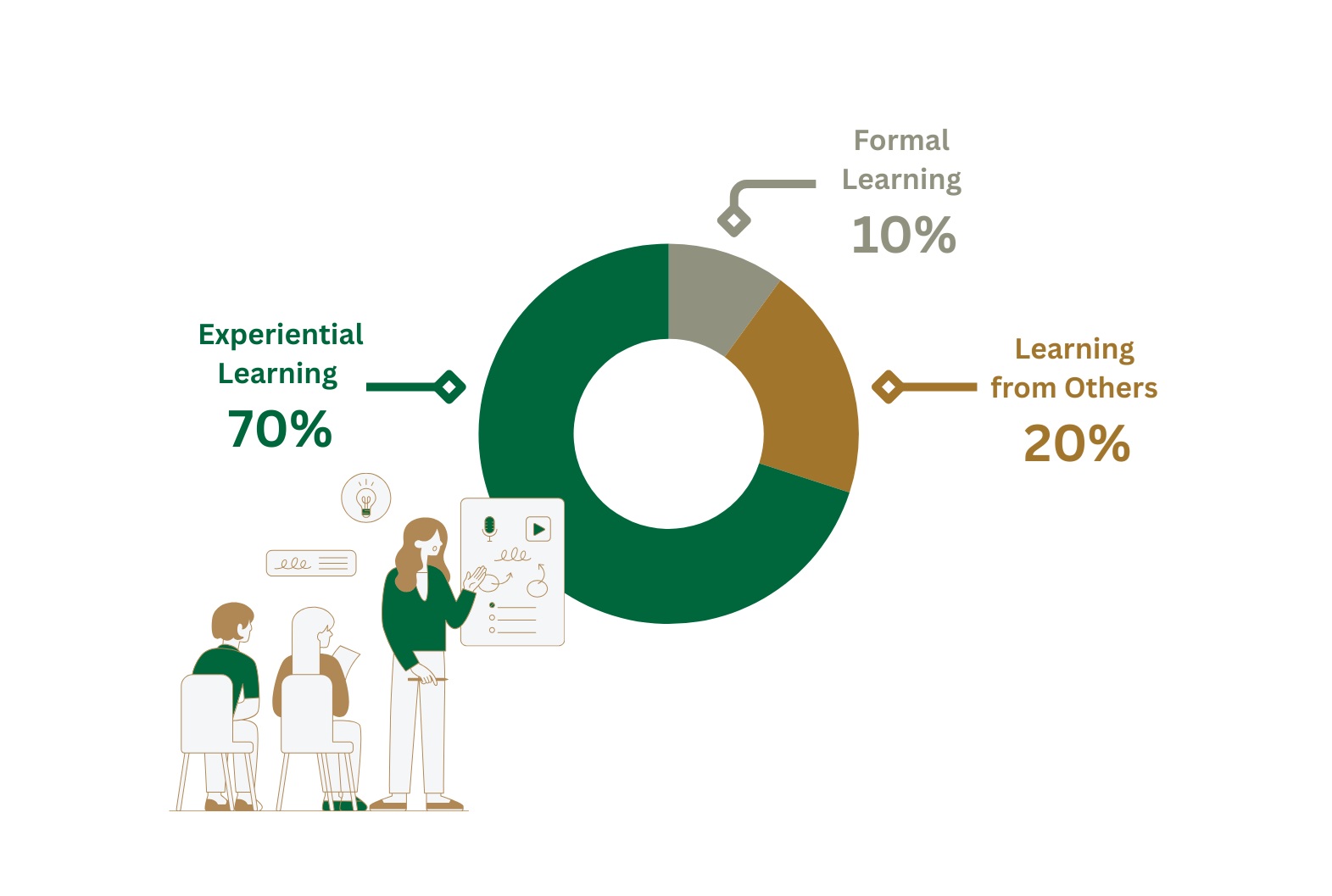
Total training hours in 2025: 27,530 hours
1,643 of 1,647 employees trained (99.75%)
Average training: 18 hours per employee (target: 9 hours)
Average 2.25 days per employee
Employee Training & Development
| Training Type | Training Hours 2025 | % of Training hour | Average hour per employee | Average day per employee |
|---|---|---|---|---|
| Health & Safety | 1,461 | 5.31% | 0.89 | 0.11 |
| Onboarding | 57 | 0.21% | 0.33 | 0 |
| Skills Development | 10,215 | 37.10% | 6.22 | 0.78 |
| Manager Training | 1,449 | 5.26% | 0.88 | 0.11 |
| Specialised | 5,519 | 20.05% | 3.36 | 0.42 |
| Anti-Money Laundering Office (AMLO) | 1,125 | 4.09% | 0.68 | 0.09 |
| Personal Data Protection Act (PDPA) | 1,323 | 4.81% | 0.81 | 0.1 |
| Cyber Security | 226 | 0.82% | 0.14 | 0.02 |
| Code of Conduct | 1,514 | 5.50% | 0.92 | 0.12 |
| Anti Corruption | 1,688 | 6.13% | 1.03 | 0.13 |
| Executive Training | 4,008 | 14.56% | 2.44 | 0.31 |
| Total | 27,530 | 100.00% | 18 | 2.25 |
Occupational Accident Statistics
0
incidents over 365 days
Community Investment
Total Community Investment in Year 2025
4,059,996 THB
Goals and Strategic Performance: Environmental Dimension
Low Carbon Products and Process
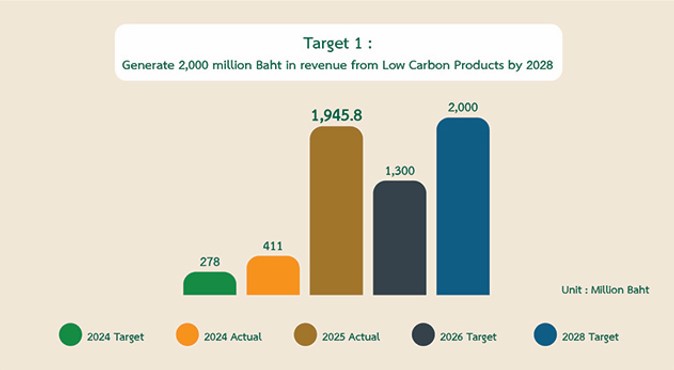
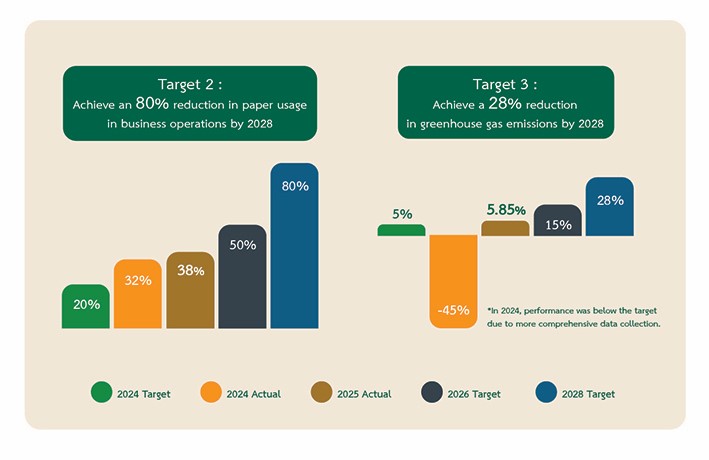
Material Topic 1: Low Carbon Products and Processes
| 2028 Target | 2026 Target | 2025 Performance |
|---|---|---|
| Encourage subsidiaries to develop and offer low-carbon products, generating a total additional revenue of THB 2,000 million from these products | Target total revenue of THB 1,300 million from low-carbon products | Total revenue of THB 1,945.8 million generated from low-carbon products |
| SECAP • Leased 1,000 vehicles including EV, xEV, PHEV, and Hybrid , generating approximately THB 800 million in revenue. |
SECAP • Leased 1,075 vehicles, including EV, xEV, PHEV, and Hybrid, generating THB 1,383 million in revenue. |
|
| SEM • Provided Solar Rooftop business loans totaling THB 200 million. |
SEM • Provided Solar Rooftop business loans for buildings, totaling THB 209.8 million |
|
| Indara • Sold 15,000 motor insurance policies for EV, Hybrid, PHEV, and Green Products. • Generated THB 300 million in premium income. • Representing 3.13% of total premium income (THB 9,999 million). |
Indara • Sold 17,964 motor insurance policies for EV, Hybrid, PHEV, and Green Products. • Generated THB 353 million in premium income. • Representing 3.13% of total premium income (THB 11,277 million). |
|
| Reduce printing and paper usage by 80% | 50% | Reduced printing and paper usage by 38% • 2025: Reduced printing and paper usage by 44,931 kg, equivalent to 8,640,656 sheets or 1,440 trees. • 2024: Reduced printing and paper usage by 48,746 kg, equivalent to 9,374,231 sheets or 1,562 trees. • 2023 (baseline year): Reduced printing and paper usage by 72,016 kg, equivalent to 13,849,417 sheets or 2,308 trees. |
| Greenhouse gas emissions reduced by 28% | 15% | Greenhouse gas emissions reduced by 5.85% • 2025: 4,391 tCO2e • 2024 (baseline): 4,664 tCO2e • 2023: 3,202 tCO2e (Indicator comparison between 2023 and 2024 reflects the expanded scope of data collection) |
In addition, the Company has promoted its affiliated companies to continuously provide project finance to entrepreneurs engaged in environmentally friendly businesses. Flexible lending criteria and qualifications have been applied to improve access to funding, along with preferential low interest rates, in order to support the expansion of green businesses. At present, entrepreneurs who have received such financing have successfully completed the construction and operation of solar rooftop projects, totaling 58 sites, with a combined electricity generation capacity of 45.104 MW in 2025.
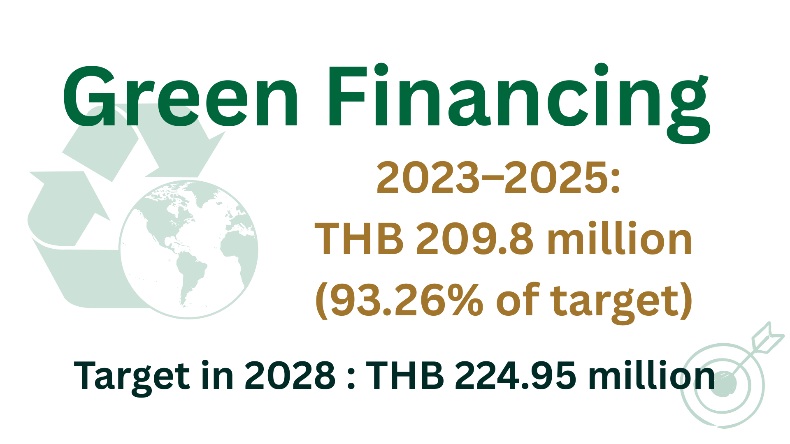
Southeast Capital Company Limited (SECAP) is well-positioned to provide electric vehicles (EVs), including hybrid and plug-in hybrid vehicles, to support environmental sustainability by reducing fossil fuel consumption and lowering emissions of pollutants and greenhouse gases (GHGs). This initiative aligns with the government’s policy to promote the adoption of electric vehicles under the national EV policy “30@30,” which targets the production of zero-emission vehicles (ZEVs) to account for at least 30% of total vehicle production by 2030. The Company aims to expand its EV fleet to help reduce emissions and dependence on fossil fuels.
In 2025, the Company provided a total of 1,075 EVs, including hybrid and plug-in hybrid vehicles, representing 179% of its 2026 target, and generating revenue of THB 1,383 million (172% of the target). Meanwhile, Indara Insurance Public Company Limited has developed environmentally friendly insurance products, providing coverage for EVs, hybrid vehicles, PHEVs, solar rooftops, and EV chargers, totaling 17,964 policies (119% of the 2026 target), generating revenue of THB 353 million (117% of the target).
Executive Remuneration
Thai Group Holdings Public Company Limited (TGH) recognises the importance of aligning executive incentives with its sustainability and climate-related commitments as part of strengthening long-term value creation and responsible business practices. The Board of Directors has incorporated sustainability considerations, including elements linked to FTSE Russell ESG Rating performance, into the executive performance evaluation framework for the Chief Executive Officer and Leadership Team. This approach supports the integration of ESG considerations into day-to-day decision-making while encouraging continuous improvement over time.
ESG outcomes are considered in executive remuneration, particularly within variable incentives, where they contribute to the overall performance assessment in a balanced and proportionate manner. The Board, supported by the Nomination and Remuneration Committee, oversees this process and continues to enhance the framework in line with evolving regulatory and investor expectations, while improving transparency of ESG-related disclosures
Greenhouse Gas Management
The Company has set a target to reduce greenhouse gas emissions across Scope 1–3 by at least 28% from the 2024 baseline by 2028, through promoting digital transformation and encouraging employees to work on online systems to reduce paper usage, alongside campaigns to conserve the environment by minimizing the use of natural resources. Key initiatives include the implementation of the i-Series platform for online operations such as performance evaluations and meeting room bookings, as well as effective internal waste management through proper waste segregation and disposal. In addition, the Company aims to reduce paper usage from business processes by at least 5% per year by encouraging agents, customers, and business partners to adopt online services, including e -Applications, e-Policies, and aftersales services via the D-Life platform. Under this initiative, every 100 e-Applications/e-Policies is equivalent to planting one tree, with the Company matching each tree by planting an additional one, contributing to a total target of 100,000 trees, which is estimated to offset approximately 900–1,500 kilotons of carbon dioxide emissions per year.
| Scope 1 | Scope 2 | Scope 3 |
|---|---|---|
| Stationary Combustion – fuel consumption for building operations - Diesel (Generator) - Diesel (Fire pump) Mobile Combustion – fuel consumption for transportation (vans, pool cars, executive vehicles, motorcycles) - 95 ULG - DIESEL - GASOHOL E20 - GASOHOL E85 - GASOHOL91 - GASOHOL95 - PREMIUM DIESEL - PREMIUM GASOHOL 95 - Refrigerant Usage (R22) - Refrigerant Usage (R32) |
Electricity Consumption – Metropolitan Electricity Authority | - Paper Consumption (A4 and A3, 80 gsm, white) - Corrugated Cardboard - Mixed Paper (general paper waste) - PET Plastic: Polyethylene Terephthalate (clear bottles) - LDPE Plastic: Low-Density - Polyethylene (garbage bags) - Organic Waste (food waste) - General Waste - Hazardous Waste (light bulbs) - Water Consumption –Metropolitan Waterworks Authority |
Green House Gas Emission
Thai Group Holdings Public Company Limited (TGH) has compiled its greenhouse gas (GHG) emissions data for the period from 1 January to 31December 2025, with organizational boundaries defined using the operational control approach in accordance with the GHG Protocol. Reported Scope 1 and Scope 2 emissions cover more than 95% of the Group’s operations, ensuring comprehensive and representative disclosure. Target to reduce Green House Gas Emission -28% within 2071
Unit: tCO2e
| GHG Emissions | 2025 | 2024 (Base Year) | 2023 | % Change from 2024 |
|---|---|---|---|---|
| Scope 1: Direct GHG Emissions | 1,855.89 | 1,921.29 | 1,471.06 | -3.40% |
| Scope 2: Indirect GHG Emissions from Energy Consumption (Location-based) |
2,068.80 | 2,304.43 | 1,472.13 | -10.23% |
| Total Scope 1 + 2 | 3,924.69 | 4,225.72 | 2,943.19 | -7% |
| Scope 3: Other Indirect GHG Emissions | ||||
| Category 1 Purchased goods and services | 129.64 | 130.75 | 161.96 | 0.84% |
| Category 5 Waste generated in operations | 337.08 | 307.58 | 96.91 | 9.59% |
| Total Scope 3 | 466.72 | 438.33 | 258.57 | 6.47% |
| Total Scope 1 + 2 + 3 | 4,391.41 | 4,664.05 | 3,201.76 | -5.85% |
| Average per employee | 3.26 | 3.05 | 3.2 |
Climate Change Management
Additionally, the Company recognizes the importance of environmental stewardship, particularly both the positive and negative impacts arising from climate change. The Company has therefore established a Climate Change Policy covering all business operations and the supply chain of the Company and its subsidiaries, aiming to prevent and mitigate impacts from “Climate Risk,” which is considered a financial risk that may significantly affect the organization’s performance. The scope of this policy also extends to relationship management with partners, suppliers, agents, brokers, loss adjusters, hospitals, contracted garages, regulatory authorities, subcontractors in various activities, and other related parties. The Company emphasizes collaboration among all stakeholders to support operations that minimize negative climate impacts, promote greenhouse gas emission reduction, and encourage efficient resource utilization to protect the environment in the long term and drive sustainable business practices across all dimensions. The Company has established targets, strategies, and business approaches to reduce greenhouse gas emissions in order to limit global temperature rise. Oversight of climate-related risk management is governed by the Corporate Governance and Sustainability Committee and the Risk Oversight Committee.
Climate Change Policy
Thai Group Holdings Public Company Limited and its subsidiaries recognize the importance of protecting the climate as a global challenge with significant implications on the economy, society and the environment. In line with its commitment to leadership in sustainable development, the company has established this policy to guide climate action across all areas of its operations by integrating sustainable resource management with low-carbon business models. The Company is committed to effectively reducing negative impacts from climate change while creating positive environmental outcomes and building long-term confidence among all stakeholder groups. This commitment is pursued through the promotion of greenhouse gas (GHG) emission reductions, improvements in energy efficiency, sustainable use of natural resources, and implementation of actions that minimize environmental impacts. In alignment with the Paris Agreement, the company aims to limit global temperature rise to well below 2°C, pursuing efforts to limit it to 1.5°C, while adhering to the Principles for Sustainable Insurance (PSI) and conducting business in accordance with the United Nations Sustainable Development Goals (UN SDGs). Moreover, the company seeks to enhance preparedness and resilience to climate change across all aspects of its operations and to support effective supply chain management by collaborating with business partners and suppliers to reduce negative impacts and create positive outcomes related to climate change, all in accordance with international standards.
Climate Change Mitigation and Adaptation
The Company has established initiatives to support limiting the increase in global temperature to
no more than 1.5°C in accordance with the Paris Agreement and to reduce negative impacts from
climate change, as follows:
1. Digitalize work processes (Digitalization) to reduce paper usage by 80% by 2028 from the 2023
baseline.
2. Align all future capital expenditures (CapEx) with the Company’s long-term greenhouse gas
(GHG) emission reduction targets or with the targets of the Paris Agreement aimed at limiting global
temperature rise to no more than 1.5°C.
3. Reduce greenhouse gas emissions by 28% by 2028 from the 2024 baseline, and consider further
adjustments to long-term targets.
4. Develop environmentally friendly products and services, including increasing corporate car
rental services for EVs, hybrids, and plug-in hybrids, while reducing internal combustion engine
vehicles using fossil fuels; developing Green Insurance products covering EVs, hybrids, plug-in
hybrids, EV chargers, and solar roofs; and providing solar roof financing to affiliated business
partners, with a revenue target of THB 2 billion during 2023–2028, to promote the adoption of clean
and alternative
energy in place of fossil fuels.
5. Undertake the development of the Thai Group Quarter building on Surawong Road as the Group’s
new headquarters, designed to be environmentally friendly in accordance with international standards
under U.S. Green Building Council, including the LEED (Leadership in Energy and Environmental
Design) green building rating and certification system, which is widely recognized globally.
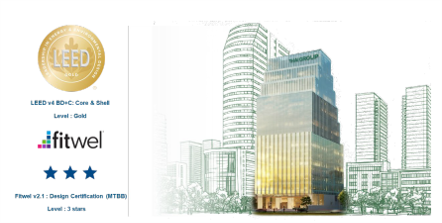
Remark: currently under certification application and assessment process.
Emphasizing energy-efficient, water-saving, environmentally friendly, and occupant health-conscious
design, construction, and operations, the project also implements construction pollution control in
accordance with the U.S. Environmental Protection Agency to reduce environmental impacts and
greenhouse gas emissions, as follows:
• During construction, measures are in place to prevent soil erosion caused by runoff.
• Sedimentation ponds are installed prior to water discharge from the project, along with
wastewater treatment tanks for restrooms and grease traps for canteens.
• Barriers are constructed to control water flow direction and prevent impacts on surrounding
areas.
• Indoor air quality during construction is controlled in accordance with SMACNA standards, such
as protecting air ducts and HVAC equipment with plastic coverings. For outdoor areas, dust control
measures include water spraying at least twice daily, washing vehicle wheels before exiting the
site, and covering trucks and material piles to prevent dispersion.
• Main contractors and subcontractors participate in waste segregation, with more than 75% of
waste recycled or reused. Some concrete waste is repurposed into parking blocks and for site
preparation of other construction projects, contributing to reduced carbon footprint.
• Construction materials include recycled content and are sourced, manufactured, and assembled
within a 160-kilometer radius of the project where possible. Examples include hydraulic concrete,
reinforcing steel, structural steel, and gypsum board.
• Interior materials, including paints, coatings, adhesives, sealants, and ceilings, are
selected based on low volatile organic compounds (VOC) content and comply with emission standards of
the California Department of Public Health.
• At least 11 materials with Environmental Product Declarations (EPD) are used, meeting at least
10 LEED requirements.
• Insulated Glass Unit (IGU) is used for high thermal performance, with a Solar Heat Gain
Coefficient (SHGC) lower than 0.23, along with a high Solar Reflectance Index (SRI) for roofing to
reduce heat transfer into the building. LED lighting is used throughout the project, supported by
lighting control systems both indoors and outdoors.
• Basement parking areas utilize energy-saving lighting with built-in motion sensors, reducing
brightness by 20% when unoccupied.
• High-efficiency HVAC systems use non-CFC-based refrigerants, including R-134a for water-cooled
chillers and R-410A for VRF systems, reducing greenhouse gas emissions and slowing ozone depletion
by 11% compared to the LEED baseline.
• Water-cooled chillers and VRF systems exceeding minimum efficiency standards are used,
directly reducing electricity consumption and carbon dioxide emissions by approximately 80,000 kg of
carbon per year.
• The project targets energy reduction of 10–15% compared to the LEED baseline.
• Water-saving sanitary fixtures reduce water usage by up to 43% compared to LEED reference
standards.
• Cooling tower systems are equipped with drift eliminators, water meters, and sensors to
monitor water quality and system performance.
• Recycled water is used for landscape irrigation, including rainwater collected in retention
ponds and condensate water from air conditioning systems, helping to reduce surface runoff.
• Wastewater from kitchens and restrooms is treated through a Water Treatment Plant consisting
of sedimentation tanks, aeration tanks, settling tanks, and sludge storage tanks, with excess sludge
properly removed and disposed of by licensed service providers.
Water Resource Management
The Company promotes responsible water usage by encouraging employees to use water mindfully and only as necessary. For wastewater management, the Company has installed a legally compliant wastewater treatment system in accordance with the Building Control Act. Wastewater is properly treated before being discharged into the public drainage system. Southeast Property Co., Ltd. and Asiatic House Co., Ltd., the owners of the office buildings leased by the Company, conduct annual building inspections in accordance with the Building Control Act B.E. 2522 (1979), Section 8(6), which covers environmental management systems such as lighting, ventilation, air conditioning, air purification, drainage, wastewater treatment, and waste disposal. Due to space limitations in the current office premises, the Company is unable to construct a water retention pond for wastewater treatment and reuse.
TAP Water Consumption
The Company sources water from Metropolitan Waterwork Authority for
both Thai Group Building, Silom Road, and Surawong Road. In 2025, total water consumption was 35,851
cubic meters, averaging 26.62 cubic meters per person
Target: 10% reduction from the 2023 baseline by 2028
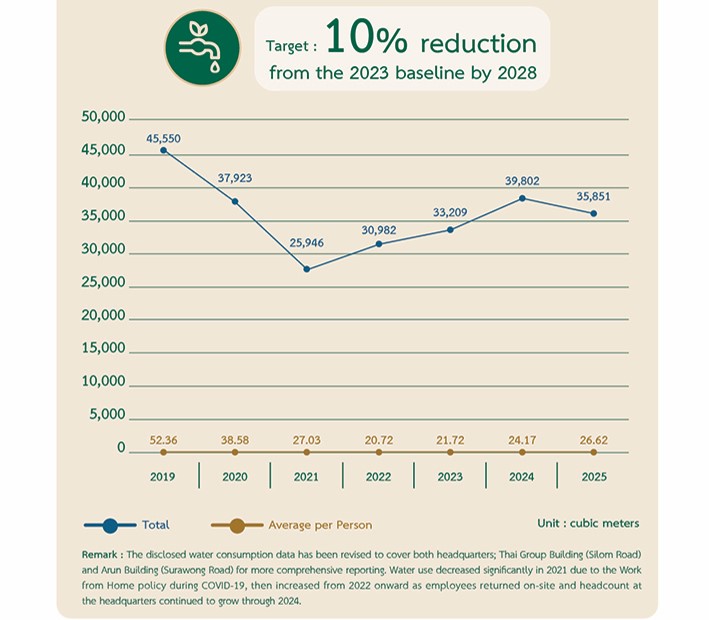
Energy Management
Thai Group Holdings Public Company Limited and its subsidiaries recognize that energy is a critical issue with significant impacts on people’s livelihoods and the national economy. The Company therefore considers energy conservation to be essential and the responsibility of everyone to collaboratively and continuously manage energy in a sustainable manner. Accordingly, the Company has established an Energy Conservation Policy, which was subsequently reviewed in March 2026 to serve as a guideline for energy management practices, aiming to promote efficient and optimal use of energy.
Electricity Consumption
The Company sources electricity from Metropolitan Electricity
Authority for both Thai Group Building, Silom Road, and Surawong Road. In 2025, total Electricity
Consumption 3,554,021 kWh, average 2,638.47 kWh per person
Target: 10% reduction from the 2023 baseline by 2028
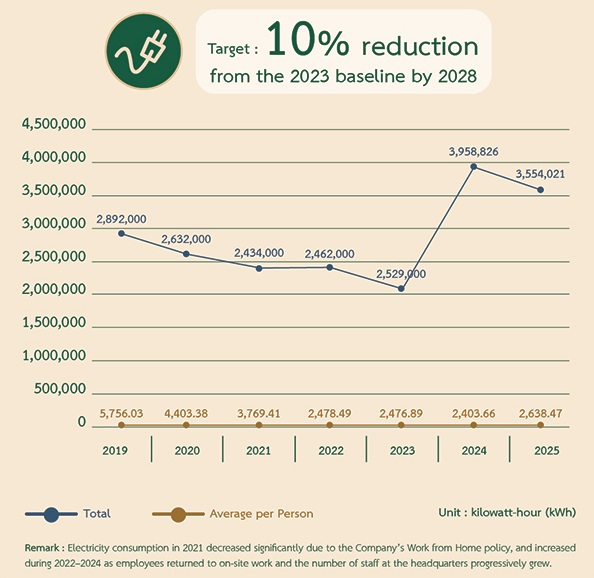
Type and Number of Lighting Fixtures
At the Silom Head Office building, 82% of lighting fixtures are energy-saving bulbs, with total electricity consumption of 143,827.6 kWh per year.
| Type of Lighting Fixtures | Number of Lighting Units (Unit: Bulbs) |
|---|---|
| LED T8 / 16W | 2,837 |
| LED T8 / 8W | 87 |
| LED T5 / 16W | 84 |
| LED E27 / 9W | 677 |
| Downlight MR16 12V / 6W | 745 |
Waste Management (Sorted Waste)
The Building and Facilities Department, responsible for waste management, has collected, segregated, and properly disposed of waste. The company has collaborated with Thai Bev Recycle Co., Ltd. to recycle applicable waste according to proper procedures. Non-recyclable waste is handed over to the Bang Rak District Office’s waste collection service for appropriate disposal. The company’s waste and disposal volumes are summarized as follows:
Unit: Kilograms
| Waste and Residual Material Volume | 2021 | 2022 | 2023 | 2024 | 2025 |
|---|---|---|---|---|---|
| Non-hazardous waste | 16,199 | 40,444 | 42,950 | 135,086 | 146,008 |
| Hazardous waste | 8 | 0 | 96 | 141 | 155 |
| Total | 16,207 | 40,444 | 43,046 | 135,227 | 146,163 |
| Average per Person | 17 | 27 | 28 | 90 | 109 |
Remark: The volume of waste in 2024 increased due to the proper management practices, which involved more comprehensive collection and segregation of waste types.
Energy-saving campaigns were conducted at various points within the Silom and Surawong buildings, with continuous efforts planned from 2023 to 2025.
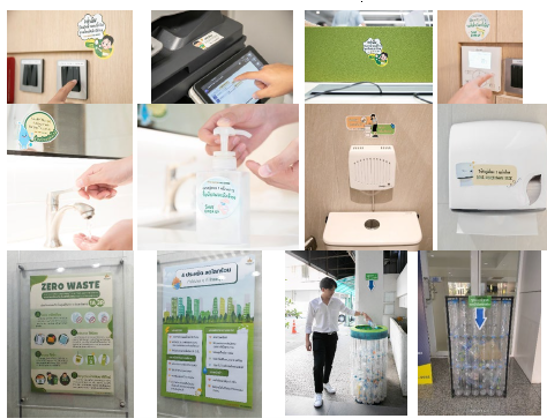
ไทยกรุ๊ป โฮลดิ้งส์
นโยบายคุกกี้
นโยบายการใช้คุกกี้นี้มีผลบังคับใช้กับเว็บไซด์รวมถึงแอพพลิเคชั่นใด ๆ ของบุคคลที่สาม ที่เชื่อมต่อหรือเข้าใช้งานเว็บไซด์ของบริษัท ไทยกรุ๊ป โฮลดิ้งส์ จำกัด (มหาชน) (ต่อจากนี้จะเรียกว่า บริษัท) การเข้าใช้บริการต่าง ๆ ของเว็บไซด์ของบริษัท รวมถึงบริการต่อเนื่อง จะถือว่าท่านได้ยอมรับแนวนโยบายการใช้คุกกี้ฉบับนี้ และอนุญาตให้ทางเว็บไซด์ของบริษัทใช้คุกกี้เพื่อการใช้งานของเว็บไซด์ได้ หากท่านปฏิเสธ ไม่ยอมรับ ไม่อนุญาตให้ใช้คุกกี้ ท่านสามารถเลือกที่จะออกจากเว็บไซด์ของบริษัทไป หรือสามารถที่จะปิดการใช้งานคุกกี้ผ่านระบบของเว็บเบราว์เซอร์ที่ท่านใช้งานอยู่ โดยท่านต้องยอมรับว่าอาจมีผลกระทบต่อการใช้งานเว็บไซด์ของบริษัท
จากนี้จะแจกแจงว่า คุกกี้คืออะไร, คุกกี้ที่เราใช้งานมีอะไรบ้าง, อายุการใช้งาน และอื่น ๆ ที่เกี่ยวข้อง
คุกกี้คืออะไร
คุกกี้ เป็นไฟล์ข้อมูลขนาดเล็กที่ถูกบันทึกไว้ในอุปกรณ์ของท่าน ไม่ว่าจะเป็น คอมพิวเตอร์ สมาร์ทโฟน แท็บเล็ต หรืออุปกรณ์อื่นใดที่สามารถเข้าถึงอินเทอร์เน็ตและสามารถแสดงเว็บไซด์ของบริษัทได้ คุกกี้นี้จะทำงานในการใช้งานเว็บไซด์ให้มีประสิทธิภาพและคล่องตัวมากขึ้น โดยปกติแล้วคุกกี้จะประกอบไปด้วยชื่อของเว็บไซด์, ข้อมูลที่จัดเก็บ, อายุของคุกกี้ และค่าหมายเลขจำเพราะเพื่อระบุตัวตนของคุกกี้
การใช้งานและประโยชน์ของคุกกี้บนเว็บไซด์ของบริษัท
โดยทั่วไปแล้ว การใช้งานคุกกี้มีไว้เพื่อประโยชน์ในเข้าชมหรือใช้งานเว็บไซด์ให้ดีขึ้น สะดวกขึ้น รวดเร็วขึ้น เช่น จดจำการตั้งค่า การล๊อคอิน เก็บสถิติการเข้าชมเพื่อวิเคราะห์ความสนใจหรือพฤติกรรมของผู้ใช้งานเพื่อแสดงเนื้อหาที่ผู้ใช้สนใจ อย่างไรก็ตาม คุกกี้ที่ใช้ในเว็บไซด์ของบริษัทจะไม่สามารถใช้ระบุตัวตนของท่านโดยตรงได้ กล่าวคือเว็บไซด์ไม่สามารถทราบได้ว่าคุกกี้ตัวใด หมายถึงผู้ใช้คนใด บนอุปกรณ์ใด โดยตรงได้
คุกกี้บนเว็บไซด์บริษัท
คุกกี้ที่ใช้บนเว็บไซด์ของบริษัท ประกอบด้วย
- คุกกี้ที่จำเป็นอย่างเคร่งครัด (Strictly necessary cookies) คุกกี้เหล่านี้จำเป็นสำหรับใช้ในการเรียกดูเว็บไซต์และใช้คุณสมบัติต่าง ๆ หากไม่สามารถใช้งานจะทำให้เว็บไซด์ไม่สามารถทำงานได้ คุกกี้เหล่านี้โดยทั่วไปจะเป็นเซสชันคุกกี้
- คุกกี้ฟังก์ชันการทำงาน (Functionality cookies) คุกกี้เหล่านี้อนุญาตให้เว็บไซต์จดจำตัวเลือกที่คุณทำไว้ในอดีตเช่นภาษาที่คุณต้องการภูมิภาคที่คุณต้องการรายงานสภาพอากาศหรือชื่อผู้ใช้และรหัสผ่านของคุณเพื่อให้คุณสามารถเข้าสู่ระบบโดยอัตโนมัติ
- คุกกี้ประสิทธิภาพ (Performance cookies) คุกกี้เหล่านี้รวบรวมข้อมูลเกี่ยวกับวิธีการใช้งานเว็บไซต์ เช่น หน้าที่คุณเข้าชมและลิงค์ที่คุณคลิก โดยไม่มีข้อมูลใดสามารถใช้ระบุตัวคุณได้ วัตถุประสงค์เพียงอย่างเดียวของมันคือมีไว้เพื่อเพิ่มประสิทธิภาพในการใช้งานผู้เข้าชม
- คุกกี้บุคคลที่สาม (Third Party Cookies) คุกกี้ที่อาจะมีการเชื่อมโยงไปใช้บริการจากเว็บไซด์ภายนอก อาทิเช่น Search Engine ของ Google หรือ Facebook
การปรับปรุงนโยบายฉบับนี้
บริษัทขอแจ้งให้ทราบว่า บริษัทอาจมีการปรับปรุงเปลี่ยนแปลงนโยบายนี้เพื่อความเหมาะสม อย่างไรก็ตามหากนโยบายนี้ถูกเปลี่ยนแปลงในสาระสำคัญ ทางบริษัทจะประกาศแจ้งการเปลี่ยนแปลงให้ทราบในหน้าแรก(homepage) ของเว็บไซต์ บริษัทขอแนะนำให้ผู้ใช้เข้าดูนโยบายนี้เป็นครั้งคราวเพื่อทราบถึงการเปลี่ยนแปลงนโยบายนี้